Why Pretend Roles Matter in Early Childhood
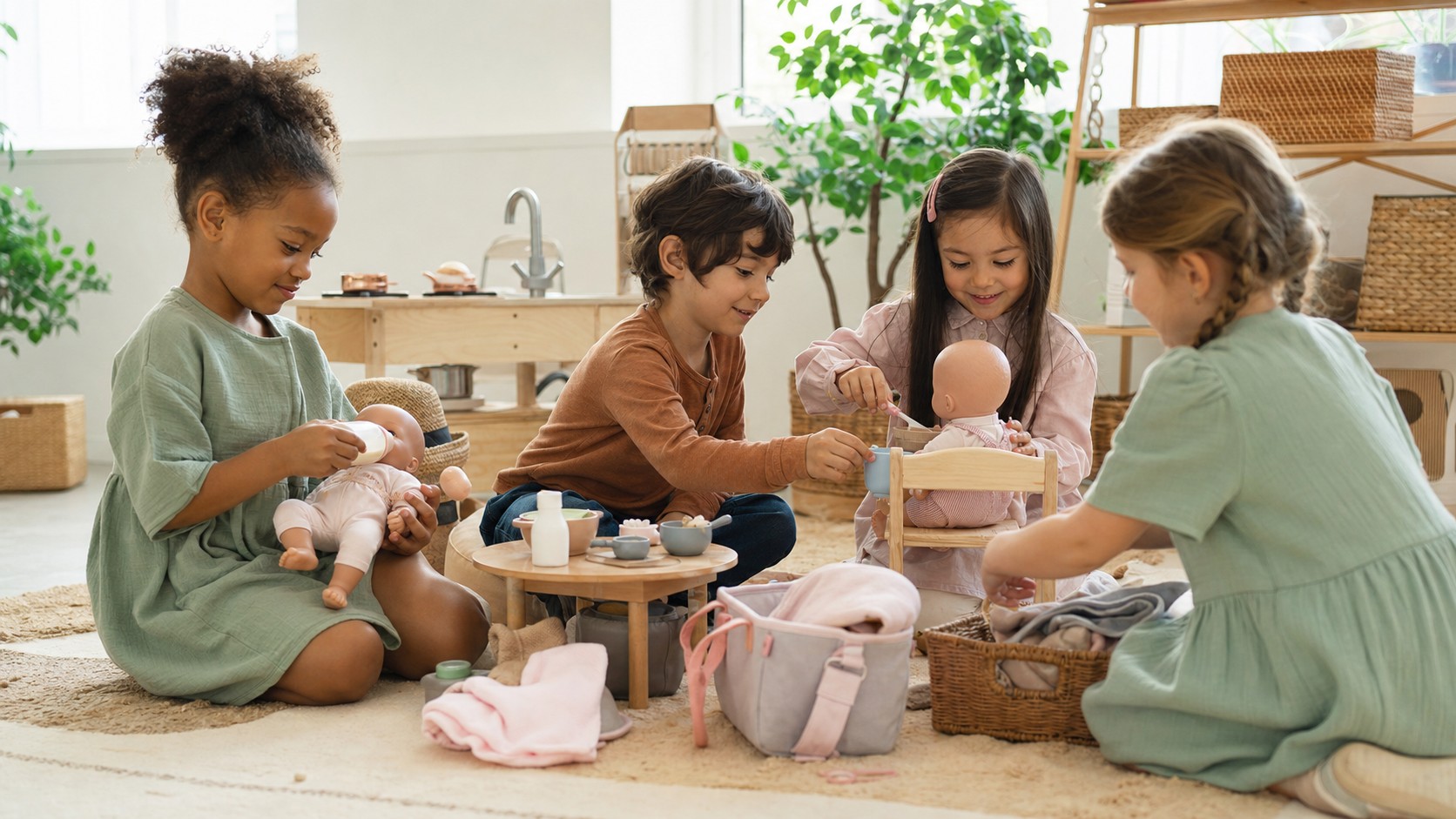
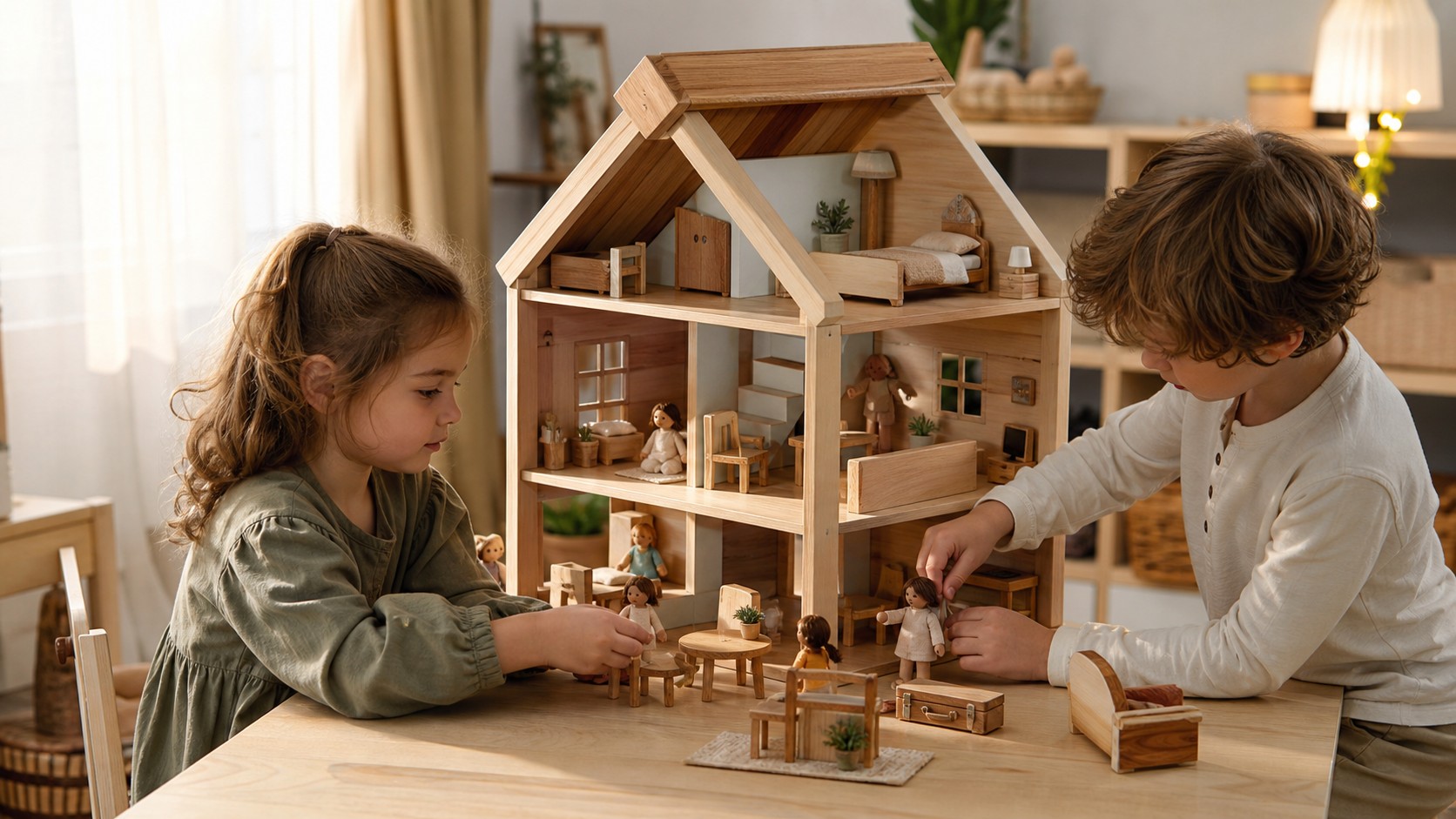
Role play toys are essential for early childhood development because they let young children act out the world before they fully understand it. A pretend doctor kit, market basket, tool bench, costume scarf, play kitchen, or doll stroller gives children a way to practice language, movement, planning, empathy, and confidence through action. Instead of being told what responsibility, cooperation, or care means, children get to try those ideas inside a story they can control.
Role Play Turns Observation Into Understanding
Young children spend a great deal of time watching the people around them. They see adults cook, clean, drive, shop, repair things, care for babies, answer phones, and help people who are hurt. Role play gives children a way to make sense of those observations. They do not simply copy what they saw; they reorganize it into a scene that fits their own understanding.
This matters because early childhood learning is concrete. A child may not understand a long explanation about responsibility, but they can understand that the pretend pet needs food before bedtime. They may not be able to define patience, but they can practice waiting while another child finishes being the cashier. The role gives the idea a shape.
Role play toys make that process easier because they provide cues. A toy stethoscope suggests checking and listening. A basket suggests choosing and carrying. A scarf suggests becoming someone else. These objects help children step into a role and begin thinking from inside it.
Language Develops Inside the Scene
Pretend play gives children a reason to speak. A child running a pretend restaurant has to greet customers, ask what they want, explain what is ready, and solve small problems. A child pretending to be a doctor may ask where it hurts, give reassurance, and describe what happens next. These words are not isolated vocabulary drills. They are tools the child needs in order to keep the scene moving.
Role play also encourages children to use different kinds of language. They describe, negotiate, question, comfort, warn, invite, and explain. A child may use a gentle voice for a patient, a confident voice for a shopkeeper, or a silly voice for a character who keeps forgetting the rules. That flexibility supports communication in a way worksheets cannot easily replicate.
When children play together, language becomes even more important. They have to decide who is playing which role, what the problem is, whether the story is changing, and how to include another idea. These conversations can be messy, but they are real practice in social communication.
Pretend Roles Support Emotional Growth
Role play gives children a safe way to explore feelings. A toy patient can be scared. A pretend baby can be tired. A customer can be disappointed. A firefighter can be brave and nervous at the same time. By giving those emotions to characters, children can approach them with a little distance.
That distance is useful. A child who is not ready to say, I felt worried at the doctor, may be able to make a doll feel worried at the clinic. A child who struggles with anger may create a character who needs help calming down. The play gives the child a way to test emotional responses without being directly corrected or exposed.
Adults can support emotional growth by asking open questions rather than taking over. What would help the patient feel ready? Who could help the baby stop crying? What should the builder do after getting frustrated? Questions like these help children connect feelings with actions.
Planning and Memory Grow Through Pretend Routines
Many role play scenes have a natural order. A restaurant opens, food is prepared, customers arrive, orders are served, and dishes are cleaned. A doctor visit begins with waiting, moves to checking symptoms, and ends with a care plan. A construction scene may involve gathering tools, fixing a problem, testing the repair, and cleaning up.
These sequences build early planning skills. Children have to remember what has already happened and anticipate what should happen next. They may not call this sequencing or executive function, but they are practicing both. The story gives memory a purpose.
Role play also encourages flexible thinking when the routine changes. A customer arrives before the food is ready. The toy hammer is missing. The pretend baby will not sleep. The child has to adapt the plan rather than abandon the play. This kind of adjustment is a valuable developmental skill.
Movement and Fine Motor Skills Are Built In
Role play toys often ask children to use their hands and bodies in purposeful ways. They button costumes, stir pretend soup, wrap dolls, open toolboxes, sort food, carry baskets, push strollers, and place small items where they belong. These actions support fine motor development because the movement has meaning.
Whole-body movement matters too. A child may crawl under a table to fix a pretend pipe, walk carefully while carrying a tray, march like a rescuer, or bend down to check on a stuffed animal. The movement is connected to imagination, which can make practice feel more engaging.
Because the action belongs to the story, children often persist longer. They may try again to tie the scarf, balance the basket, or arrange the plates because the scene depends on it. The play gives effort a reason.
Social Skills Emerge Through Shared Roles
When children share role play, they have to coordinate. Someone may be the cook, someone the customer, someone the delivery driver, and someone the person waiting at home. These roles create opportunities for cooperation because the story works better when the players respond to one another.
Shared pretend play also teaches children that different people can hold different perspectives. The doctor knows one thing, the patient feels another, and the parent character may be worried about something else. Children begin to understand that a situation can contain more than one point of view.
Conflicts are part of the process. Children may argue over who gets the most exciting role or whether the story should change. With calm support, these conflicts become chances to practice compromise, turn taking, and repair.
Choosing Role Play Toys That Actually Help
The best role play toys are flexible enough to become many stories. A toy phone can support family calls, emergency help, store orders, travel plans, or silly messages. A basket can become groceries, doctor supplies, camping gear, or a delivery bag. A scarf can become a costume, blanket, bandage, cape, or curtain.
Highly scripted toys may entertain children, but they can limit the child’s role if every sound, phrase, or action is already built in. For development, the child needs room to decide what the object means and what happens next. Simpler props often create deeper play.
A strong setup does not need to be large. A few costumes, dolls or figures, simple household props, pretend food, toy tools, and open containers can support a wide range of scenes. The goal is not to recreate the adult world perfectly. The goal is to give children materials they can use to think, speak, move, and imagine.
How Adults Can Encourage Better Role Play
Adults can help by making role play easy to start. Keep props visible, grouped loosely by theme, and simple enough for children to reset. If a child has to wait for an adult to unpack every piece, the play may happen less often. Accessibility supports independence.
The best adult participation is usually light. Join as a customer, patient, neighbor, or helper rather than taking the lead. Ask one question, offer one prop, or model one useful phrase, then let the child carry the scene. Children learn more when they remain authors of the play.
It is also helpful to protect time. Role play often deepens after the first few minutes, once children move beyond choosing props and begin building the situation. A little uninterrupted time can turn a simple pretend kitchen or doctor kit into serious developmental work.
Why Repetition Is Part of the Learning
Adults sometimes worry when children repeat the same pretend scene over and over. In early childhood, repetition is often a sign that the child is practicing something important. The same grocery store, doctor visit, or bedtime routine gives the child a familiar structure where small changes can be tested safely.
A repeated scene may grow in subtle ways. The first version of the doctor game may involve only listening to a heartbeat. Later, the child may add a waiting room, a nervous patient, a parent who asks questions, and a plan for taking care of the patient at home. The basic theme stays the same, but the thinking becomes more complex.
Parents can look for these small changes instead of pushing for a new scenario too quickly. More detailed language, longer sequences, new roles, and better problem solving all show that the child is developing within the repeated play.
Role Play Makes Rules Easier to Understand
Young children often resist rules that feel arbitrary. Role play can make rules meaningful because the child sees what the rule does inside a situation. A pretend crossing guard helps people wait safely. A pretend cook washes hands before serving food. A pretend veterinarian uses gentle hands with an animal.
This kind of practice is different from a lecture. The child is not simply being told what to do; the child is acting out why the behavior matters. When children stand inside a role, they can understand expectations from a new angle.
Adults can use this gently. If a child struggles with a routine, create a playful version first. A doll can pack for school, a stuffed animal can practice waiting, or a pretend shop can close for cleanup. The play does not replace real guidance, but it can make guidance easier to absorb.
Different Children Need Different Entry Points
Some children jump into role play with big voices and dramatic scenes. Others prefer quiet arranging, whispering to figures, or repeating one role privately before sharing it. Both styles are valid. The developmental value does not depend on performance.
A shy child may use a puppet, doll, or costume piece as a bridge into interaction. An active child may need larger roles such as delivery driver, builder, explorer, or rescuer. A detail-oriented child may enjoy shopkeeping, packing, cooking, or clinic routines. Matching props to temperament helps children enter the play more confidently.
A good role play area should allow several kinds of participation. There should be room for conversation, movement, care, sorting, planning, and quiet observation. When the materials support different entry points, more children can benefit.
Keeping Pretend Play Connected to Real Life
Role play becomes especially powerful when it connects to experiences children recognize. A recent doctor visit, grocery trip, family meal, home repair, or new baby can all reappear in pretend form. Children use play to revisit what happened and make it understandable.
Adults should be careful not to force these connections, but they can notice them. If a child keeps playing hospital after an appointment, the play may be helping them process the experience. If a child runs a pretend restaurant after a family dinner, they may be exploring hosting, ordering, and serving.
The link between real life and pretend play is one reason these toys matter so much in early childhood. They give children a way to digest the world at child size.