Why a Good Dollhouse Becomes a Story World
A strong dollhouse is more than a miniature home. It is a stage where children can arrange rooms, invent families, welcome visitors, solve problems, and change the rules of daily life. The best dollhouses support imaginative play because they give children structure without trapping the story. Rooms, furniture, doors, stairs, and open space all become tools for storytelling.
The Best Dollhouses Are Easy to Play With
A dollhouse can be beautiful and still fail as a toy if children cannot comfortably use it. The first test is reach. Children need to move figures through rooms, change furniture, and reset scenes without knocking over half the house. Open-front layouts, stable floors, and rooms sized for small hands make a real difference.
Durability matters as much as appearance. A fragile house may make children cautious in the wrong way. Instead of inventing stories, they worry about breaking railings or dislodging stairs. A playable house should tolerate repeated rearranging, enthusiastic visitors, and the occasional dramatic rescue.
The best houses also leave room for imperfection. Children may put a bathtub in the kitchen, turn a bedroom into a clinic, or make the roof a picnic spot. That flexibility is not a problem. It shows that the child sees the house as a living setting, not a fixed display.
Rooms Give Children a Map for Stories
A dollhouse helps children organize events. A character wakes up upstairs, eats breakfast downstairs, waits at the front door, visits a neighbor, and comes home tired. The rooms give the child a map for sequencing without requiring a written plan.
Different rooms create different kinds of stories. Kitchens invite hosting, hunger, mess, and sharing. Bedrooms invite privacy, comfort, sickness, and bedtime worries. Living rooms invite gatherings, announcements, and celebrations. Porches and doors invite arrivals, goodbyes, and surprises.
Empty or lightly furnished rooms can be especially powerful. A spare room can become a shop, classroom, pet clinic, studio, storage room, or secret hideout. When the child decides what a room is for, the house becomes more personal and more replayable.
Scale Should Match the Child
Scale shapes the entire experience. Larger dollhouses and figures are easier for younger children to grip, move, and share. Smaller houses can invite careful decorating and detailed scenes for older children who enjoy slower play. Neither scale is automatically better; the right one depends on the child’s age, patience, and preferred style.
Figure compatibility is worth checking before buying. If a child already loves certain dolls, animals, or small figures, the house should welcome them. A perfect-looking house that excludes favorite characters may not get much use.
Mixed-age households need extra care. Tiny accessories may be unsafe for younger siblings, while delicate pieces may frustrate children who play with energy. Removable detail pieces, sturdy furniture, and flexible rooms can help a dollhouse work for several ages at once.
Furniture Should Do More Than Decorate
Dollhouse furniture is strongest when it supports action. A bed is not just a bed; it can become a hospital bed, guest bed, hiding place, or sleepover spot. A table can hold dinner, homework, a board game, a repair project, or a family meeting. A sofa can become a bus seat, waiting room bench, or stage.
Too many tiny decorative pieces can crowd the play. Children need enough furniture to suggest a home, but not so much that every room becomes hard to move through. A few sturdy, flexible pieces often create better stories than a large set of fragile accessories.
Furniture that moves easily between rooms adds replay value. When children can redesign the house, they can change the story. The kitchen becomes a bakery, the attic becomes a vet clinic, and the living room becomes a neighborhood meeting place.
Dollhouses Support Social and Emotional Play
A dollhouse gives children a safe way to explore everyday relationships. Characters can move in, argue, share, get sick, celebrate, become afraid, or welcome someone new. These stories let children practice emotional situations they see in real life.
The house also helps children think about privacy and belonging. A character may need a quiet room, a shared table, or a safe place for a pet. These choices invite children to consider what different people need inside the same home.
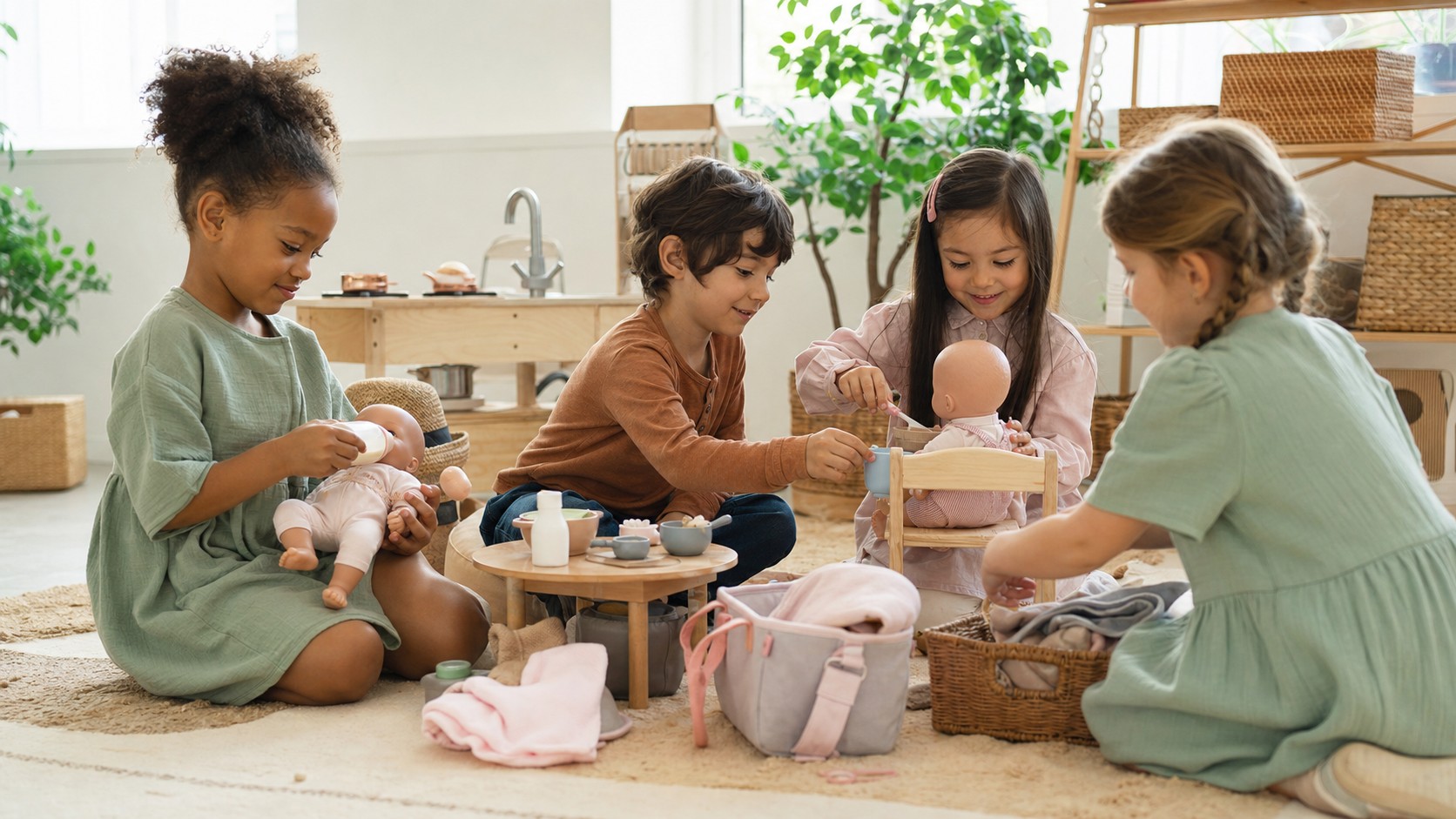
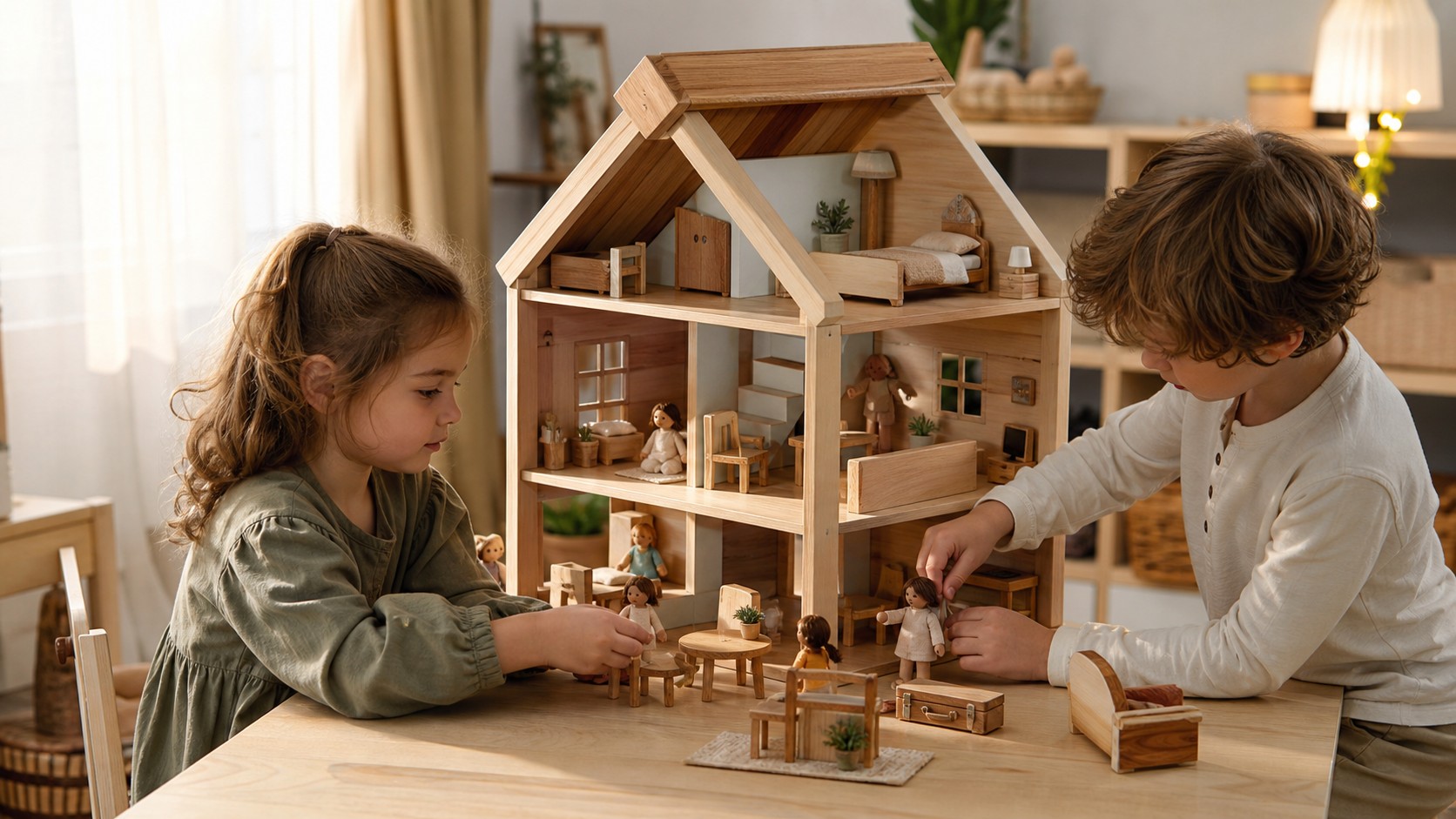
When several children play together, the dollhouse becomes a shared world. One child may arrange furniture while another creates the plot. Learning to respect another person’s scene, ask before changing a room, and include new ideas is part of the social value.
How to Keep Dollhouse Play Fresh
A dollhouse does not need constant new purchases to stay interesting. Small additions can change everything. Fabric scraps become rugs or blankets. Cardboard becomes walls, beds, signs with no writing, or moving boxes. Blocks become fences, counters, or garden walls.
Adults can offer light story prompts when play feels stuck. A visitor is arriving. The family is moving. A pet is missing. The roof is leaking. The kitchen is closed for repairs. A good prompt opens a door without writing the entire story.
The real sign of a good dollhouse is return play. Children come back with new room ideas, new visitors, new problems, and new arrangements. A house that keeps accepting the child’s changes can remain useful for years.
Storytelling Grows When Children Control the House
A dollhouse becomes more powerful when children are allowed to control more than the figures. They should be able to decide where furniture goes, who lives in the house, what each room is called, and whether the house follows ordinary rules. Maybe the kitchen is upstairs, the attic is a science room, or the porch becomes a pet rescue desk. These choices are not mistakes. They are storytelling decisions.
Control gives children a sense of authorship. They are not simply reenacting a prewritten domestic scene; they are building a world with its own logic. That authorship encourages longer play because the child wants to see what happens inside a world they helped design.
Adults can support this by resisting the urge to reset everything to look neat. A tidy dollhouse may please adults, but a rearranged dollhouse often tells a better story. If the furniture placement makes sense to the child, it is doing its job.
Dollhouses Help Children Practice Everyday Problems
Many dollhouse stories revolve around ordinary problems: someone is late, a room is messy, a pet is hiding, dinner is not ready, a guest needs a place to sleep, or two characters want privacy at the same time. These problems may seem small, but they mirror real social life in a way children can manage.
Through these scenes, children practice planning and repair. They decide where people should go, what order events should happen in, and how characters respond when something goes wrong. A child who moves a couch to make room for a guest is practicing hospitality and spatial reasoning at the same time.
The house also lets children revisit events from their own lives. Moving, welcoming a new sibling, visiting relatives, being sick, cleaning up, or starting school can all appear in dollhouse stories. Play gives children a way to organize these experiences at their own pace.
What to Look for Before Buying
Before choosing a dollhouse, look beyond the product photo. Ask whether the child can reach every room, whether the figures can stand, whether the furniture is sturdy, and whether the house can survive being moved or bumped. A beautiful house that frustrates everyday use will not inspire much storytelling.
Storage is another practical issue. Some houses hold furniture inside when play ends, while others require separate bins. If cleanup is difficult, pieces may disappear quickly. A house that supports easy reset is more likely to become part of daily play.
Consider where the house will live. A dollhouse placed in a visible, accessible spot will usually be used more than one stored behind other toys. If space is limited, a smaller open house with flexible rooms may be better than a large house that is hard to reach.
How Dollhouse Play Changes With Age
Younger children often begin with simple routines: sleeping, eating, visiting, bathing, and going out. These scenes are important because they help children understand everyday order. The child is learning what happens in a home and how people care for one another.
Older children may add more complicated plots. They create neighbors, secrets, businesses, repairs, storms, parties, moves, and family disagreements. The same house can support these richer stories if it is not too tied to one narrow theme.
That ability to grow is one of the best reasons to choose a flexible dollhouse. A toy that starts as a simple home can become a school, hotel, clinic, apartment building, museum, or community center as the child’s imagination expands.
Using a Dollhouse With Other Toys
A dollhouse becomes even more useful when it can connect with toys the child already loves. Animal figures can become pets, visitors, or wildlife in the yard. Blocks can become roads, stores, fences, or furniture. Vehicles can turn the house into part of a neighborhood. Small dolls can visit from another playset and change the whole story.
These combinations matter because they prevent the dollhouse from becoming a closed system. The house can be a home base for adventure, a stop on a trip, a rescue center, or a community building. When children connect toy categories, they build larger story worlds and practice more flexible thinking.
Parents do not need to buy matching accessories for every idea. In fact, mismatched pieces often make better stories because children have to explain why they belong together. A dinosaur in the living room, a horse at the front door, or a delivery truck in the bedroom may sound odd, but each one can launch a memorable plot.
Helping Children Share the Space
Dollhouses often attract more than one child at a time, which can be wonderful and difficult. The rooms are visible, the pieces are tempting, and everyone may want to control the same family. Sharing works better when children have enough zones to play in at once. One child can arrange the upstairs while another starts a kitchen scene downstairs.
Adults can help by naming the house as a shared story world. Instead of asking who owns the house, ask what part of the story each child is building. This shifts attention away from possession and toward contribution.
If conflict keeps happening, reduce the number of delicate pieces and add more flexible props. Extra chairs, blankets, baskets, or figures can give children more ways to participate without fighting over one special item.
The Best Choice Is the House Children Return To
A dollhouse does not need to impress adults at first glance to become a beloved toy. The better test is whether children return to it with fresh ideas. Do they move rooms around? Do they create visitors? Do they bring in animals, vehicles, or handmade props? Do they tell you what happened in the house yesterday and what might happen tomorrow?
Those signs show that the dollhouse has become a working story world. It is giving the child enough structure to begin and enough freedom to continue. That balance is more important than perfect decoration, matching accessories, or a large footprint.
When choosing between options, look for the house that seems easiest to enter imaginatively. A sturdy, reachable, flexible dollhouse can hold years of stories because it does not insist on one correct way to play. It lets children keep making the home their own.