How Pretend Play Turns Toys Into Social Practice
Dolls and role play toys give children a place to practice the small social skills that shape daily life: noticing feelings, taking turns, asking for help, solving disagreements, and including someone else in a shared idea. The value is not that every scene looks realistic or tidy. The value is that children get to try social language and caring behavior inside a world they can control, revise, and safely repeat.
Pretend Care Builds Empathy
When a child wraps a doll in a blanket, checks a pretend fever, or tells a stuffed patient that everything will be okay, the child is practicing the habit of imagining another point of view. That may look simple from the outside, but it is a meaningful social step. The child has to decide what the character needs, how the character feels, and what kind of response would help.
Dolls are especially useful because they make feelings visible without putting the child directly on the spot. A child who is not ready to say, I feel nervous, may be able to say, The baby is scared. That distance gives children a safe way to explore worry, frustration, loneliness, excitement, pride, and comfort.
Over time, this kind of play can expand a child’s emotional vocabulary. The doll is not just sad; she is sad because her friend left. The patient is not just sick; he is worried because the doctor is new. Those details help children connect emotions with causes, which is an important part of empathy.
Shared Stories Teach Turn Taking
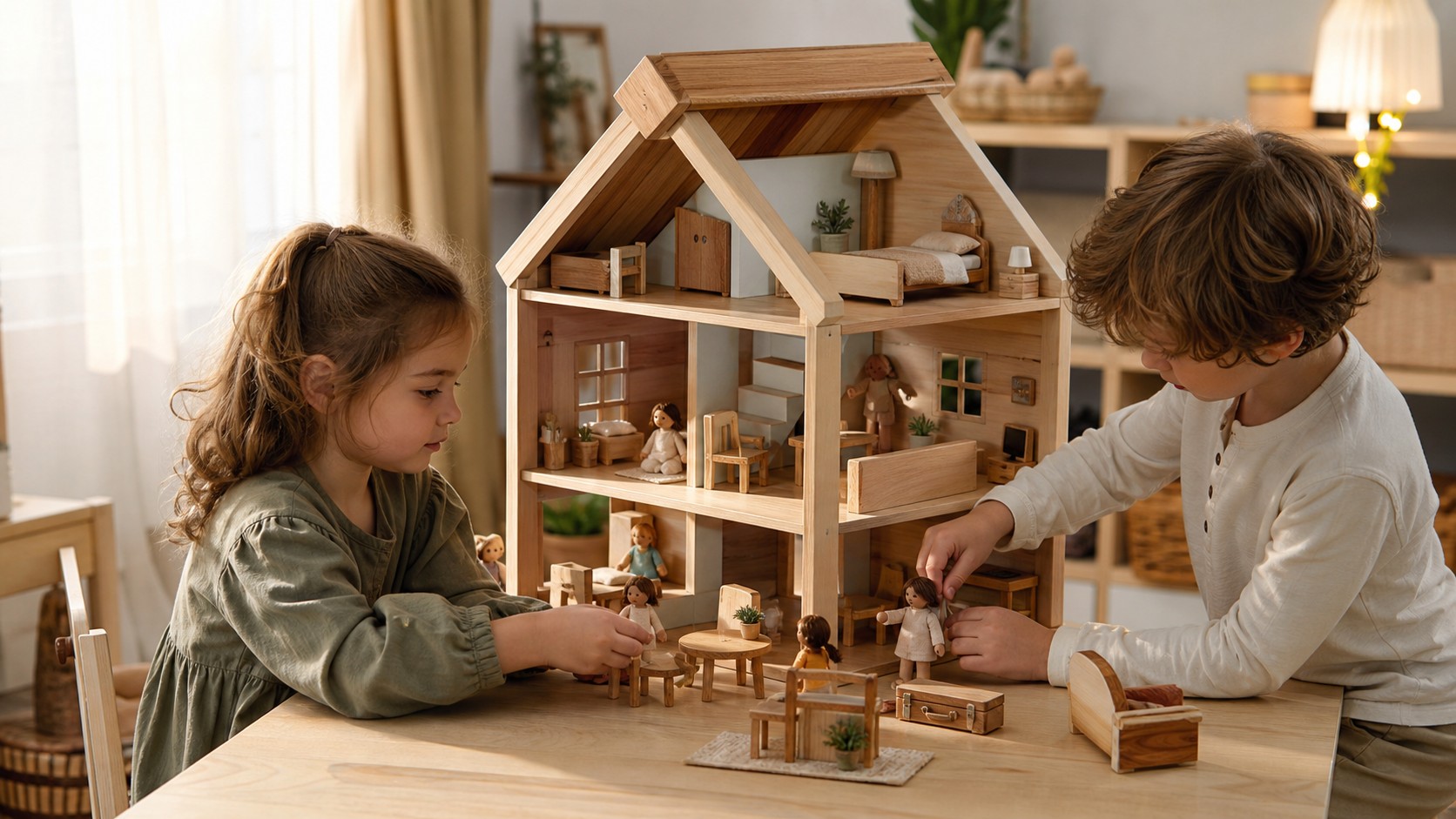
Role play naturally creates chances to take turns because a pretend world has many jobs. One child can be the parent, another the doctor, another the visitor, and another the driver. Even when children are using only a few dolls or props, the story invites different roles and responsibilities.
Turn taking is easier to accept when it has a purpose inside the story. Waiting to use a stroller feels different when the stroller is part of a trip to the store. Letting another child speak feels more meaningful when that child is playing the character who knows where the family is going. The plot gives patience a reason.
Disagreements still happen, of course. Two children may want the same doll, the same costume, or the same leadership role. Those conflicts are not failures of the toy. They are opportunities for children to practice negotiation while the stakes are still small enough for adult support and quick repair.
Role Play Strengthens Conversation
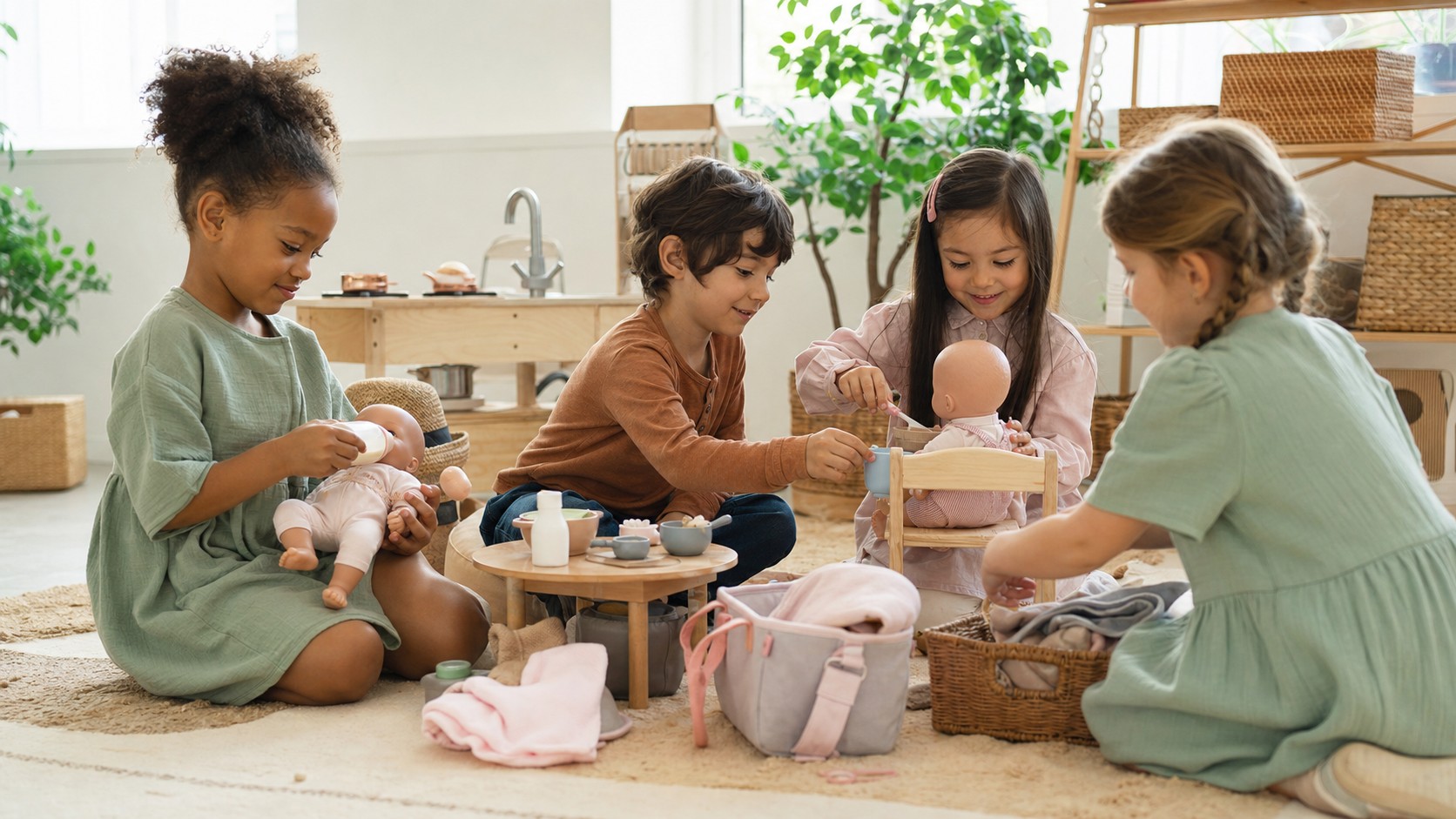
Pretend scenes give children a reason to use longer, more flexible language. A toy phone invites greetings and goodbyes. A doctor kit invites questions and explanations. A play kitchen invites hosting, offering, thanking, refusing, and asking what someone wants next. The language grows because the story needs it.
Children also learn to adjust tone. A character might whisper to a sleeping baby, speak firmly to a runaway puppy, or use a gentle voice with a worried patient. Trying those voices through play can help children understand how tone changes the meaning of words.
This practice is valuable even when a child plays alone. Solo pretend play can be a rehearsal space where children test phrases before using them with peers. When another child joins, those rehearsed phrases can become part of real interaction.
Simple Props Often Work Best
The strongest role play setups are not always the most expensive or elaborate. A few dolls, a blanket, a bag, cups, scarves, and simple household-style props can support dozens of stories. A scarf can become a cape, a sling, a picnic blanket, a curtain, or a hospital sheet. A bag can become a school backpack, doctor kit, suitcase, or grocery tote.
Open-ended props keep the child in charge. Toys that talk, flash, or direct every step can be exciting for a while, but they may leave less room for the child’s own language and decisions. For social development, children need to supply motives, problems, apologies, invitations, and solutions.
A small, visible play area can help. If children can reach the dolls and props without asking an adult to set everything up, they are more likely to begin independently. Independence matters because social play grows through repetition, not through one carefully staged afternoon.
Adults Can Support Without Taking Over
The adult role in doll and role play is delicate. Too much direction can turn pretend play into a lesson, but thoughtful support can help children go deeper. Good prompts are open and light: Who needs help? What could she say next? How can both ideas fit in the story? What should happen before everyone leaves?
Adults can also model repair language. If children argue over a prop, an adult might say, You both have ideas for the stroller. Can the stroller make two trips, or does the story need another helper? This keeps the children thinking inside the play instead of simply obeying an outside ruling.
It is also helpful to notice growth after the play ends. Saying, You made room for your friend’s idea, or You helped the character feel safe, gives children language for what they practiced. That kind of reflection can connect pretend behavior to real social confidence.
What Progress Looks Like
Social growth in pretend play is rarely dramatic all at once. It may show up as a child inviting a sibling into the scene, using a kinder voice, accepting a different ending, or repairing a pretend argument more quickly than before. These small signs matter.
Repetition can also be a sign of progress. A child may run the same bedtime, doctor, school, or travel scene again and again while slowly adding new details. Repeated stories let children master a social script before they change it.
The best dolls and role play toys give children room to return, revise, and try again. That is why they remain useful across stages. A toddler may focus on feeding and comfort, while an older child may create complicated friendships, family changes, or group adventures with the same basic materials.
Why Doll Play Works for Different Personalities
Not every child uses dolls in the same way, and that variety is part of the strength of the category. Some children build long family dramas with many characters and complicated relationships. Others prefer quiet care routines, doctor visits, school scenes, or travel stories. A child who does not enjoy loud group play may still use dolls to rehearse social situations in a private, thoughtful way.
Active children may move dolls through rescues, camping trips, store runs, or neighborhood adventures. Detail-oriented children may spend more time setting beds, arranging meals, packing bags, or deciding who belongs in which room. Both styles can build social skills. The important question is not whether the play looks a certain way, but whether the child is thinking about people, feelings, roles, and responses.
Adults sometimes unintentionally narrow doll play by assuming it should be soft, domestic, or quiet. In reality, dolls and role play figures can support bravery, humor, leadership, problem solving, and big movement as well as nurturing. A flexible setup lets children bring their own temperament into the story.
How to Handle Conflicts During Role Play
Conflicts during role play can be frustrating, but they are also some of the most useful moments. Children may argue about who gets the favorite doll, who controls the story, or whether a character is allowed to change roles. These disagreements reveal the exact social skills children are still learning: waiting, listening, compromising, and recovering after disappointment.
The best adult response is usually to slow the moment down without solving everything instantly. Instead of taking the toy away or assigning a winner, name the problem and return it to the story. You both want the doctor bag. Does the clinic need two doctors, or does one person check in patients first? This gives children a structure for negotiation.
When children find a solution, even an imperfect one, they gain confidence. They learn that disagreement does not have to end the play. It can become part of the story, and that lesson is useful far beyond the playroom.
Making the Play More Inclusive
Dolls and role play toys are strongest when many kinds of children can see themselves in the play. That may mean dolls with different skin tones, hair textures, ages, body types, or abilities. It can also mean props that support different family structures, community roles, and everyday experiences.
Inclusive play does not need to be heavy-handed. A wheelchair, glasses, hearing device, grandparent figure, baby carrier, work bag, or school backpack can simply become part of the world. Children learn from what is normal in the materials around them. When variety is present, stories become wider.
This also helps children practice respect. They may ask questions about a difference, create a care routine, or invent a scene where every character has a meaningful role. A diverse pretend world gives children more chances to build social understanding before they meet similar situations in real life.
Keeping Doll Play Fresh Without Buying More
Families do not need to buy a constant stream of new dolls to keep the play alive. Often, the most powerful refresh comes from changing the situation. The family is moving. A friend is visiting. The baby will not sleep. The class pet is missing. The doctor’s office is closed, so the waiting room moves to the kitchen table.
Household materials can renew the story. A small cardboard box becomes a bus, bed, elevator, or shop counter. Fabric becomes a tent, blanket, river, curtain, or costume. A paper towel tube becomes a telescope or microphone. These additions matter because the child helps create them.
When children help transform ordinary objects, they become more invested in the scene. They are not just consuming a toy; they are building a world. That kind of ownership is one reason simple role play materials can last through many stages of childhood.
Why These Toys Still Matter in a Busy Home
In a busy home, it can be tempting to choose toys that entertain children quickly and require little involvement. Dolls and role play toys ask for a different kind of attention. They are slower, more open, and less predictable. That is exactly why they are useful. They give children time to create dialogue, negotiate ideas, and work through social situations without rushing.
This kind of play also gives adults a window into what children are processing. A child may replay a doctor visit, school routine, new sibling moment, or friendship worry through dolls long before they can explain it directly. Watching the play can help adults understand what feels important, confusing, or exciting to the child.
The goal is not to turn every pretend scene into therapy or instruction. The goal is to respect the play as meaningful. When children are given space to build social stories, they often reveal both what they know and what they are still trying to understand.
A Simple Way to Start
Families who want to encourage this kind of play can begin with a small invitation. Place two dolls or figures near a blanket, cup, bag, and soft piece of fabric. Ask one open question, such as Who is coming to visit today? or What does this character need before leaving home? Then step back. The child’s answer should shape the rest of the scene.
If the child ignores the setup, try again another day with a different starting point. Pretend play grows best when it feels like an invitation, not an assignment.