How Animal Playsets Turn Indoor Play Into a Wild World
Animal playsets can turn a living room into a forest, farm, savanna, ocean edge, rescue center, or mountain trail with only a few figures and simple props. Children do not need a perfect miniature landscape to feel transported. They need animals with personality, materials that suggest habitats, and enough freedom to decide what the creatures need, where they go, and what happens when the wild world changes.
Habitats Make Animal Stories Stronger
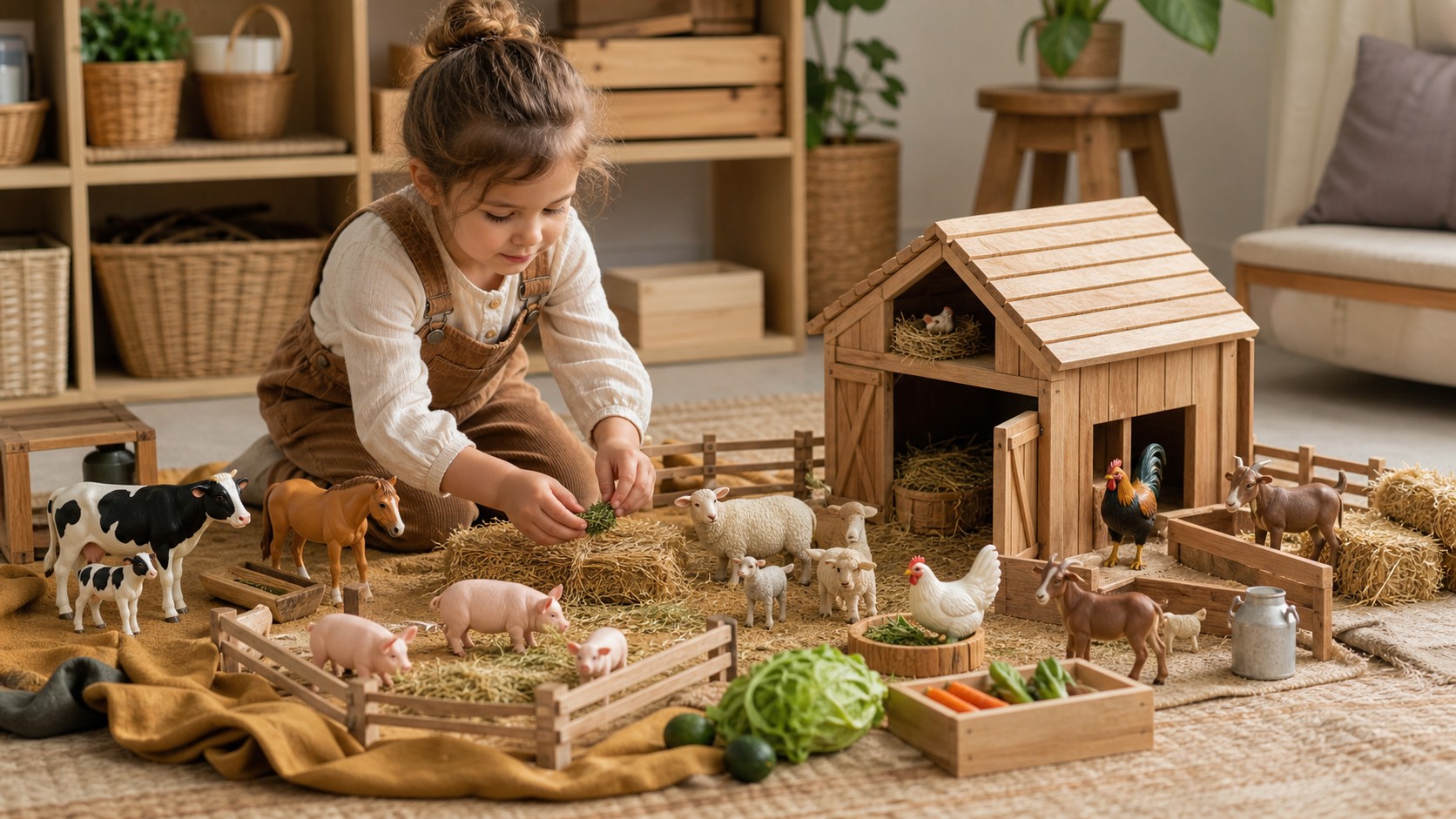
Animal figures become more meaningful when children build places for them. A blue scarf can become a river, a towel can become snow, blocks can become cliffs, and a cardboard box can become a den. These simple materials help children understand that animals belong somewhere, not just anywhere.
Habitat building encourages children to think about needs. A turtle may need water nearby. A bird may need a nest. A horse may need a fence. A fox may need a hidden place. These ideas can appear naturally during play, long before children are ready for formal science lessons.
The habitat does not have to be accurate every time. A child may put a penguin in a jungle or a whale near a barn. Adults can gently add facts without shutting down the story. Asking what the animal would need in that unusual place keeps imagination alive while encouraging better thinking.
Animal Movement Brings the Scene to Life
Children often understand animals through movement. They hop a frog, creep a tiger, flap a bird, gallop a horse, and lumber a bear. This movement makes the figures feel alive and gives the child’s body a role in the story.
A living room animal scene can include many kinds of motion. Some animals travel in groups, some hide, some chase, some climb, and some move slowly to stay safe. Children begin to notice that animals do not all move through the world in the same way.
Sound can add another layer. Roars, chirps, splashes, hoofbeats, and quiet rustling help children give each animal character. Child-made sounds are often more valuable than electronic sounds because they keep expression in the child’s control.
Rescue Stories Build Care and Responsibility
Many children naturally create rescue plots with animal toys. A baby animal gets lost, a bird has a hurt wing, a calf wanders from the barn, or a turtle needs help reaching water. These stories can be exciting, but they also invite children to slow down and think about care.
Rescue play asks useful questions. What does the animal need first? Who can help safely? Where should the animal rest? When is it ready to return? The child is not just creating drama; the child is practicing responsibility through imagination.
Simple props can deepen these stories. A small blanket becomes a recovery bed, a basket becomes a transport crate, and a bowl becomes food or water. The props do not need to be elaborate. They only need to give care a visible form.
Animal Play Supports Early Science Thinking
Animal playsets can introduce classification in a natural way. Children sort animals by habitat, size, movement, family group, or imagined personality. They may place water animals together, separate babies from adults, or decide which creatures come out at night.
These sorting choices are early science skills. Children compare features, make categories, revise those categories, and test whether their choices make sense in the story. A child who moves an animal from one habitat to another is often thinking through a reason, even if the reason is playful.
Adults can support this by asking gentle questions. Where does this animal sleep? What does it need nearby? Who travels with it? What would happen if the river dried up? Questions like these add depth without turning play into a quiz.
Living Room Materials Can Become Wild Landscapes
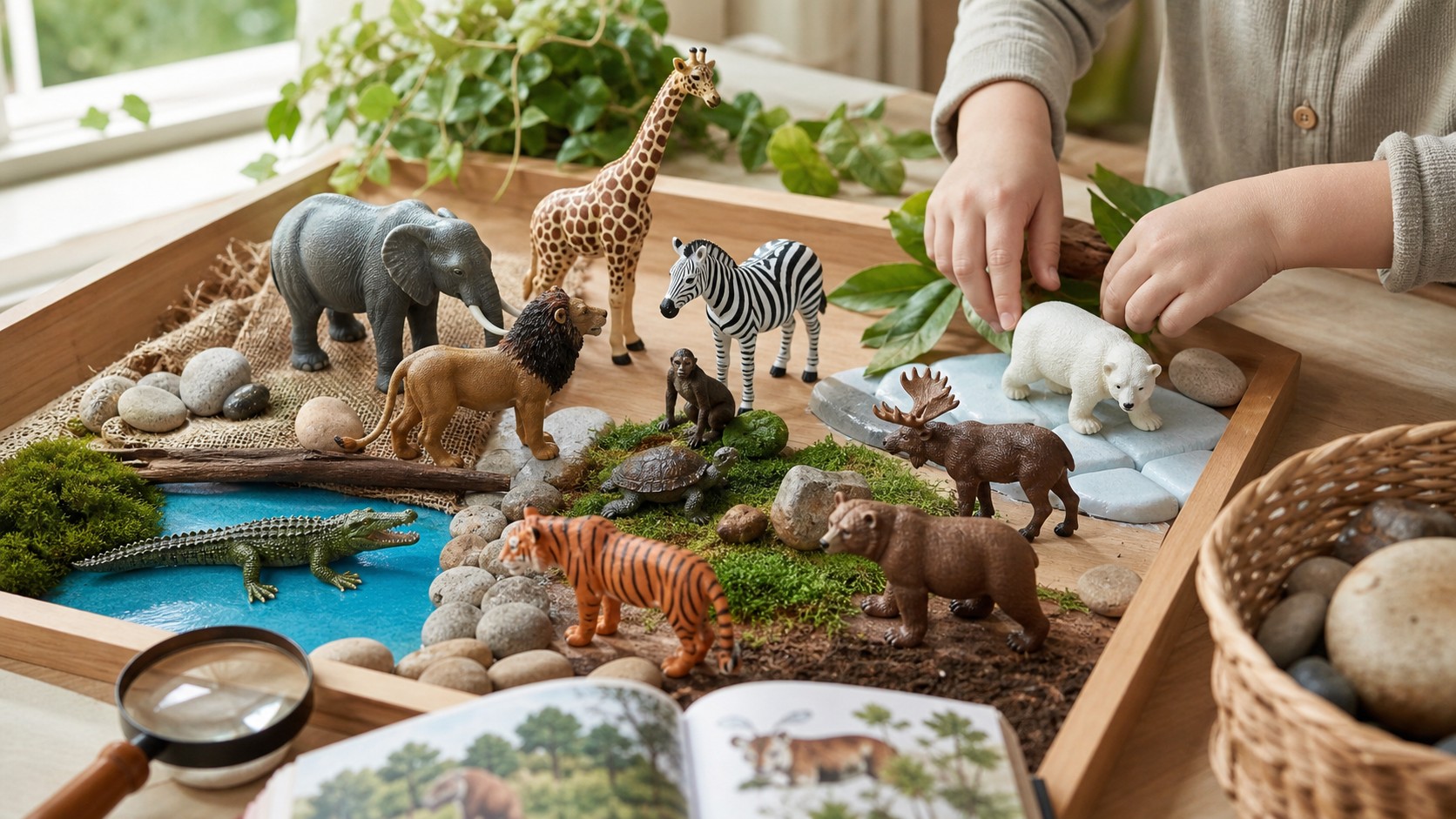
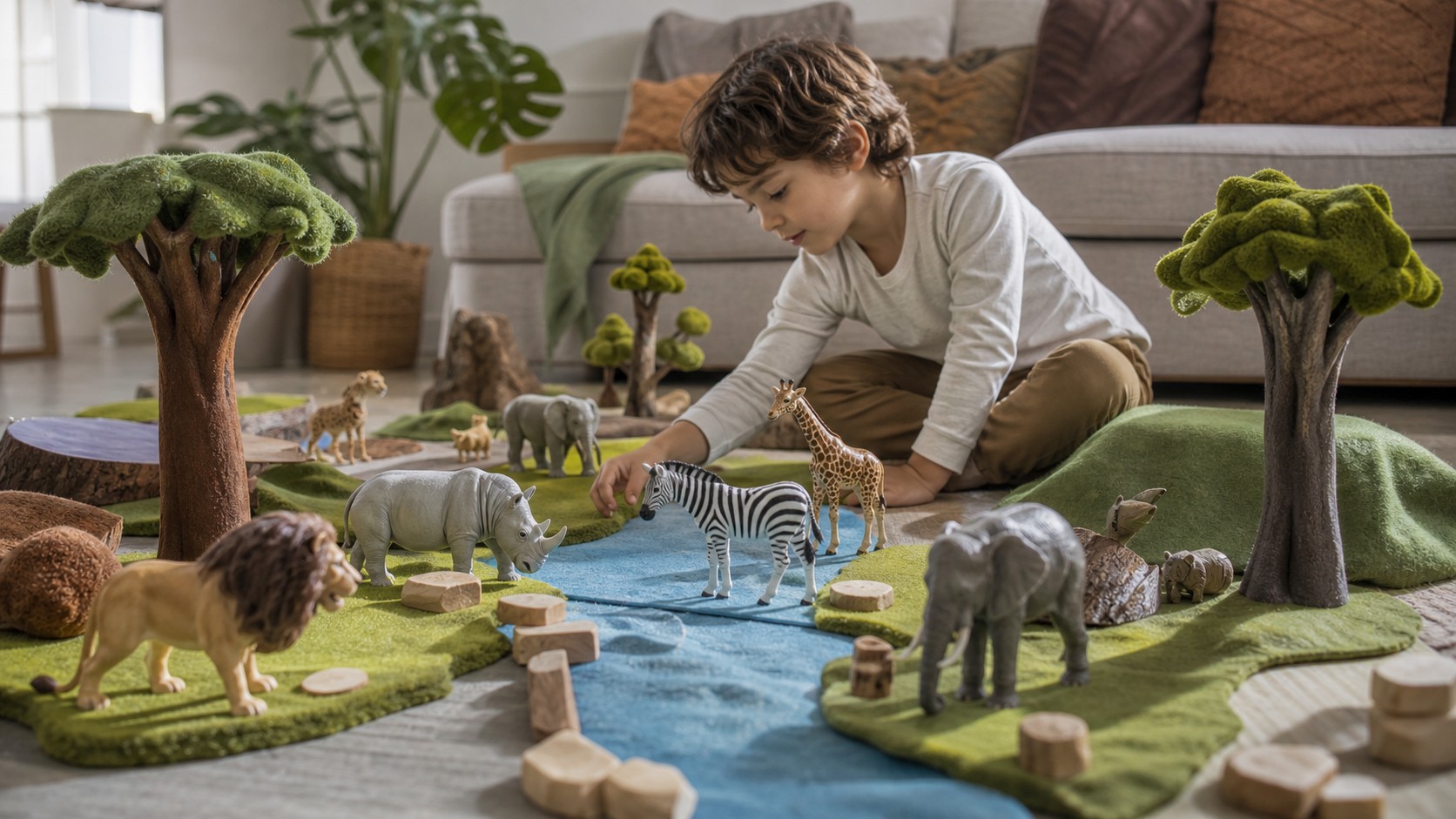
One of the strengths of animal play is that it works well with ordinary household materials. Pillows can become mountains, blankets can become fields, blocks can become caves, and a tray can hold a small water scene. Children learn that imagination can transform the room.
Loose materials are often better than fixed scenery because children can rebuild the world each time. The same scarf can be a river today, a desert tomorrow, and a rescue blanket the next day. This flexibility keeps the play from becoming repetitive.
Building the landscape before choosing the animals can also improve the play. Children have to think about where paths, shelters, water, and open spaces should go. When the animals arrive, the world already has structure.
Choosing a Strong Animal Playset
A good animal playset offers variety. It should include animals that move differently, live in different places, and suggest different kinds of stories. A large animal changes the scale, a small animal invites hiding, a bird adds height, and a baby animal introduces care.
Durability matters because animal figures often travel across floors, furniture, rugs, and outdoor-adjacent spaces. Figures should stand well, feel sturdy, and be easy to clean. If animals constantly fall over, children may spend more time fixing the setup than telling the story.
Avoid choosing only the most dramatic animals. Fierce creatures are exciting, but gentle animals, shy animals, family groups, and small creatures often create richer stories. A balanced set gives children more emotional range.
How Adults Can Extend Wildlife Play
Adults can extend animal play without taking it over. Add one new challenge: a storm is coming, the water hole is crowded, the ranger needs to observe quietly, or a baby animal is missing. Then let the child decide how the animals respond.
Books and real-world observations can connect to the play later. After reading about frogs, children may rebuild the pond. After seeing birds outside, they may add nests to the living room habitat. These connections help indoor play feed outdoor curiosity.
Cleanup can become part of the learning too. Instead of simply tossing animals into a bin, invite children to return creatures to their habitats. This reinforces sorting, care, and closure while making the next play session easier to begin.
Why Indoor Wildlife Play Matters
Not every family can visit farms, forests, beaches, or zoos often. Animal playsets bring pieces of those worlds into reach. They let children explore wild settings through stories they can touch and change.
This kind of play can build respect for living things. A child who thinks about shelter, food, safety, babies, and release is beginning to understand that animals have needs beyond being cute or exciting. That understanding can grow into real care for nature.
The best animal playsets therefore do more than fill a toy bin. They open a door between imagination and the living world. In a child’s hands, the living room can become a place of migration, rescue, discovery, and wonder.
How Animal Play Encourages Story Structure
Animal playsets often help children build stories with a beginning, middle, and end. A herd starts the day near water, a storm changes the route, a young animal gets separated, and the group finds a safer place before night. The animals give the story movement because each creature has needs and limitations.
This structure is useful for children who are learning how stories work. They begin to understand that events connect. A broken fence leads to an escape. A dry river leads to a search. A hidden cave becomes important when danger arrives. The child is practicing cause and effect through play.
Adults can support story structure by asking what changed. What happened that made the animals move? Who noticed first? What needs to happen before the story ends? These questions encourage sequence without taking over the plot.
Using Animal Play for Gentle Social Themes
Animal stories are often about more than animals. A lost cub may be about separation. A crowded watering hole may be about sharing. A frightened rabbit may be about safety. A herd traveling together may be about belonging. Children can explore these themes without naming them directly.
This is one reason animal play can feel emotionally rich. The child can work with fear, bravery, care, leadership, and cooperation through creatures that feel slightly removed from everyday life. That distance can make difficult ideas easier to approach.
Adults should not over-interpret every scene, but they can listen. If the same animal is always left out, always rescued, or always in charge, the pattern may reveal what the child is thinking about. A gentle question can help the child expand the story.
Rotating Habitats Keeps Play Fresh
The same animal figures can feel new when the habitat changes. A lion in a grassland story has one set of problems; a lion near a rescue center has another. Ocean animals, farm animals, woodland animals, and mountain animals all invite different kinds of movement and care.
Families can rotate habitat materials instead of constantly buying more figures. One week, use blue fabric, stones, and shells for water play. Another week, use blocks, green cloth, and small boxes for forest scenes. The animals remain familiar, but the world changes around them.
This approach also helps cleanup. A smaller habitat theme keeps the scene focused and makes it easier for children to return materials to the right place.
Helping Children Respect Wildness
Animal play can teach care without turning every animal into a pet. Some creatures in the story may need help, but they may also need space, freedom, or a return to their habitat. That distinction is important for children who love animals deeply.
A rescue story can end with release. A ranger can observe quietly instead of capturing. A child can build a safe path rather than bringing every animal home. These story choices help children understand that caring for animals includes respecting their wildness.
The best animal playsets leave room for both closeness and distance. Children can love the animals, protect them, and still imagine them belonging to a world beyond the living room.
Choosing the Right Scale for Living Room Habitats
Scale matters because animal playsets usually spread across floors, rugs, tables, and couches. Larger animals are easier for younger children to grip and identify, while smaller figures make it possible to build herds, dens, ponds, and migration routes without taking over the whole room. The best choice depends on how the child actually plays.
If a child likes big movement, sturdy mid-size animals may work better than tiny collector-style figures. They can survive being carried in baskets, lined up on windowsills, marched across block bridges, or tucked into blanket caves. If a child loves careful scenes, smaller animals can support more detailed habitats and quiet sorting.
Families should also think about storage before buying a large set. A shallow bin, tray, or divided basket can help children see the animals and choose a scene. When the figures are visible, the play is more likely to start with an idea instead of a dumped pile.
The right scale does not have to be perfect. It simply has to make the wild world easy for the child to build, change, clean up, and return to later.