Educational Games Should Make Learning Active
Educational video games improve learning when they ask children to think, test, remember, solve, create, or explain. A game is not educational just because it has bright letters, numbers, or a school subject on the cover. The best learning games connect content to action. They help children practice a skill in a way that gives feedback, invites retrying, and makes progress visible.
Learning Games Need Real Interaction
A strong educational video game should require more than tapping through rewards. Children should be making choices, solving problems, arranging information, testing ideas, or applying knowledge. The screen should respond to their thinking, not simply entertain them between quiz questions. Real interaction is what turns digital content into learning.
This matters because children can appear busy without doing much mental work. A game may look educational while mostly rewarding speed or attention to flashing prompts. Parents should look closely at what the child is actually practicing. The best games make the learning action clear.
Feedback Should Teach, Not Just Judge
Educational games can improve learning when feedback helps children understand what happened. A wrong answer should not only buzz and disappear. The game should show the pattern, offer a hint, demonstrate the idea, or let the child try a different strategy. Feedback is most useful when it guides the next attempt.
Good feedback also protects motivation. Children are more likely to persist when mistakes feel like part of the process. A game that shames errors or rushes children too aggressively may discourage the very learning it claims to support. The best games make retrying feel normal.
Practice Works Best With Variety
Educational games often provide repeated practice, which can be helpful for math facts, reading skills, vocabulary, logic, typing, or memory. Repetition alone is not enough, though. The practice should vary enough that children have to keep thinking. Otherwise, they may memorize a pattern without understanding the concept.
Varied practice might change the context, visual model, difficulty, or type of response. A math game might ask children to group, compare, estimate, and solve instead of only racing through equations. A reading game might connect sounds, words, meaning, and comprehension. Variety helps learning become flexible.
Educational Games Can Build Problem Solving
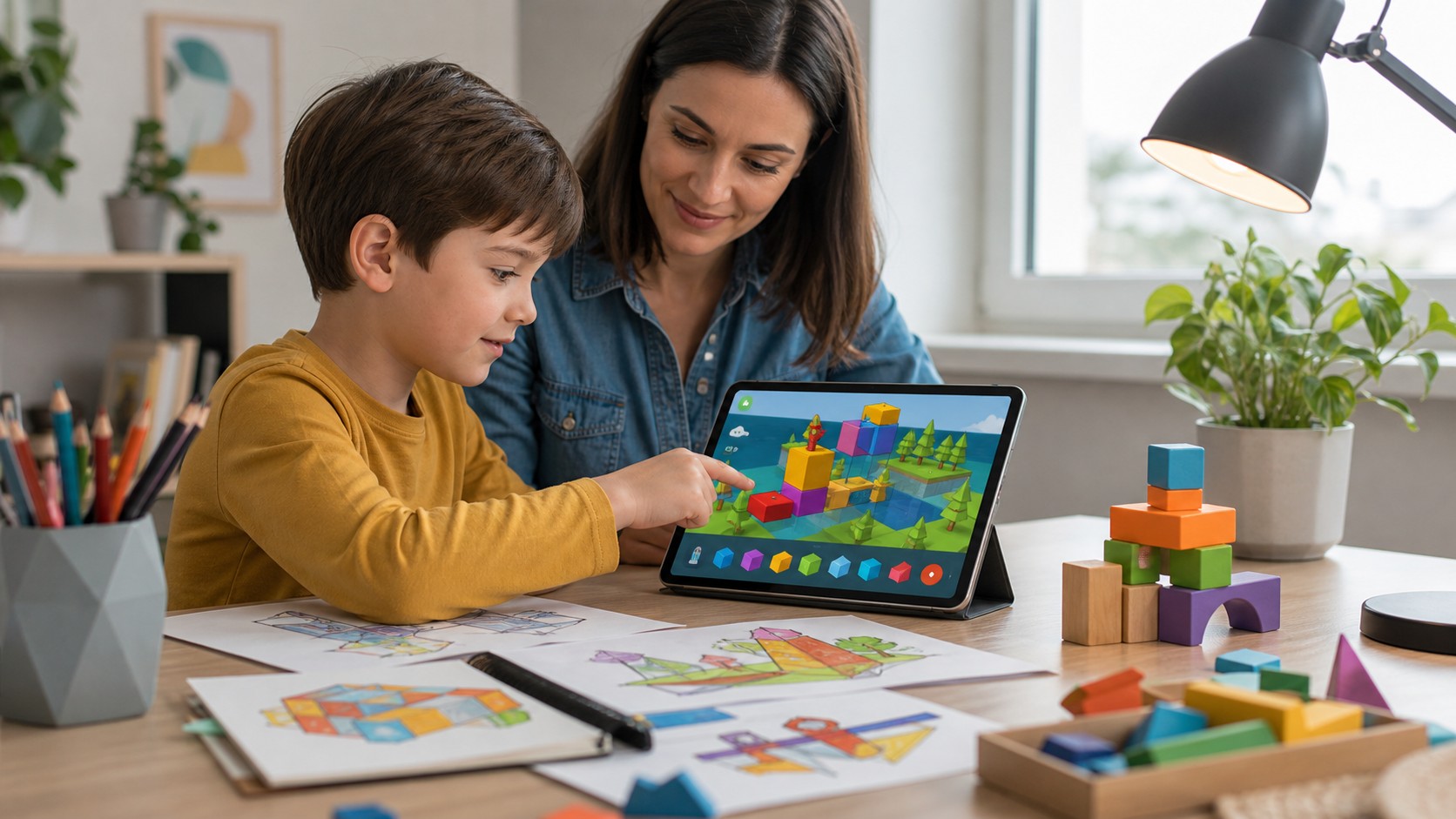
Some of the strongest educational games are puzzle systems. They ask children to plan moves, test a hypothesis, sequence steps, or find a pattern. The learning may be math, coding, spatial reasoning, language, or science, but the deeper skill is problem solving. Children practice staying with a challenge long enough to understand it.
Problem-solving games are useful because they reveal thinking. A child can explain why one path failed, why a tool should move earlier, or why a pattern changes later. Adults can listen for that reasoning. When children can describe their strategy, the game has moved beyond simple screen entertainment.
Subject Matter Should Be Accurate and Age-Fit
An educational game should handle its subject carefully. A science game should not teach misleading facts, a history game should avoid oversimplified stereotypes, and a reading game should match the child’s actual skill level. Accuracy and age fit matter because children may trust what a game presents. Fun design does not excuse weak content.
Parents do not need to become experts in every topic before choosing a game, but they can preview examples, reviews, and the first few levels. Look for clear explanations, sensible progression, and content that matches what the child is ready to practice. A game that is too easy becomes empty, while one that is too hard becomes frustrating.
Motivation Should Come From Mastery
Many games use points, badges, streaks, and rewards to keep children playing. Those tools can be useful, but they should not replace the satisfaction of understanding. The best educational games make mastery itself rewarding. A child feels progress because they can solve a harder puzzle, read a longer passage, or use a concept more confidently.
When rewards become too loud, children may chase the badge instead of the learning. This can make the game feel exciting while the skill remains shallow. Parents should notice whether the child talks about what they learned or only about what they unlocked. That difference matters.
Adaptive Difficulty Can Help
Educational video games can improve learning when they adjust difficulty thoughtfully. If a child is struggling, the game can offer more support, a smaller step, or extra practice. If a child is ready, it can introduce a harder challenge. This kind of adaptation can keep the child in a productive zone.
Adaptive systems are not perfect, and they should not replace adult attention. A child may still need encouragement, explanation, or a break. But when adaptation is well designed, it can prevent boredom and frustration. The game becomes more responsive to the learner.
Transfer Beyond the Screen Is the Real Test
A learning game is strongest when children can use the skill beyond the game. A math game should support real number sense, not only quick tapping. A coding game should help children think about sequence and logic outside one app. A reading game should strengthen actual reading, not only in-game guessing.
Parents can look for transfer by asking children to explain or apply what they practiced. Can they use the strategy with blocks, paper, a book, or a real problem? If the learning remains trapped inside the game, its value may be limited. If it travels, the game is doing more meaningful work.
Time Limits Still Matter
Even a good educational game needs boundaries. Children can become tired, overstimulated, or overly focused on progress systems. Learning is not improved simply by extending screen time indefinitely. Short, purposeful sessions often work better than long sessions that end in frustration.
A healthy routine might include a clear goal, a stopping point, and a transition to another activity. The child can finish a level, explain what they practiced, and then move to reading, drawing, outdoor play, or homework. Boundaries help the game remain a tool rather than taking over the day.
Choosing Games That Actually Teach
Before choosing an educational game, look for active thinking, useful feedback, age-fit content, meaningful practice, and a path from easy to harder skills. Avoid games that rely mainly on ads, pressure timers, random rewards, or purchases that interrupt learning. A good educational game should respect the child’s attention.
The best test is the conversation after play. If a child can explain what they solved, what changed, what was difficult, or how they improved, the game likely supported learning. If the child only remembers prizes and animations, the educational value may be thinner than the packaging suggests.
A Learning Game Should Require Thinking, Not Just Compliance
Some educational games ask children to follow prompts quickly without much thought. A stronger game asks them to compare, predict, sequence, classify, build, read, calculate, or explain. The difference is important. Learning improves when the child is mentally active, not just obedient to the next flashing instruction.
Parents can often spot this by listening. A child who is thinking will talk about strategies, patterns, mistakes, or discoveries. A child who is only complying may talk mostly about points, streaks, and prizes. The conversation after play can reveal whether the game supported real learning.
Good Educational Games Make Concepts Concrete
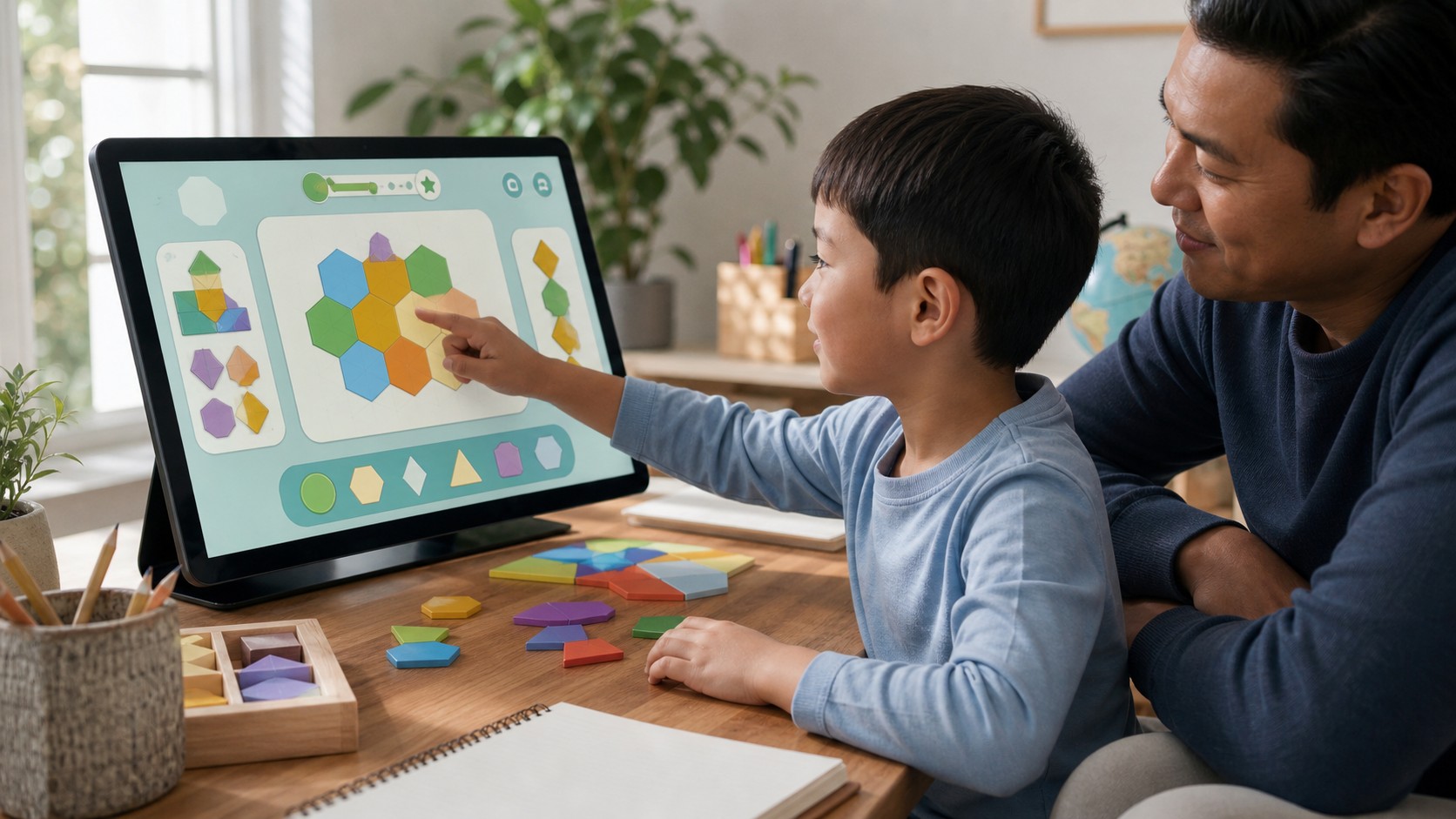
Digital games can improve learning when they make abstract concepts easier to see. Fractions can become pieces that combine, coding can become blocks that run in order, and science systems can respond to variables. A child can manipulate the idea instead of only hearing about it.
Concrete models are helpful because they give children something to test. If a number changes, the model changes. If the code order changes, the result changes. The child can connect concept and outcome. That connection is often where understanding begins to deepen.
The Best Practice Feels Purposeful
Practice is valuable, but children need to understand why they are practicing. A math game that simply throws endless problems may become exhausting. A better game uses practice to solve a puzzle, build progress, unlock a meaningful challenge, or apply a skill in context. The practice has a job.
Purposeful practice can keep children engaged without relying only on rewards. They feel that the skill helps them do something. This is very different from drilling for its own sake. When practice has context, children are more likely to remember and transfer what they learn.
Educational Games Should Encourage Explanation
A game improves learning more when children can explain what they did. Explanation shows that the child is organizing the concept, not just guessing. They might describe why a solution worked, what clue mattered, or how they changed a strategy after feedback. That language is evidence of thinking.
Adults can support explanation with short, respectful questions. What did the game ask you to figure out? What changed after your first try? How did you know that answer made sense? These questions do not need to become a lesson. They simply help the child make learning conscious.
The Best Games Fit Into a Broader Learning Routine
Educational video games work best when they are one part of a learning routine, not the whole routine. A reading game can support phonics practice, but children still need books. A math game can support number sense, but children still benefit from real objects, drawings, and conversation. The game should strengthen learning beyond itself.
This broader routine also helps with balance. A short, focused session can be useful, especially when followed by offline practice or discussion. Long sessions may create fatigue even when the content is good. The goal is purposeful learning, not simply more screen time under an educational label.
A helpful routine might end with a child showing one idea from the game in another form. They might write a sentence, solve a similar problem on paper, read a related page, or build a small model. That transfer step keeps the game connected to real learning.
Educational Games Should Show Growth Over Time
A strong educational game helps children see that they are improving. The progress might appear through harder puzzles, more fluent reading, faster recall, clearer explanations, or fewer hints. Growth should feel connected to skill, not only to collecting points. Children need to know what they can do better than before.
This kind of progress can build motivation when it is handled carefully. A child who sees improvement may be more willing to keep practicing. But the game should not turn growth into pressure or shame. The best learning games make progress visible while still keeping the experience humane.
Parents Should Listen for Transfer
The real test of an educational game is whether learning travels beyond the screen. A child might use a math strategy with coins, recognize a phonics pattern in a book, or explain a coding sequence with toy figures. Transfer shows that the child understands more than the game’s interface.
Parents can encourage transfer gently. Ask the child to show the idea with paper, blocks, a book, or a real-world example. If the child can use the skill in another setting, the game has done something meaningful. If the skill stays trapped inside the app, the educational value may be limited, even when the game looks polished.