Farm Playsets Give Children a Working Story World
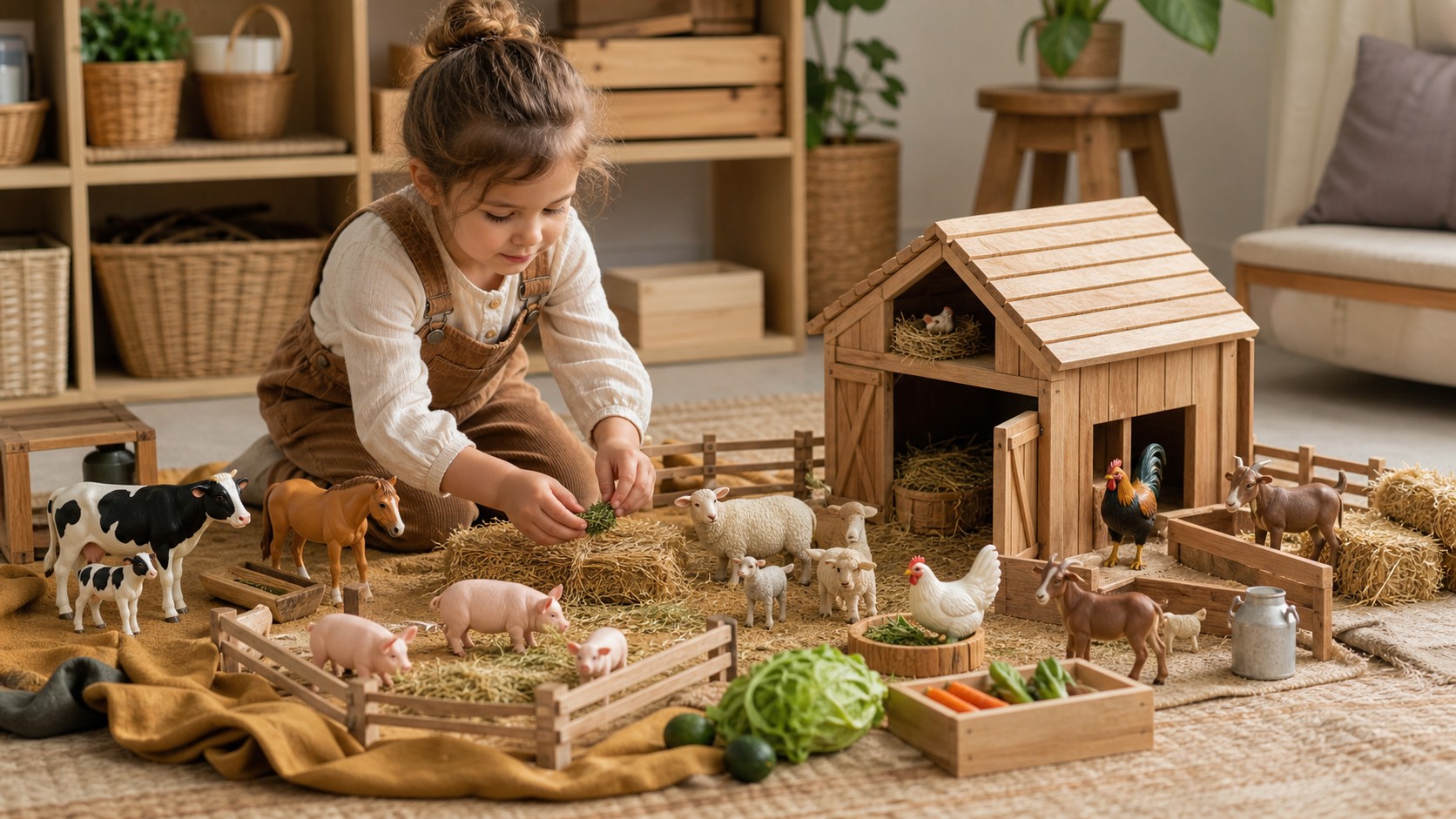
Farm animal playsets are especially good at sparking creative storytelling because they give children a world that already feels busy. A barnyard has animals to feed, gates to close, weather to watch, babies to protect, and routines that begin again every morning. Children do not have to invent a complicated plot before play can start. They can step into the rhythm of farm life, then change it with one loose fence, one missing lamb, or one storm rolling toward the barn.
A Barnyard Gives the Story a Natural Rhythm
The strongest farm play usually begins with ordinary chores, and that is part of why it works so well. Children can open the barn, move animals to pasture, carry pretend feed, check water, and bring everyone back before night. Each small action gives the story a next step, so the child is not just moving figures around without purpose. The routine acts like a quiet plot engine, helping even young children understand that one event leads to another.
That rhythm also makes farm play easy to repeat without becoming stale. A child may play morning chores many times, but each version can change because the animals behave differently or the weather shifts. One day the chickens refuse to stay in their pen, and another day the horse needs extra care before the wagon can leave. Repetition becomes practice, and variation turns practice into storytelling.
Farm Animals Quickly Become a Cast of Characters
A good farm set works best when the animals feel different from one another in the child’s mind. The goat may become the climber, the pig the messy troublemaker, the horse the steady helper, and the calf the curious one who wanders too far. These personalities do not need to come from the manufacturer or a screen. Children create them through repeated scenes, and those repeated choices give the play emotional texture.
Once animals have personalities, children begin building relationships. The sheepdog watches the gate because the lamb is nervous. The cow stays near the calf because the pasture is loud. The chicken group scatters when the wagon rolls past, while the barn cat ignores the whole commotion. This character work is what turns a simple animal set into a rich pretend community.
Structures Create Problems Worth Solving
Barns, fences, stalls, gates, carts, troughs, and little paths matter because they make the farm world work. A fence can keep animals safe, divide pastures, create a show ring, or become the broken piece that starts the afternoon’s story. A barn can be a shelter, a storage place, a winter refuge, or a busy meeting spot before market day. These structures give children useful limits, and limits often make pretend play stronger.
The best farm structures are sturdy and open enough for real hands. A beautifully detailed barn is less useful if children cannot reach inside or rearrange the space. Moveable fences and simple doors usually create more play than fragile decorative parts. When children can change the layout, they can change the story without needing a new toy.
Farm Stories Build Responsibility Without Pressure
Farm play lets children practice responsibility in a pretend world where mistakes are safe. They can decide who needs food first, which animal should be moved away from the storm, and how to help a baby animal that is cold or lost. The child gets to make caring decisions, but no real animal depends on the outcome. That balance makes the play emotionally meaningful without becoming heavy.
This kind of responsibility often appears in small details. A child may tuck a lamb into a stall, check whether the gate is closed, or give the tired horse a rest before the next trip. Adults do not need to turn those moments into lessons. Noticing the care is enough, because the child is already practicing attention, planning, and concern.
Seasonal Changes Keep the Same Set Interesting
Farm play can shift naturally with the seasons, which helps the same set feel new over time. Spring stories can focus on baby animals, mud, repairs, and new growth. Summer stories may bring long days, water checks, and busy fields. Autumn can become harvest, market, and hay storage, while winter brings shelter, warmth, and careful feeding.
Simple household materials can suggest those changes without requiring a new playset. Cotton can become snow, yellow blocks can become hay, a green towel can become pasture, and blue fabric can become a pond after heavy rain. Children understand symbolic scenery quickly when they are allowed to help create it. The farm becomes a flexible world rather than a fixed display.
Farm Play Strengthens Language
A farm scene gives children many practical reasons to talk. They may call animals by name, warn that a gate is open, explain why the horse cannot leave yet, or ask another player to bring the feed bucket. The language comes from the needs of the story, which makes it more natural than a vocabulary drill. Children practice action words, position words, care words, and sequence words while staying inside the play.
Adults can support that language by asking open questions that invite more story. Instead of asking a child to name every animal, ask what the animals need before the storm comes or why the wagon is leaving so early. Those questions encourage explanation, prediction, and problem solving. The adult becomes a listener who helps the child build a fuller scene.
Sorting and Matching Happen Inside the Story
Farm play often includes early sorting, but it does not feel like a worksheet. Children place cows with calves, chickens near coops, horses in fields, and ducks near water because the story makes those choices useful. They compare size, type, movement, and need while deciding where everyone belongs. The thinking is real, even though it arrives through pretend work.
Matching can also become more flexible as children grow. A younger child may simply group animals by kind, while an older child may sort by who eats hay, who needs shelter, who can pull a cart, or who belongs in the night barn. The same figures support deeper classification over time. That is one reason farm sets can last through several developmental stages.
Good Farm Sets Leave Room for Handmade Additions
A farm playset becomes more powerful when children can add to it with ordinary materials. A cardboard box can become a feed store, a folded towel can become a muddy lane, and a block tower can become a hay stack that has to be loaded carefully. Handmade additions matter because the child is not only playing with a world. The child is building the world.
This is also where creative storytelling often becomes most personal. A child may create a farm stand because they visited a market, a storm shelter because they heard thunder, or a vet corner because a pet had a checkup. The farm absorbs real experiences and gives the child a safe place to reshape them. That is much richer than a toy that only performs one scripted action.
Choosing a Farm Set That Will Actually Be Used
The most useful farm sets are not always the largest ones. Children need animals they can identify, structures they can reach, fences they can move, and enough open space to invent problems. A crowded set with tiny pieces may look impressive in the box but become frustrating on the floor. A smaller, sturdier set can create longer play if every piece has a purpose.
Before choosing a farm set, think about the child’s usual play style. A child who loves care routines may need baby animals, feeding pieces, and a simple barn. A child who loves movement may need a wagon, open pastures, and animals that can travel. A child who loves building may enjoy fences and loose scenery more than sound buttons. The best set matches the child, not just the product photo.
Why Farm Play Still Matters
Farm animal playsets remain useful because they combine care, routine, movement, language, and imagination in one approachable world. Children can be gentle, silly, busy, responsible, worried, proud, and inventive within the same scene. The farm has enough structure to guide them and enough openness to let their own ideas take over. That combination is exactly what strong pretend play needs.
The lasting value is not that children learn every fact about farm life. The value is that they practice building a world where living things have needs and choices have consequences. When the barnyard is open enough for children to revise, repair, and return, creative storytelling has room to grow.
A Farm Set Can Support Many Kinds of Children
Farm play does not belong to only one personality type. A quiet child may spend a long time arranging stalls, matching animals, and making sure every creature has a place to sleep. A more active child may drive the wagon across the room, chase the escaped goat, or build a storm rescue with blocks and blankets. The same set can welcome both styles when the pieces are sturdy and open-ended.
That flexibility is helpful in families with siblings or visiting friends. One child can build the pasture while another decides what went wrong with the gate, and a third can care for the baby animals. The farm world has enough jobs for several players, which makes it easier for children to join without taking over the whole story.
Farm Play Makes Everyday Work Feel Meaningful
Children are often fascinated by adult work because it looks purposeful. Farm play gives them a version of work they can understand and control. Feeding animals, hauling pretend hay, checking fences, and closing the barn are not random tasks inside the story. They are jobs that help the little world keep running.
This matters because children gain confidence when their pretend choices seem useful. The child is not only pretending to be busy; the child is solving visible needs. When the animals are safe, fed, and settled, the child can feel the satisfaction of having completed something important inside the play.
The Best Farm Stories Leave Space for Surprise
A farm set should have enough routine to guide the child and enough openness to allow surprises. If every scene is already decided by sounds, buttons, or fixed pieces, the child has less reason to invent. If the set is too empty, the child may not know where to begin. The best farm toys sit between those extremes.
Surprise can be very simple. The cow refuses to leave the barn, the market wagon arrives early, the rain starts before the hay is stacked, or the ducks choose the wrong pond. Small twists like these give children a reason to explain, repair, and continue. That is where storytelling becomes richer.
Animal Care Can Become a Child’s First Planning System
Farm play asks children to think ahead in a concrete way. If the animals are going outside, the gate needs to open, the water has to move, and the smallest animals may need a safer place. Those decisions help children practice planning without making the activity feel academic. The farm gives the plan a visible purpose.
This kind of planning is especially useful because children can revise it immediately. If the sheep escape, the fence changes. If the barn is crowded, a new stall appears. The child learns that plans can be adjusted instead of abandoned, which is a valuable lesson inside and outside pretend play.