Choosing Animal Toys That Feed Real Curiosity
The best animal toys for kids who love wildlife and nature do more than look cute on a shelf. They invite children to observe, compare, sort, care, build habitats, and ask questions about the living world. A strong animal toy collection can become a child’s first nature lab, storytelling kit, and care practice space all at once.
Realistic Details Encourage Observation
Children who love animals often notice details adults overlook. They may study claws, tails, shells, beaks, hooves, stripes, or the way an animal stands. Realistic animal figures reward that attention because they give children something specific to compare and discuss.
A toy does not need to be scientifically perfect to be useful, but it should offer enough detail to spark questions. Why does this animal have a long neck? Why are these feet shaped differently? Why does one animal have horns and another have wings? Questions like these can lead to deeper learning.
Observation is the beginning of nature knowledge. When children look closely at toy animals, they practice the same habit they will use outdoors: noticing differences, wondering about purpose, and connecting features to behavior.
Different Types of Animal Toys Serve Different Needs
Hard animal figures are excellent for habitat play, sorting, and storytelling. They can stand in a barn, hide in a cave, gather near water, or move across a block-built mountain. These toys support world-building because children can place and compare them easily.
Soft animals serve a different purpose. A plush fox, bear, turtle, or dog may become a comfort object, bedtime friend, or patient in a care scene. Soft animals can help children connect emotionally with wildlife themes, especially when they are younger or more nurturing in their play.
Puzzles, life-cycle sets, bath animals, and animal matching games add still more possibilities. The best collection does not need every type, but a thoughtful mix can support observation, comfort, problem solving, and pretend care.
Habitats Make Animal Toys More Meaningful
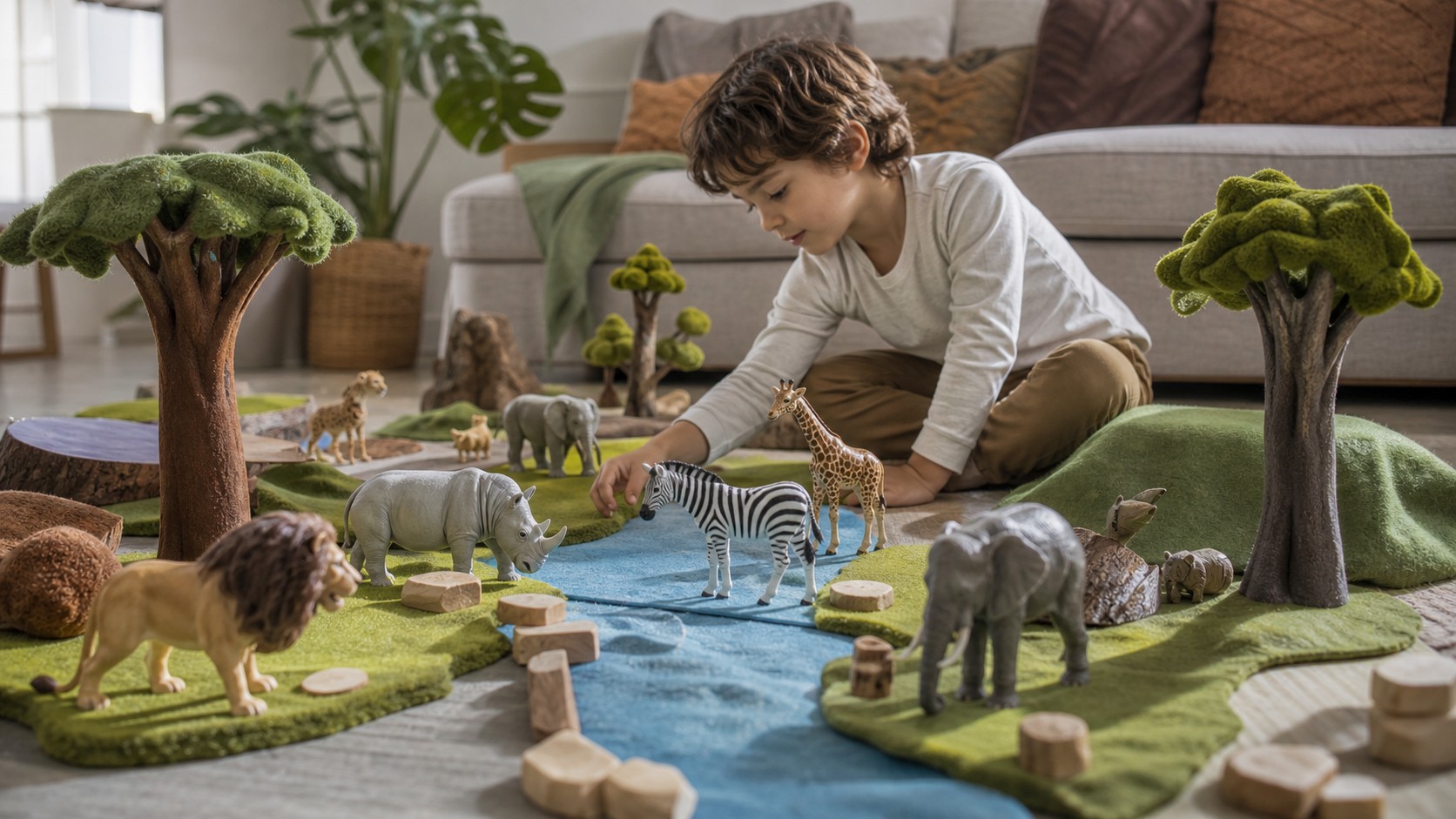
Animal toys become richer when children can build places for them. A pond, cave, tree, burrow, nest, barn, reef, or field gives the animal a reason to be somewhere. Without habitat, figures can become a pile. With habitat, they become part of a system.
Habitat play helps children think about needs. They begin asking where an animal sleeps, what it eats, who it travels with, and how it stays safe. These questions are more valuable than simply memorizing animal names.
Families do not need expensive scenery to create habitats. Fabric, bowls, blocks, stones, trays, and cardboard can become landscapes. Loose materials often work better because children can rebuild them as their ideas change.
Care Props Build Respect for Living Things
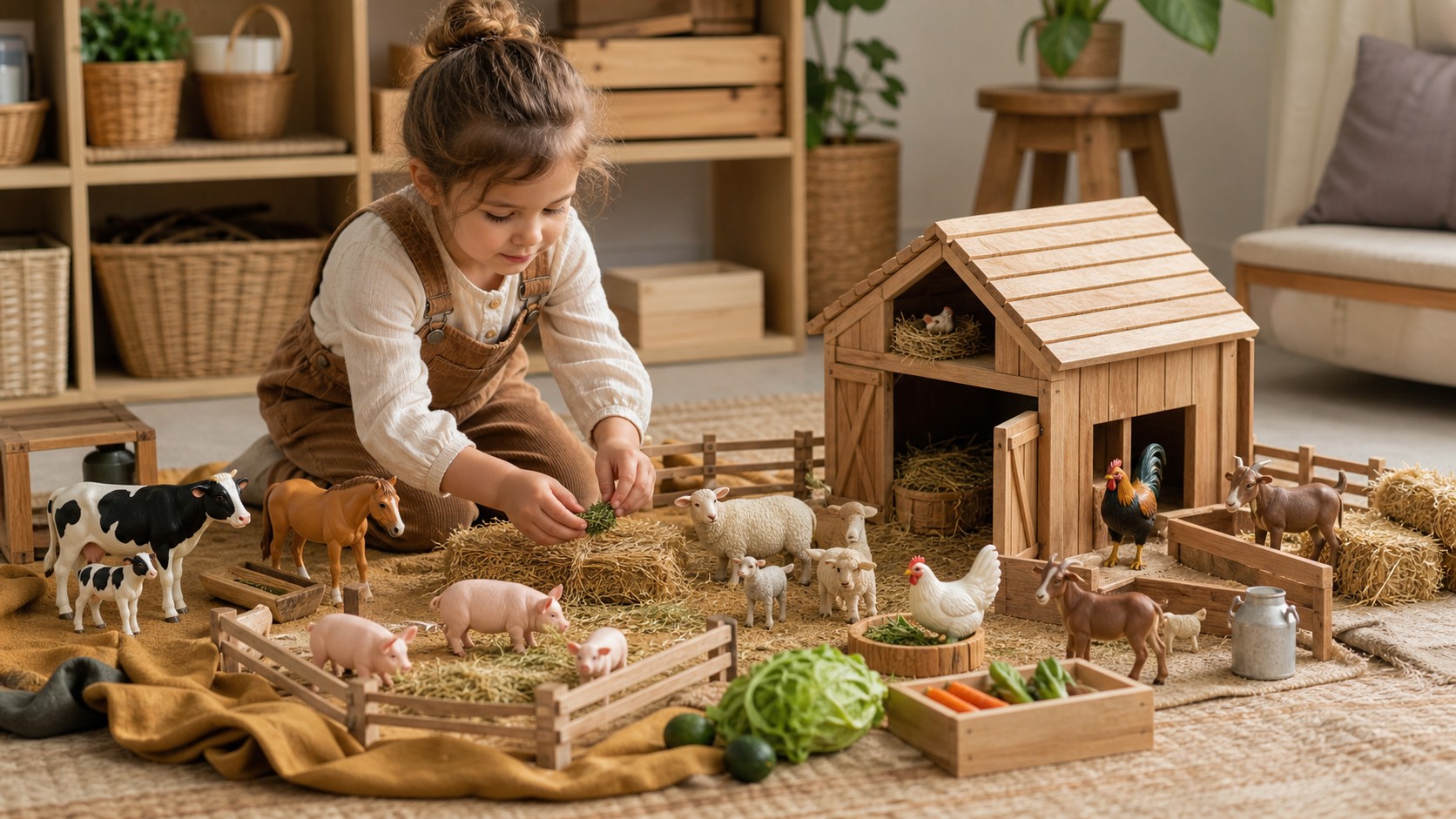
Many animal-loving children want to help the creatures in their stories. Care props such as bowls, blankets, carriers, brushes, and pretend bandages give that instinct a form. The child can feed, comfort, rescue, examine, and release animals through play.
Care play teaches that animals have needs. A turtle needs water, a horse needs space, a bird needs gentle handling, and a lost baby animal needs a safe path back. The child begins to think beyond ownership and toward responsibility.
Adults can support this by asking what kind of help is respectful. Should the animal be kept, observed, treated, or returned? That question helps children understand the difference between caring for animals and controlling them.
Observation Tools Can Extend the Play
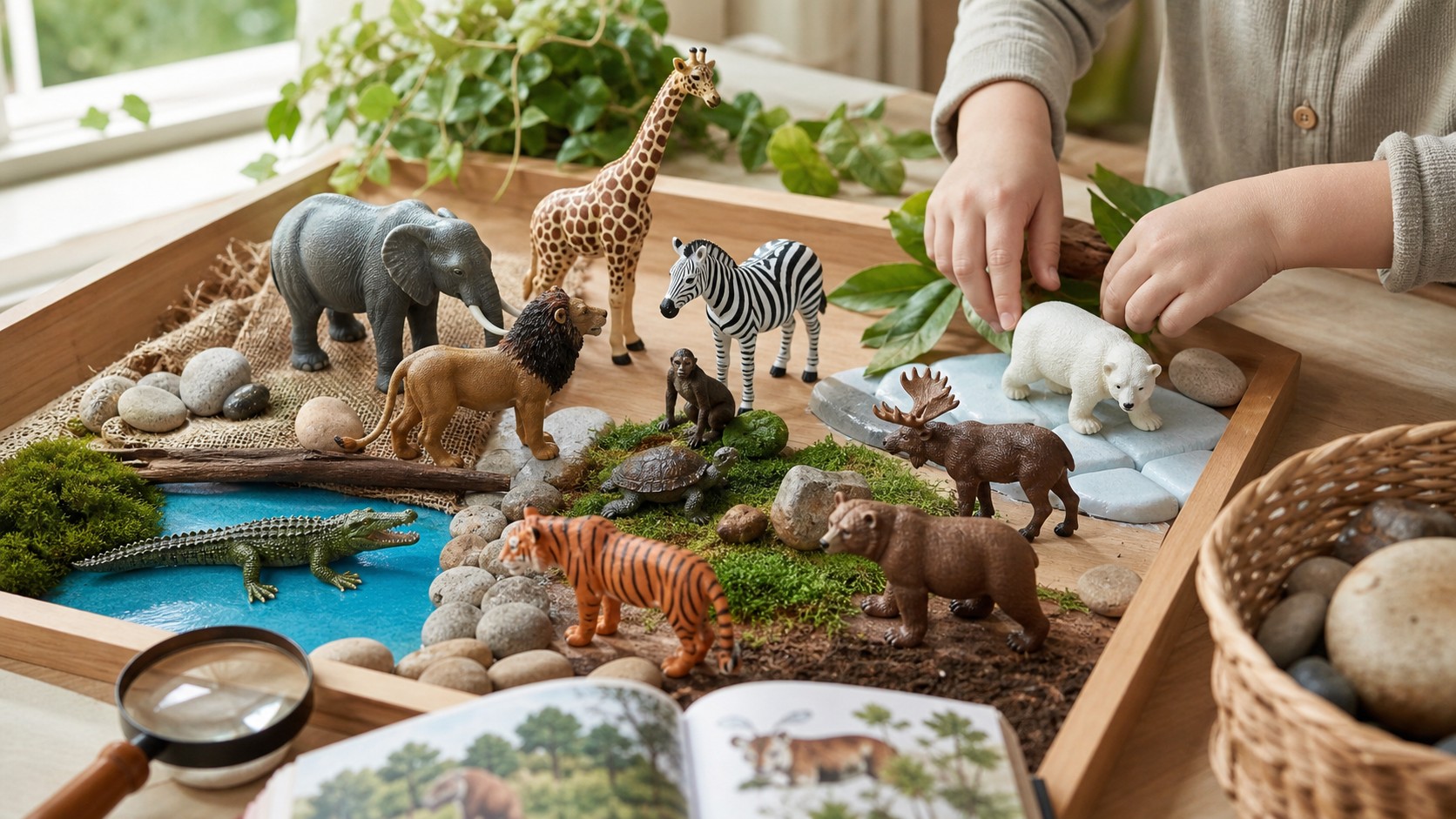
Magnifying glasses, toy binoculars, bug viewers, and blank field notebooks can make animal play feel like exploration. These tools encourage children to slow down and look more carefully, whether they are studying a toy beetle or watching birds outside.
The tools should stay playful. A magnifier should invite curiosity, not pressure children to produce correct answers. A blank notebook can hold drawings, pretend tracks, habitat maps, or questions to look up later.
When observation tools are paired with animal toys, children often bridge indoor and outdoor learning. They may inspect a toy frog and then look for damp places outside, or sort toy birds and then listen near a window for real calls.
A Smaller Collection Can Be Better
It is easy for animal toys to multiply. A large bin may look impressive, but too many figures can make play less focused. Children may dump everything out and then lose interest because there is no clear starting point.
A smaller, more varied collection often works better. Include animals with different body types, habitats, sizes, and roles. One local animal, one water animal, one bird, one small creature, one dramatic wild animal, and one soft comfort animal can create a strong beginning.
As children ask new questions, add pieces that answer those questions. If they wonder where animals sleep, add shelters. If they care about babies, add family groups. If they love movement, add animals that fly, swim, climb, and burrow.
Connecting Animal Toys to the Real World
Animal toys can become a bridge to real nature experiences. After playing with birds, a child may become more interested in listening outside. After building a turtle habitat, the child may notice ponds and rocks differently. After sorting insects, garden life may become more interesting.
Parents can encourage this connection gently. Ask whether anything outside reminds the child of an animal from the play shelf. Read a book that matches a favorite figure. Look up one question after the play ends. These small connections keep curiosity alive.
The goal is not to turn every animal scene into a lesson. The goal is to let play and real-world noticing feed each other. A child plays, observes, asks, learns, and returns to play with richer ideas.
What Makes an Animal Toy Worth Keeping
A worthwhile animal toy is one a child returns to with new questions or stories. It may be used for sorting one day, rescue play the next, and habitat building after that. Toys with several possible uses tend to last longer than toys that only do one thing.
Durability also matters. Animal toys often travel across floors, tables, rugs, bath areas, and sometimes patios or porches. They should be safe, washable, and sturdy enough for repeated handling.
Most of all, the toy should keep wonder active. A good animal toy helps a child love the creature, care about its needs, compare it with others, and imagine its place in the world. That combination is what makes wildlife play meaningful.
How to Build a Better Animal Toy Shelf
A useful animal toy shelf should be easy for children to understand. Instead of one crowded bin, consider smaller groups by habitat or theme. Woodland animals can sit with fabric trees and stones. Ocean animals can sit with blue cloth and shells. Farm animals can sit with fences and feeding props.
This organization helps children begin play with a plan. They can choose a habitat, gather the animals that belong there, and build a scene without digging through everything. Clear choices often lead to longer, calmer play.
A shelf can also include a few open-ended materials. Blocks, cloth, bowls, trays, and small boxes make the animal collection more flexible. These pieces allow children to build rather than simply arrange.
Choosing Toys for a Child’s Favorite Animal
Many children begin with one favorite animal. That focus can be a doorway into broader curiosity. A child who loves wolves may become interested in forests, tracks, packs, prey animals, dens, and nighttime behavior. A child who loves sea turtles may become curious about beaches, eggs, currents, shells, and ocean safety.
Instead of trying to replace the favorite, build around it. Add one related habitat piece, one animal that shares the environment, and one prop that supports care or observation. The child’s favorite remains central while the play becomes richer.
This approach respects the child’s attachment. Children often learn more when adults take their specific interest seriously rather than pushing them toward a general collection too quickly.
Using Books and Outdoor Experiences
Animal toys become more meaningful when they connect with books and real-world experiences. After reading about owls, a child may create a nighttime forest. After seeing ducks at a pond, they may build a water scene at home. After visiting a farm, the barn animals may return to the center of play.
These connections do not need to be formal lessons. A simple comment can be enough: That toy heron reminds me of the bird we saw near the water. The child may take the idea from there.
When toys, books, and outdoor noticing reinforce each other, children begin to see nature as something connected rather than separate. The toy shelf becomes part of a larger pattern of curiosity.
What Parents Should Avoid
The biggest mistake is buying too many similar animals at once. A large set can look exciting, but if the figures do not differ much, children may not have enough story material. Variety matters more than quantity.
Another mistake is correcting every imaginative choice. If a child puts a polar animal in a jungle, use the moment gently. Ask what the animal needs there, or wonder how it arrived. Accuracy can grow without crushing the story.
Finally, avoid turning every animal toy into a collectible that cannot be touched. Children who love wildlife need to handle, move, sort, and care for their animals. Play is how curiosity becomes active.
Matching Animal Toys to Age and Play Style
Younger children usually need animal toys that are sturdy, washable, and easy to name. They may enjoy lining animals up, making sounds, feeding them, or moving them between simple homes. At this stage, the best toys are clear, safe, and forgiving. A child should be able to hold the animal, drop it, carry it, and return to it without a complicated setup.
Older children may want more detail, more accuracy, and more story range. They might compare species, build food chains, create rescue centers, or design habitats with rules. For these children, a smaller number of better-detailed animals can be more useful than a huge bag of look-alike figures.
Play style matters too. A child who loves comfort may connect deeply with plush animals and care props. A builder may prefer figures that fit into block landscapes. A question-asker may enjoy life-cycle sets, tracks, field tools, and books that answer what the toys make them wonder.
Why Quality Beats Quantity
Animal toys often become long-term favorites when they feel good in the hand and can survive many kinds of play. A sturdy fox, whale, horse, frog, or elephant can move through years of stories if it is easy to clean and strong enough for repeated handling.
Quality also affects how children treat the toy. When an animal has recognizable features and enough weight to stand well, it invites more careful observation. Children are more likely to build a habitat, invent a behavior, or compare it with another creature.
That does not mean every animal toy has to be expensive. It means each one should earn its space. A smaller collection of animals that children recognize, use, and return to will usually teach more than a crowded bin that is forgotten after the first dump.