Outdoor Adventure Toys Should Give Movement a Purpose
The best outdoor toys for kids who love adventure and active play do more than help children burn energy. They turn ordinary space into a place where children can test balance, invent routes, solve problems, carry out missions, and decide how brave they feel today. A yard, driveway, park, or patch of grass can become a base camp, river crossing, rescue path, training course, or observation station. Good outdoor toys give movement a reason, and that reason keeps children returning.
Adventure Play Begins With Adjustable Challenge
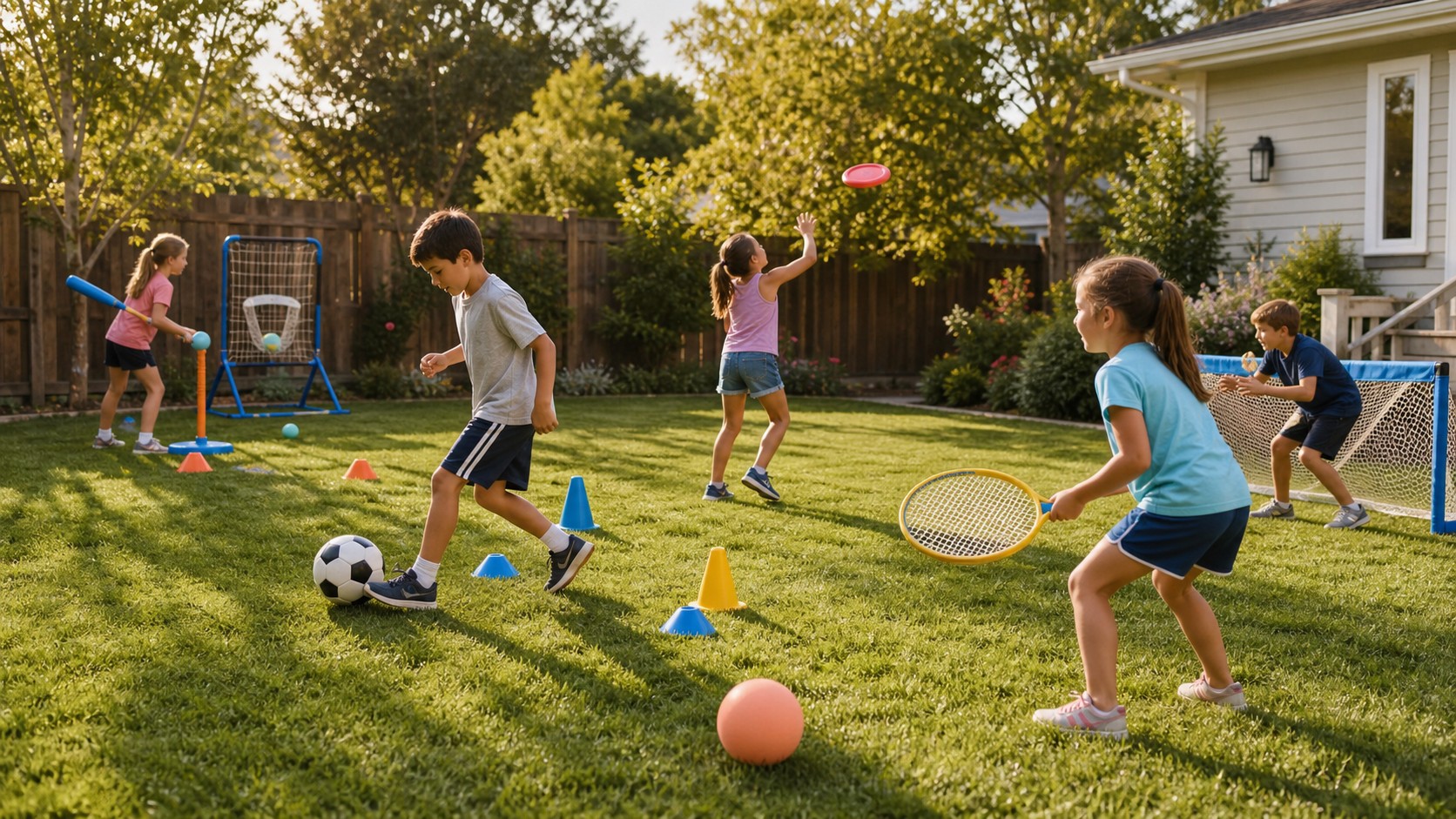
Active children need toys that can become easier or harder without losing their appeal. A stepping path can start close together, then spread farther apart as confidence grows. A tossing target can move closer for a younger child and farther away for a child who wants a harder round. A cone route can be walked, skipped, crawled, timed, or turned into a pretend supply trail.
That adjustability matters because courage is not fixed. The same child may want a daring challenge one afternoon and a calmer version the next morning. Outdoor toys last longer when they can meet both moods. Instead of forcing children into one level of risk, they let children choose the next small stretch.
Balance Toys Help Children Read Their Own Bodies
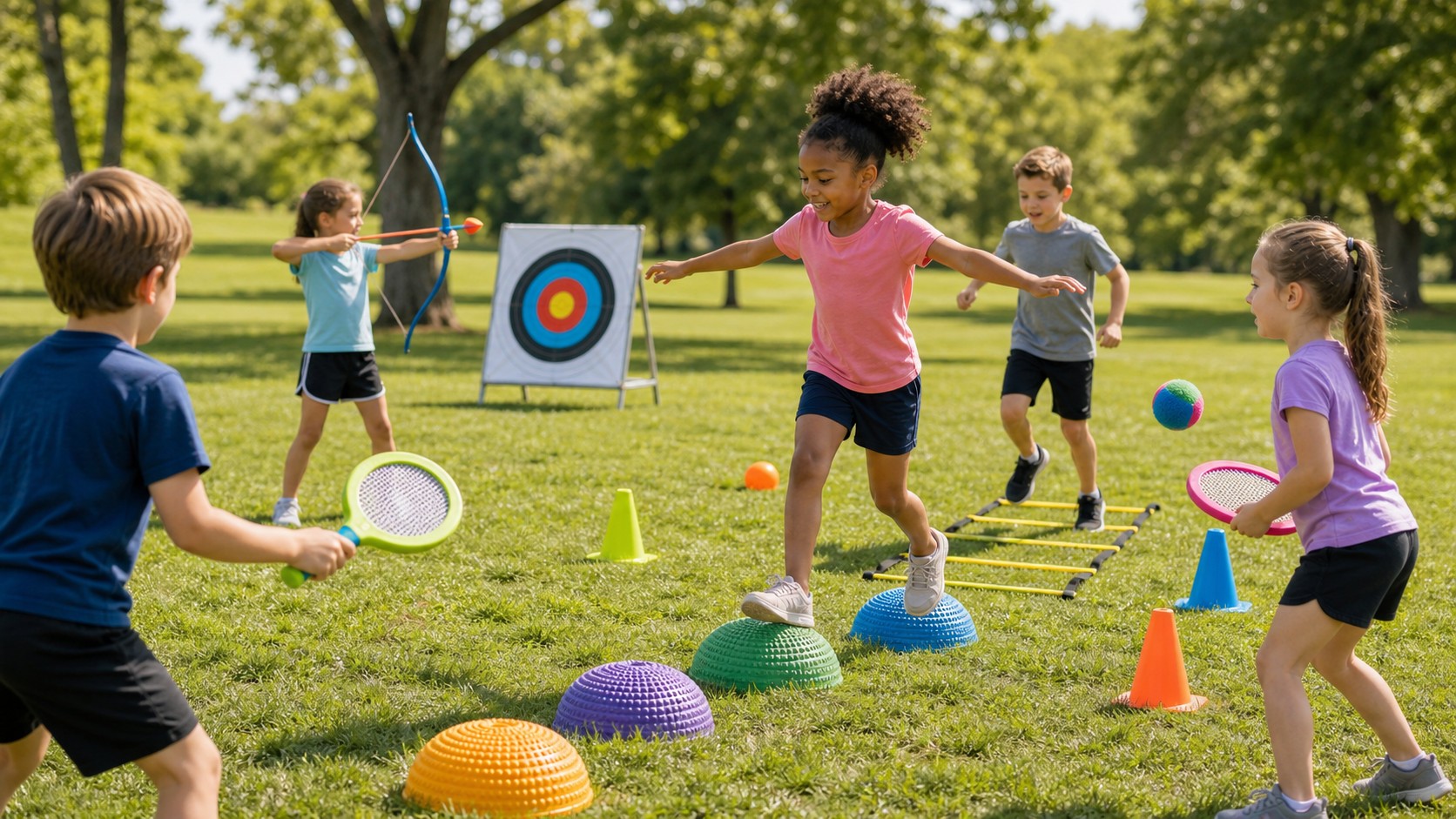
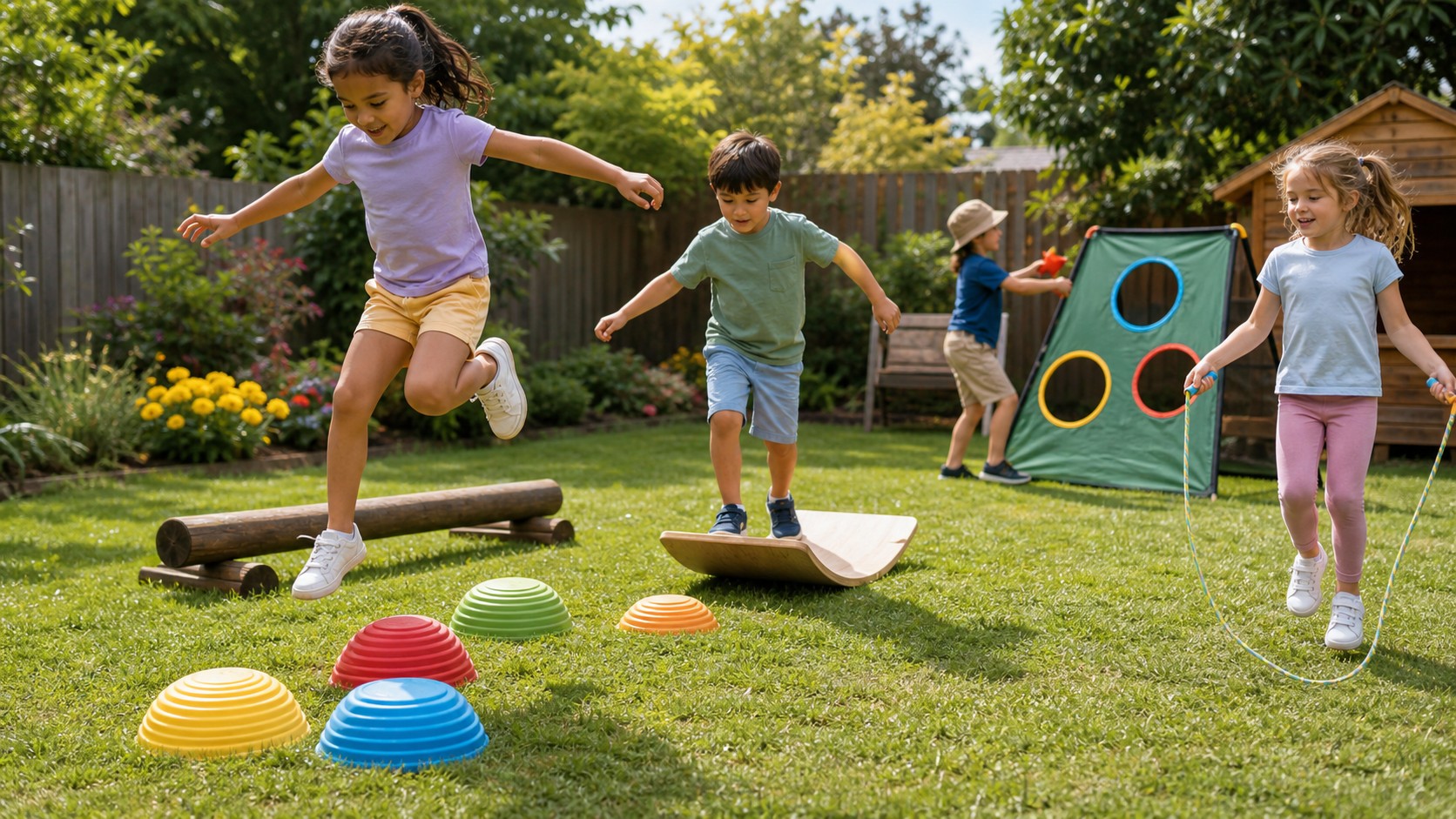
Balance pods, stepping stones, low beams, wobble boards, and sturdy path markers give children a manageable way to practice body awareness. They learn how it feels to shift weight, pause before stepping, recover from a wobble, and try again after slipping off. The toy creates a small challenge that can be repeated without shame. Each attempt gives the child more information about how their body moves.
For very active children, balance play can be especially useful because it slows the pace without making play feel inactive. The child is still working, but the work is controlled and focused. They discover that strength is not only speed or volume. Sometimes it is the ability to stay steady when the path becomes tricky.
Routes Turn Small Spaces Into Big Adventures
Cones, hoops, ropes, flags, chalk, and flat markers can make a small yard feel much larger. Once a space has a starting line, a crossing, a turn, a rest point, and a finish, children begin moving through it with intention. They are no longer just running back and forth. They are completing a route, remembering steps, and deciding how the next version should change.
Routes also help children play together because they create visible jobs. One child can build the course, another can test it, another can reset markers, and another can invent the mission. The path becomes a shared problem to solve. This kind of play can include different ages because the same route can be walked, raced, shortened, or made more complex.
Pretend Gear Adds a Story to the Movement
Explorer vests, buckets, toy binoculars, backpacks, blank maps, flashlights, and simple field bags give active play a role. A child carrying a bucket is not just running; they are delivering supplies to base camp. A child holding binoculars is not just standing still; they are watching for the next clue. Pretend gear gives children a reason to move, stop, inspect, and move again.
The strongest pretend gear stays flexible. A bag can become a rescue kit, nature pack, delivery satchel, or treasure pouch. A bucket can carry pinecones, pretend tools, chalk pieces, or mission markers. When props can change meaning, children stay in charge of the adventure instead of following a script built into the toy.
Aim Toys Add Focus to Active Play
Soft targets, beanbags, foam balls, ring toss sets, and fabric landing zones are useful because they ask children to slow down before acting. They have to notice distance, choose force, adjust angle, and try again after a miss. For children who love movement, this kind of focused challenge can be a healthy contrast to nonstop running. The body is active, but the mind is measuring.
Aim toys also make outdoor play more inclusive. A child who does not enjoy racing may enjoy target play because success depends on control rather than speed. Younger children can stand closer, older children can move back, and everyone can work toward a shared score. The same toy can support quiet concentration or lively group play depending on the setup.
Exploration Toys Encourage Noticing
Adventure does not always have to mean fast movement. Magnifiers, nature buckets, chalk maps, viewers, and observation stations encourage children to slow down and look at the outdoor world more carefully. They may inspect leaves, stones, shadows, insects, puddles, or tracks across the driveway. This kind of noticing gives outdoor play depth.
For active children, those pauses are valuable because they create a rhythm of movement and attention. The child runs to the lookout, stops to observe, carries a discovery back, then redesigns the route. The outdoor space becomes something to read, not just something to cross. That makes the adventure feel more connected to the real world.
Safety Works Best When It Supports the Game
Outdoor toys should make challenge visible rather than hiding it. Soft equipment near houses, low obstacles, bright markers, and clear landing areas help children understand where the risks are. Adults can supervise without interrupting every move because the play area makes sense. Children also learn to judge distance, speed, and effort more clearly.
The goal is not to remove every challenge. Children need practice with manageable risk if they are going to build confidence and judgment. A good setup includes water, shade, reset space, and a way to make the challenge smaller when needed. Safety becomes part of the play design instead of a constant warning from the sidelines.
Portable Toys Make Adventure Easier to Repeat
Some of the best outdoor toys are the ones that can travel. Cones, soft balls, chalk, rings, buckets, and lightweight targets can move from the yard to the park, a grandparent’s house, or a campsite. A toy that adapts to new spaces stays interesting because each location creates different boundaries, obstacles, and missions.
Portability also helps families say yes more often. If the play kit fits in one bag, children can bring movement to places where waiting might otherwise turn restless. A few simple pieces can turn a picnic area into a challenge course or a sidewalk into a chalk target game. The toy becomes a tool for active imagination wherever the child happens to be.
Adventure Toys Should Grow With the Child
A lasting outdoor toy does not have to be complicated, but it should allow growth. The child can add distance, speed, teamwork, balance, carrying, timing, or pretend rules as skills improve. The same cones that once marked a toddler path can later become an agility course. The same soft target can become part of a team challenge or personal-best game.
This kind of growth protects the toy from becoming boring too quickly. Children feel proud when they decide to try the harder version themselves. The toy becomes part of their confidence story because it remembers earlier attempts and welcomes new ones. That is much more valuable than a toy with only one impressive trick.
What to Look For Before Buying
The best outdoor adventure toys fit the child, the space, and the family’s real routine. A small yard may need aim, balance, and marker toys more than large climbing equipment. A child who loves pretend missions may use a field kit more deeply than a flashy ride-on toy. A family that plays at parks may need portable pieces that pack quickly.
Good buying decisions begin with the question of replay. Can this toy become many courses, missions, or challenges? Can children use it alone and with others? Can the difficulty change without extra purchases? If the answer is yes, the toy is more likely to support active adventure long after the first exciting day.
Adventure Play Can Be Brave Without Being Reckless
Children who love adventure often want to test themselves, but good outdoor toys should make that testing manageable. A low balance path, soft target, or visible cone course gives the child a challenge that can be understood before it is attempted. They can see the distance, feel the surface, and decide whether to try the easy route or the harder one. This kind of readable challenge builds judgment.
Adults can support bravery by offering adjustments instead of constant warnings. Move a marker closer, lower the obstacle, widen the landing area, or remove the timer for the first round. The child still gets the pride of attempting something difficult, but the play remains connected to real safety and self-awareness.
Outdoor Toys Should Encourage Problem Solving
Adventure toys become more valuable when they ask children to solve a problem. How can the supplies reach base camp without touching the pretend river? Which route is safest if the bridge is closed? Where should the lookout stand so everyone can see the next marker? These questions turn movement into thinking.
Problem solving also helps children stay interested after the first few rounds. A course that can be redesigned, a target that can move, or a mission that can change gives children fresh decisions. They are not simply repeating a motion. They are testing ideas, noticing what worked, and improving the next version.
The Best Adventure Kits Are Simple and Visible
Outdoor adventure toys do not need to be elaborate to be useful. A small bin with cones, chalk, soft balls, hoops, a bucket, and a few pretend tools can support dozens of missions. The important thing is that children can see the pieces and understand how to begin. If the setup is hidden, tangled, or complicated, the play may never start.
Visibility also supports independence. Children can choose a marker, build a path, grab a bucket, and start a story before an adult has organized every detail. That quick beginning matters for active kids because energy often arrives before patience. A good kit catches that energy and gives it shape.
Active Play Can Include Quiet Moments
The best adventure play is not constant running. It includes planning, watching, resting, deciding, and rebuilding. A child may sprint to a station, then crouch to inspect a leaf or pause at base camp to choose the next route. Those quieter moments help children regulate their energy and deepen the play.
Parents sometimes worry that pauses mean the child has lost interest, but the opposite may be true. A pause can be where the child is imagining the next mission. Outdoor toys that allow both action and stillness create a better rhythm than toys that only reward speed.
Choosing for Real Weather and Real Yards
Outdoor toys have to live in imperfect conditions. Grass may be wet, pavement may be warm, shade may move, and the yard may be smaller than a product photo suggests. The best toys fit the real environment instead of requiring an ideal one. Soft, washable, portable, and easy-to-reset pieces usually win in everyday family life.
Before buying, imagine the toy after ten uses rather than only on the first day. Will children be able to carry it outside themselves? Can it be cleaned quickly? Does it work in more than one corner of the yard or park? Those practical questions often predict whether the toy will become part of regular active play.