Active Kids Benefit From Trying Many Kinds of Movement
Outdoor sports toys are most useful when they let children sample different movement skills instead of pushing them toward one formal sport too early. A child may love aiming at a target, balancing across a path, kicking toward a goal, jumping in rhythm, or catching with a partner. Trying several types of toys helps children discover what feels good in their own bodies. It also shows them that being active is not one narrow identity, but a set of skills they can explore.
Aim Toys Teach Control Before Power
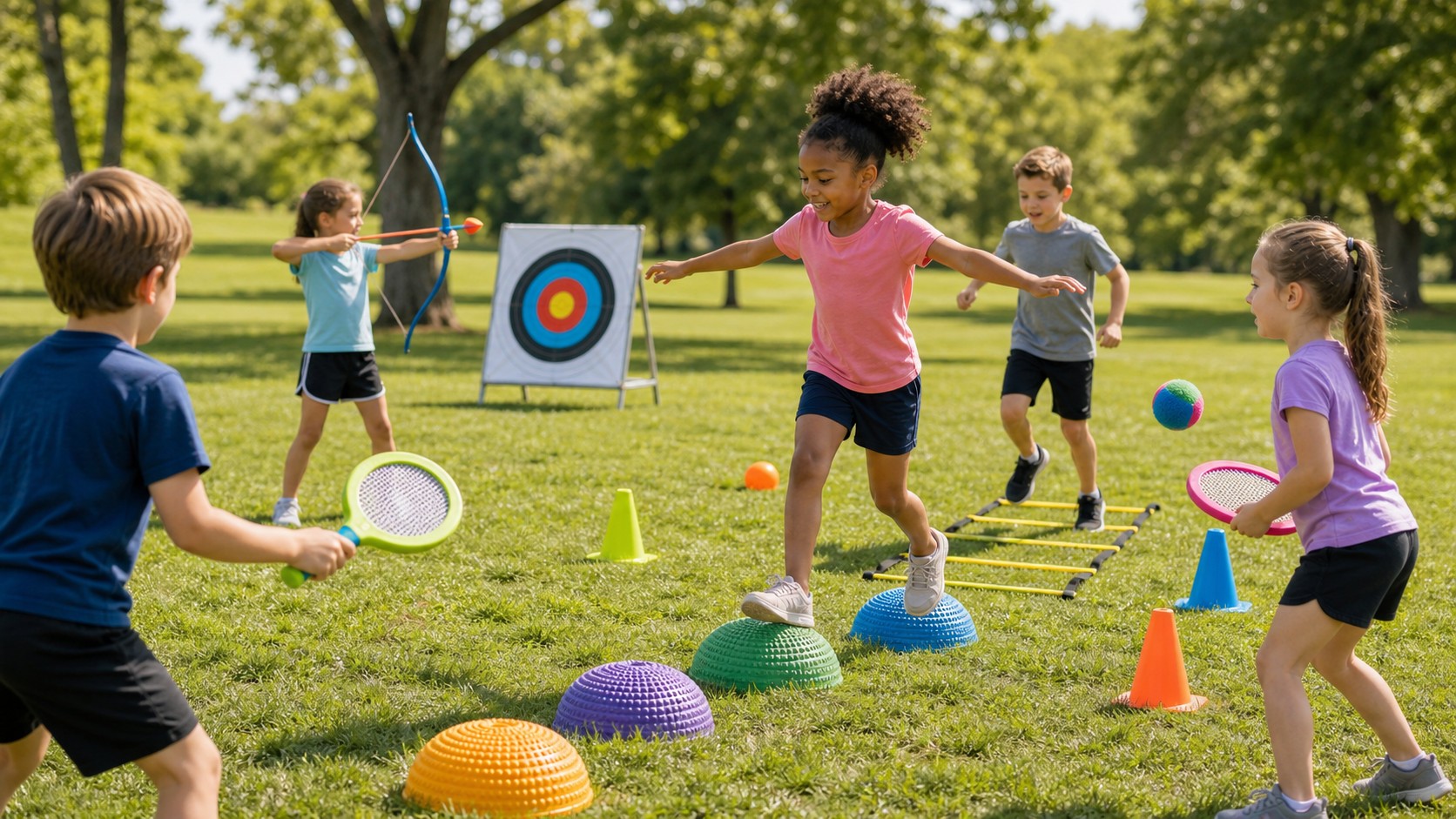
Targets, beanbag boards, soft archery sets, foam balls, and tossing rings help children understand that stronger is not always better. A child may discover that a softer throw, steadier stance, or calmer breath improves the result more than extra force. That kind of feedback is valuable because it connects movement with thought. The toy teaches adjustment through play.
Aim toys are also useful for children who do not love constant running. They still move, retrieve, and repeat, but the challenge feels measured and focused. This can help hesitant children feel successful in outdoor sports play. It can also help high-energy children practice slowing down without feeling bored.
Agility Toys Build Quick Decisions
Cones, rings, ladder-style markers, and flat discs help children practice starting, stopping, turning, and choosing a path. These toys are simple, but they create quick decisions that make movement more interesting. A child has to notice where the next marker is, adjust speed, and recover after a sharp turn. The body and mind work together.
Agility equipment becomes even stronger when children design routes for each other. One child may build a zigzag path, another may add a jumping rule, and another may create a carrying challenge. Designing the course is part of the learning. Children begin to understand how difficulty changes when distance, speed, and direction shift.
Balance Toys Reward Patience
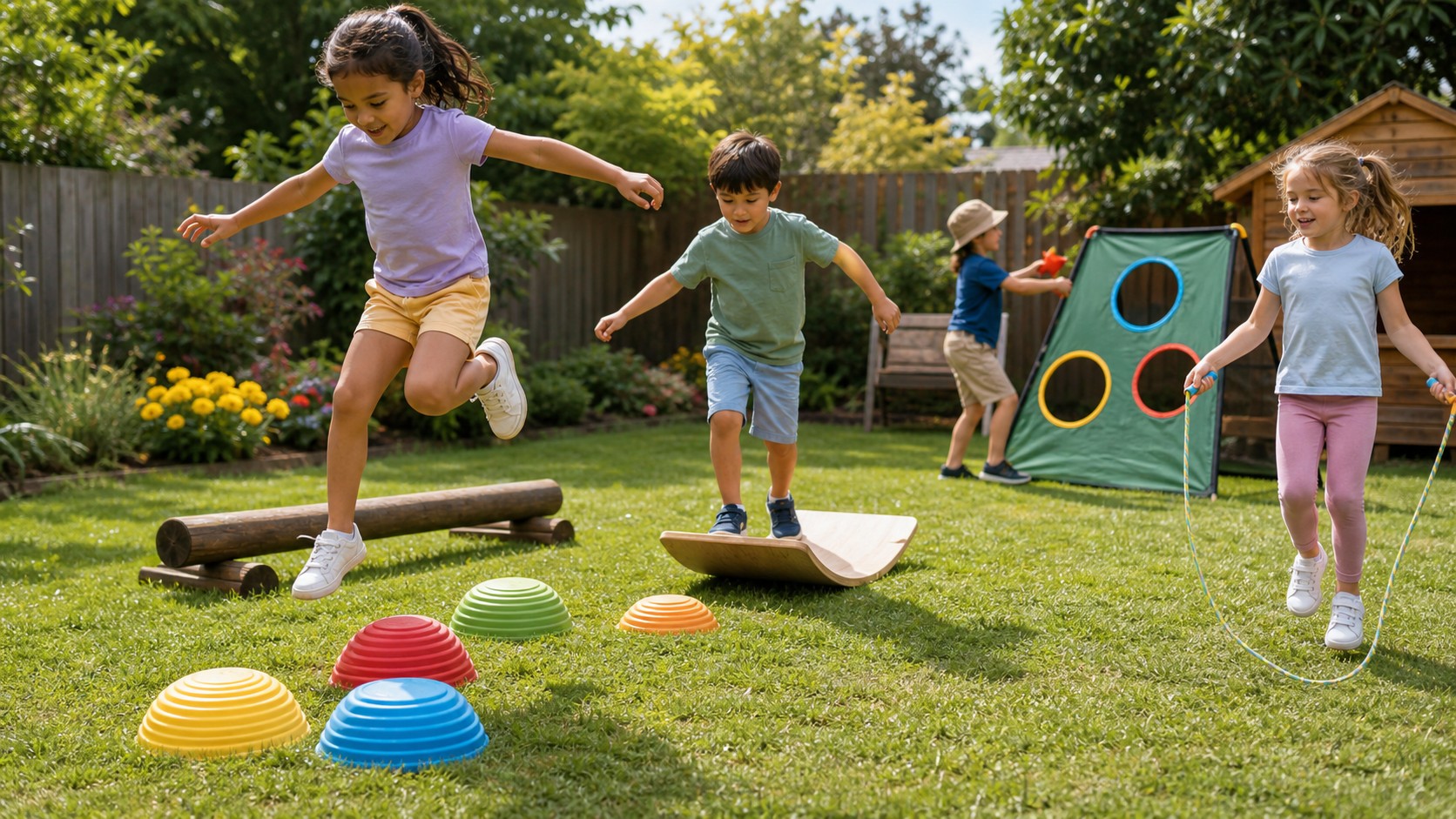
Balance stones, low beams, wobble boards, and stepping paths ask children to pay attention to their bodies. They may be exciting, but they also reward control, patience, and recovery. A child cannot always rush across a balance path successfully. They have to plan the next step, feel where their weight is, and decide when to move.
For active kids, balance toys can provide a different kind of confidence. They show that athletic play is not only about speed or competition. Staying steady, trying again after a wobble, and choosing a careful path are also meaningful skills. Those skills can support many later sports and daily movements.
Catch Toys Make Sports Social
Scoop catchers, paddles, flying discs, soft balls, and partner toss toys teach children to read another person. They need to notice where the partner is standing, how fast the object is moving, and what kind of throw will be possible to catch. This makes catch play a social exchange as well as a physical skill. The better the players respond to each other, the longer the game lasts.
Catch toys can also be adjusted easily. Partners can stand closer, take one step back after every success, switch hands, count consecutive catches, or add a movement before each throw. These small changes keep the toy fresh. They also allow children with different skill levels to play together without one person dominating.
Kicking Toys Build Power With Direction
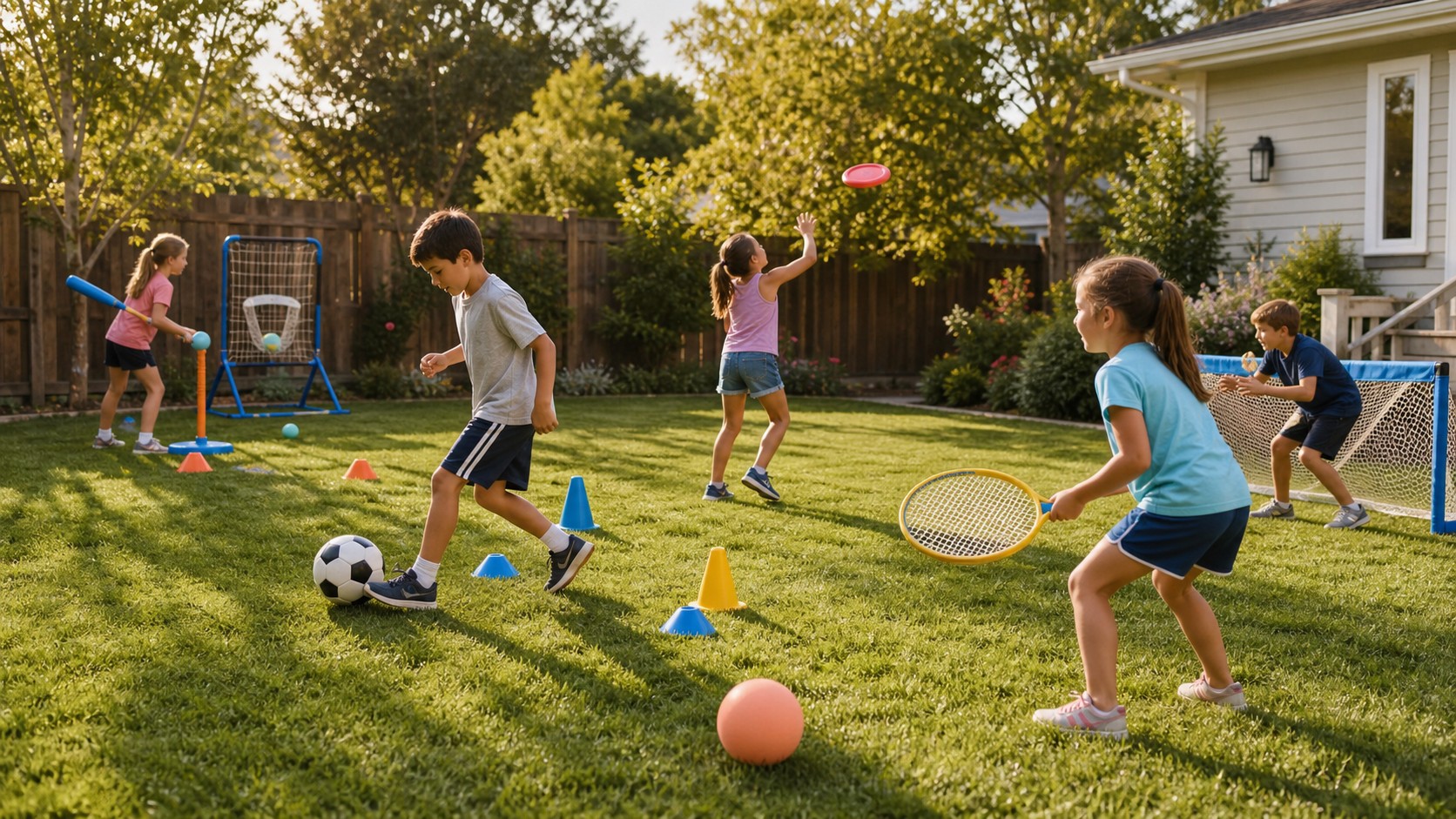
Soft soccer balls, small goals, foam footballs, and kick targets give children a satisfying way to use larger muscles. Kicking feels powerful, but a good toy adds direction so the child is not just swinging a leg at random. A goal, line, or target helps the child notice where the ball went and what might change next time. This turns energy into skill.
Kicking toys work best when the challenge can shift. A goal can move closer, farther away, or off to one side. Children can practice with the dominant foot, the other foot, or a short dribble before the kick. These variations make the toy useful for both beginners and more confident players.
Jumping and Rhythm Toys Add Endurance
Jump ropes, hop paths, rhythm rings, and skip-style games build stamina through repetition. The repetition can feel playful when children invent patterns, chants, or challenges. They may jump twice, turn, land on a color, or move through a short sequence. The toy gives the body a rhythm to follow.
Rhythm toys are helpful because they connect timing and coordination. A child has to listen, watch, anticipate, and move at the right moment. These skills can support dance, sports, playground games, and general body confidence. They also give children a way to be active in a relatively small space.
Sports Sampling Prevents Early Labels
Children sometimes decide they are good or bad at sports based on one experience. That can be unfair, because one sport may not fit their body, confidence, or interests. Outdoor sports toys allow a broader sample. A child who dislikes races may enjoy targets, and a child who struggles with catching may feel strong on a balance path.
This variety helps children see active play as something flexible. They can be a beginner in one skill and confident in another. They can improve without having to choose a team identity too soon. That openness protects the joy of movement.
Solo Challenges Give Children Private Practice
Some children want to practice without an audience. Outdoor sports toys can support that through solo target rounds, self-toss games, balance paths, dribble courses, and jump patterns. A child can miss, adjust, and try again without feeling watched. This private experimentation can be where real confidence begins.
Solo play is not a lesser version of sports play. It teaches persistence, self-correction, and independence. A child learns what feels hard, what improved, and what they want to try next. Later, that child may bring a new skill or invented game into group play.
Flexible Rules Make Group Play Better
Outdoor sports toys are more inclusive when rules can bend. Different ages can use different distances, teams can work toward shared totals, and older children can take on trickier versions of the same challenge. Flexible rules keep the game from becoming a test only one child can pass. They help everyone stay involved.
Children can help create those rules. Asking how to make the game fair often produces better ideas than assigning every adjustment from above. Children may suggest a closer line, a team score, a practice round, or a silly bonus challenge. That rule-making is part of learning to play well with others.
Building a Balanced Outdoor Sports Mix
A balanced sports toy collection does not need to be large. One aim toy, one catch toy, one marker set, one balance challenge, and one rhythm or jumping toy can create many afternoons of play. The goal is not to own every sport in miniature. The goal is to offer several movement doorways so children can choose what fits the day.
The best starter pieces are easy to store, quick to set up, and flexible enough to become more than one game. A soft ball can be kicked, tossed, rolled, or carried through a course. Cones can mark a race, target line, pretend river, or partner route. Simple toys often last because children can keep changing them.
Trying Many Toys Helps Children Find a Doorway
Outdoor sports can feel discouraging when children think there is only one way to be good at them. Sampling several toy types gives each child more chances to find a doorway into movement. One child may discover confidence through target play, another through a balance path, and another through partner catch. The variety makes active play feel more personal.
This matters because early labels can stick. A child who struggles in one group sport may decide they are not athletic at all. A mix of outdoor sports toys can challenge that idea. The child learns that movement includes aim, rhythm, control, strength, cooperation, and creativity, not only speed or competition.
Skill Growth Needs Repetition Without Shame
Sports skills usually improve through repetition, but children need repetition that does not feel humiliating. A soft target, solo catch toy, chalk line, or balance path gives children a chance to repeat a skill privately or with gentle support. They can miss, adjust, and try again without feeling like the whole group is waiting.
That kind of practice builds persistence. Children begin to notice that a small change in stance, timing, or force can improve the result. The toy becomes a feedback tool, not a judgment. This is one reason simple outdoor sports toys can support confidence so well.
Partner Play Builds More Than Coordination
Partner sports toys teach physical skill, but they also teach responsiveness. A child has to notice whether the other player is ready, whether the throw should be softer, and whether the distance is fair. Keeping a rally alive depends on helping the other person succeed. That is a social lesson inside a movement game.
These moments are especially useful for siblings or friends with different abilities. The better player can learn to adjust rather than dominate, and the newer player can participate without feeling like a problem. A good partner toy creates a shared challenge where both children matter.
Outdoor Sports Toys Can Be Imaginative
Sports toys do not have to be separated from pretend play. A cone route can become a rescue path, a target can become a castle gate, and a balance path can become stepping stones across a river. Active children often stay engaged longer when movement has a story attached to it. The game becomes both physical and imaginative.
This is especially helpful for children who resist traditional sports language. They may not want drills, but they may happily deliver supplies across a course, defend a pretend base, or complete a mission with a soft ball. Story can make skill practice feel like adventure.
The Best Starter Mix Stays Simple
Families do not need a full sports equipment closet to support active play. A soft ball, a few cones, a target, a jump rope, and a catch toy can create many different games. The pieces should be easy to carry, quick to reset, and flexible enough to combine. Simple equipment often gets used more because it asks less of the family.
A balanced starter mix gives children choices without overwhelming them. If they want focus, they can choose the target. If they want speed, they can build a cone route. If they want social play, they can grab the catch toy. The collection works because each piece opens a different kind of movement.
Outdoor Sports Toys Should Leave Room for Playfulness
Sports toys can build real skills without feeling serious all the time. A target round can include a funny stance, a cone course can become a lava path, and a catch game can add a dramatic rescue rule. Playfulness keeps children emotionally open while they practice. They are more willing to repeat a skill when the atmosphere feels light.
This matters for active kids who resist anything that feels like a drill. The same movement can become more inviting when it has humor, story, or choice attached to it. A child may practice ten throws happily if the round feels like a mission rather than a correction.