Backyard Sports Toys Should Be Easy to Start and Easy to Restart
Backyard sports toys keep kids moving when they make active play simple to begin, satisfying to repeat, and flexible enough for different ages. A child does not need a regulation field to practice aim, footwork, catching, kicking, teamwork, and persistence. A small goal, soft ball, target, cone path, or catch set can turn a yard into a lively play space. The best toys create short games with quick resets, because those are the games children return to again and again.
Soft Equipment Makes Backyard Play More Practical
Foam balls, fabric discs, soft catch toys, lightweight paddles, and padded targets fit real backyards better than hard, high-speed equipment. Children can play closer to porches, fences, garages, and mixed-age siblings with less worry. The softer materials make mistakes less dramatic, which keeps the game from ending after one wild throw. That extra forgiveness is important when children are still learning control.
Soft equipment does not make the play less valuable. Children still practice tracking, timing, reaction, aim, balance, and teamwork. They simply get to build those skills in a way that suits an everyday home space. When children can take more turns without constant correction, they usually improve faster and enjoy the process more.
Small Goals Create Clear Motivation
A small goal, pop-up net, marked scoring zone, or backyard target gives children something concrete to aim for. They can see whether the ball crossed the line, landed in the zone, or reached the net. That visible feedback makes progress easier to understand. Children are more likely to keep trying when the toy shows them what changed from one attempt to the next.
Goals are useful even when the game is not official. The same net can become a soccer goal, hockey target, relay checkpoint, or pretend rescue station. Children can make the challenge cooperative, competitive, silly, or skill-focused. The goal gives the yard structure, but the children decide what kind of game it becomes.
Cones and Markers Make Movement Smarter
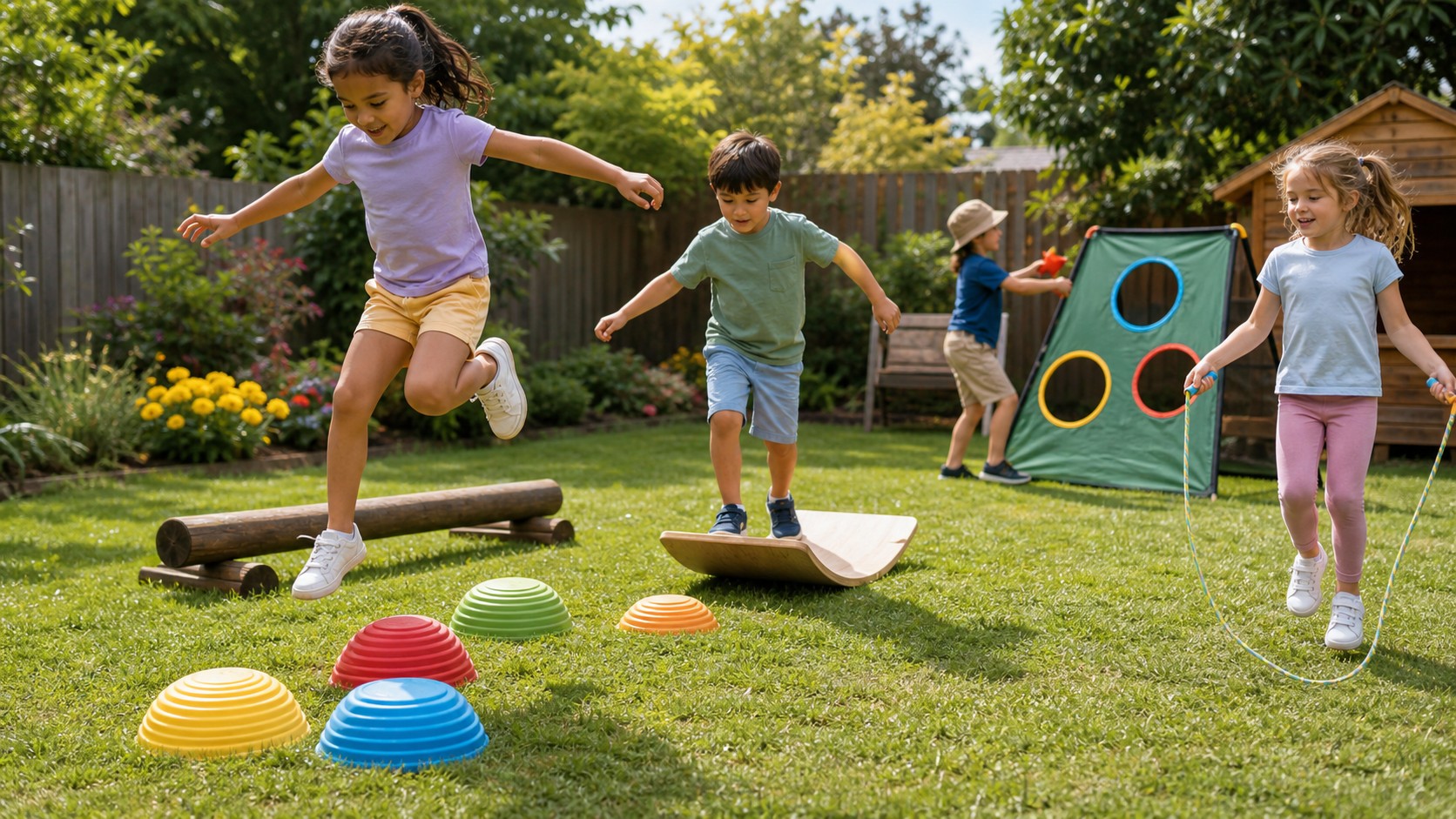
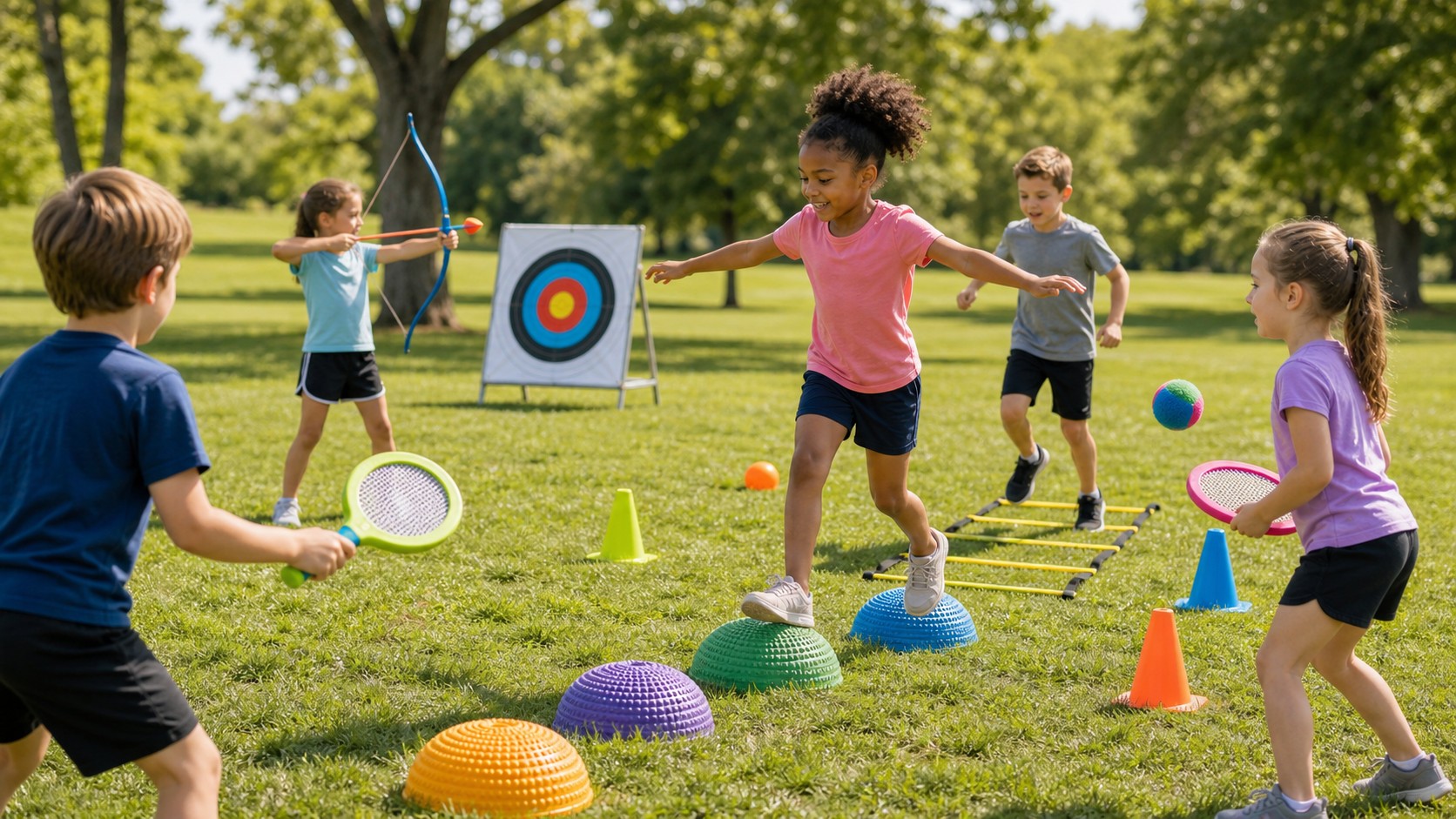
Cones, flat markers, chalk lines, and rings are simple pieces, but they can transform the way children move. They create lanes, turnarounds, starting lines, safe zones, and routes that ask children to think while moving. A child may weave, sprint, stop, circle back, or carry a ball through a path. The yard becomes a course rather than an open space with no plan.
Markers also help children design their own games. They can make a path for a sibling, move pieces after a round, or invent a rule where each color means a different action. That design work matters because it gives children ownership. They are not only following instructions; they are building the game.
Catch Toys Build Timing and Cooperation
Catch paddles, scoop sets, soft balls, flying discs, and velcro-style targets invite children to read another person. A strong catch game depends on where the partner stands, how fast the throw travels, and whether the next toss should be easier or harder. Children learn that a good throw is not always the most powerful one. It is the throw that keeps the play going.
This makes catch toys especially good for cooperation. Children can count how many passes they complete together, move farther apart after each success, or invent a team challenge where everyone has to touch the ball before scoring. The toy creates a shared goal. That shared goal can keep children moving longer than a winner-takes-all contest.
Rotating Stations Prevent Burnout
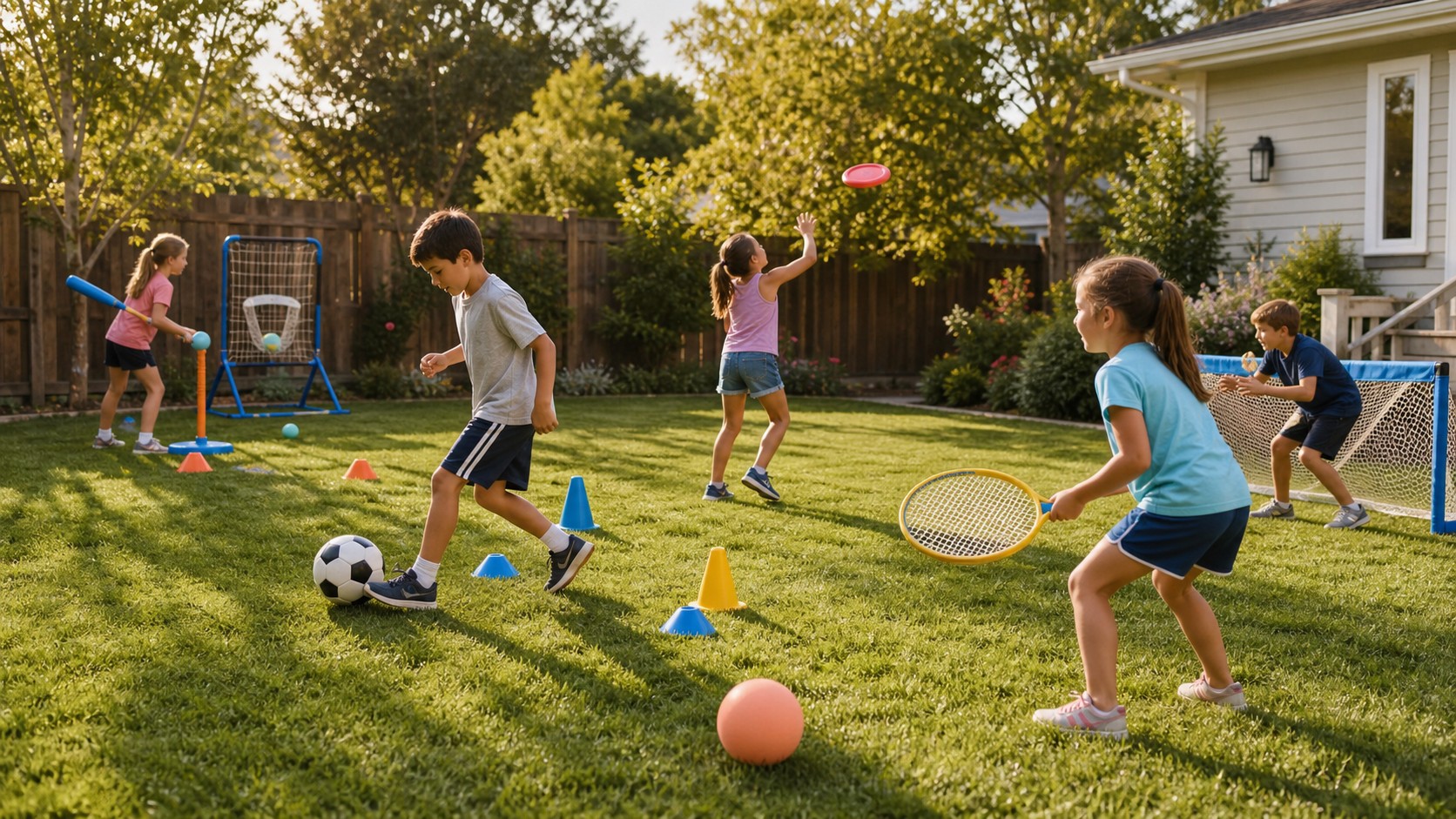
Backyard sports become more interesting when children rotate through different skills. A short sequence might include three kicks, five target tosses, a cone run, a catch round, and a water break before everyone switches jobs. The variety keeps bodies engaged and prevents one repeated motion from becoming tiring or frustrating. It also helps children discover which skills they enjoy most.
Stations are useful for groups because not every child has to do the same thing at the same time. One player can shoot, one can retrieve, one can reset the target, and one can design the next route. Those roles keep children involved even when it is not their turn to score. A backyard becomes more active when everyone has a job.
Friendly Competition Needs Flexible Rules
Competition can energize backyard sports, but it should not turn the yard into a place where only the strongest child has fun. Flexible rules make the game more inclusive. Younger players can stand closer, older players can use a harder angle, and teams can work toward shared totals instead of one winner. The rules should help children move, not make them feel embarrassed.
Personal-best challenges are often a good middle ground. A child can try to beat their own number of catches, improve a target score, or complete a route with fewer mistakes. This keeps the focus on progress rather than comparison. Children still feel the excitement of a goal, but the game remains friendly.
Backyard Sports Support Independent Practice
The best backyard sports toys are easy enough for one child to use while waiting for a friend, sibling, or parent. A target can become a solo aim challenge, a cone path can become a timed route, and a soft ball can become a kick-and-retrieve game. Independent practice gives children private space to miss, adjust, and try again. That privacy can be especially helpful for children who feel self-conscious in group games.
Solo practice often improves group play later. A child who has tested the target alone may join a sibling with more confidence. A child who has worked through a cone route may be ready to teach it to someone else. The toy becomes a bridge between personal skill-building and shared play.
Storage Determines How Often the Toys Are Used
A backyard sports toy has to be easy to find, gather, and put away. If balls are scattered, cones are buried, or targets are hard to assemble, children may choose something else before play even begins. A mesh bag, outdoor bin, cone stack, and drying spot can make active play much easier to start. The storage system is part of the toy’s usefulness.
Children can help maintain that system. They can stack cones, return balls, check for missing pieces, and choose the first game for the next day. That small responsibility gives them ownership of the play space. It also protects the equipment so the next round starts quickly.
Weather-Friendly Toys Fit Real Family Life
Backyard sports equipment should be able to handle grass, dust, sun, and a little moisture. Washable targets, plastic cones, foam balls, and mesh bags are often more practical than delicate sets with fussy pieces. Children play more freely when the toy does not have to be protected from ordinary outdoor use. Durability keeps the focus on movement instead of caution.
Weather-friendly choices also make spontaneous play more likely. If the equipment can be grabbed after school or before dinner without a long setup, children get more chances to move. Small bursts of activity matter. A ten-minute target game can still build coordination, confidence, and joy.
What Makes a Backyard Sports Toy Worth Buying
A strong backyard sports toy should support more than one kind of game. It might build aim, reaction, balance, teamwork, endurance, and planning depending on how children use it. Single-purpose toys can be fun for a short time, but flexible toys usually last longer. The real value comes from how many times children can reinvent the challenge.
Before buying, picture the toy in the actual yard. Will there be enough room? Can younger children use it safely? Can it be stored without trouble? Can children change the distance, target, route, or rules? If the toy fits the space and invites variation, it has a much better chance of keeping kids moving all day.
Backyard Sports Should Feel Welcoming
Children stay active longer when the game feels welcoming from the beginning. That means the first round should be easy enough to start, the equipment should feel manageable, and the rules should leave space for mistakes. A child who misses the target or drops the ball should feel invited to try again, not pushed out of the play.
This welcoming quality is one reason backyard sports can be so valuable. The yard is familiar, the audience is small, and the rules can be adjusted immediately. Children can build confidence in a low-pressure setting before they ever face formal sports, teams, or public performance.
The Best Sports Toys Make Progress Visible
Progress keeps children returning to a backyard sports toy. They notice when a kick lands closer to the goal, a pass reaches a partner more smoothly, or a cone route feels easier than it did yesterday. Visible progress gives effort a reward. The child can see that trying again changed something.
Targets, goals, marked lines, and countable rallies are useful because they make improvement concrete. Adults do not have to give a speech about practice. The toy shows the child what happened. That simple feedback can motivate many more rounds of movement.
Cooperative Games Can Keep Everyone Moving
Backyard sports do not need to center on one winner. Cooperative games often keep more children involved, especially when ages and skill levels differ. The group can try to reach a shared score, keep a rally alive, move a ball through a course together, or design a relay where every player has a job.
Cooperative formats are still active and challenging. Children run, throw, kick, catch, retrieve, and reset, but the emotional tone is different. Instead of one child being eliminated or embarrassed, the group works on keeping the game alive. That can make the yard feel more playful and less tense.
Adults Can Join Without Taking Over
Adult involvement can help backyard sports feel special, but it does not need to become coaching. A parent can toss a few passes, time one route, reset a target, or cheer a personal best. Short participation matters because it tells children their play is worth noticing. It also gives adults a way to connect without turning the yard into practice.
The best adult role is usually light and responsive. If children are inventing rules and solving problems, adults can stay at the edge. If a game becomes unfair or unsafe, adults can help adjust the setup and then hand control back. That balance keeps the play child-led.
Buying for the Yard You Actually Have
Backyard sports toys should fit the available space. A compact target may be better than a large net in a narrow yard, and soft balls may be better than hard equipment near windows. Families sometimes buy the most impressive-looking toy, then discover that it does not work comfortably at home. Fit matters more than scale.
It also helps to think about storage before buying. If the toy cannot be gathered quickly or kept near the play area, it may be used less often. A smaller toy that children can carry, reset, and store independently may create far more movement than a bigger toy that depends on adult setup.