High-Value Toy Sales Are About More Than Rarity
The most valuable toy collectibles ever sold matter because they reveal what collectors, museums, fans, and investors decide is worth preserving. High prices rarely come from rarity alone. They usually come from a combination of condition, provenance, cultural importance, original packaging, historical timing, and intense demand. A toy becomes extraordinary when it represents a story larger than the object itself.
Condition Can Transform an Ordinary Toy Into a Prize
Many toys were produced in large numbers, but few survived in exceptional condition. Children played with them, boxes were thrown away, accessories were lost, and fragile parts broke. That means a mint or near-mint example can become far more valuable than a common loose version. Condition scarcity can be just as important as production scarcity.
Collectors pay premiums for crisp packaging, clean paint, intact decals, tight joints, sealed contents, and complete accessories because these details are hard to preserve over decades. A high-value sale often reflects survival. The toy is not only desirable; it is an unusually well-preserved witness to its time.
Provenance Adds Trust and Story
Provenance means the documented history of an item: who owned it, where it came from, how it was preserved, and why its background can be trusted. In high-end toy collecting, provenance can reduce doubt. A prototype from a known designer, a production sample from an archive, or a sealed item from an original owner can carry extra weight.
The story matters because expensive collectibles require confidence. Buyers want to know that the item is authentic, complete, and represented honestly. Provenance does not fix poor condition, but strong documentation can make a rare object more convincing. It turns a collectible from an isolated object into a traceable piece of history.
Original Packaging Often Drives Record Prices
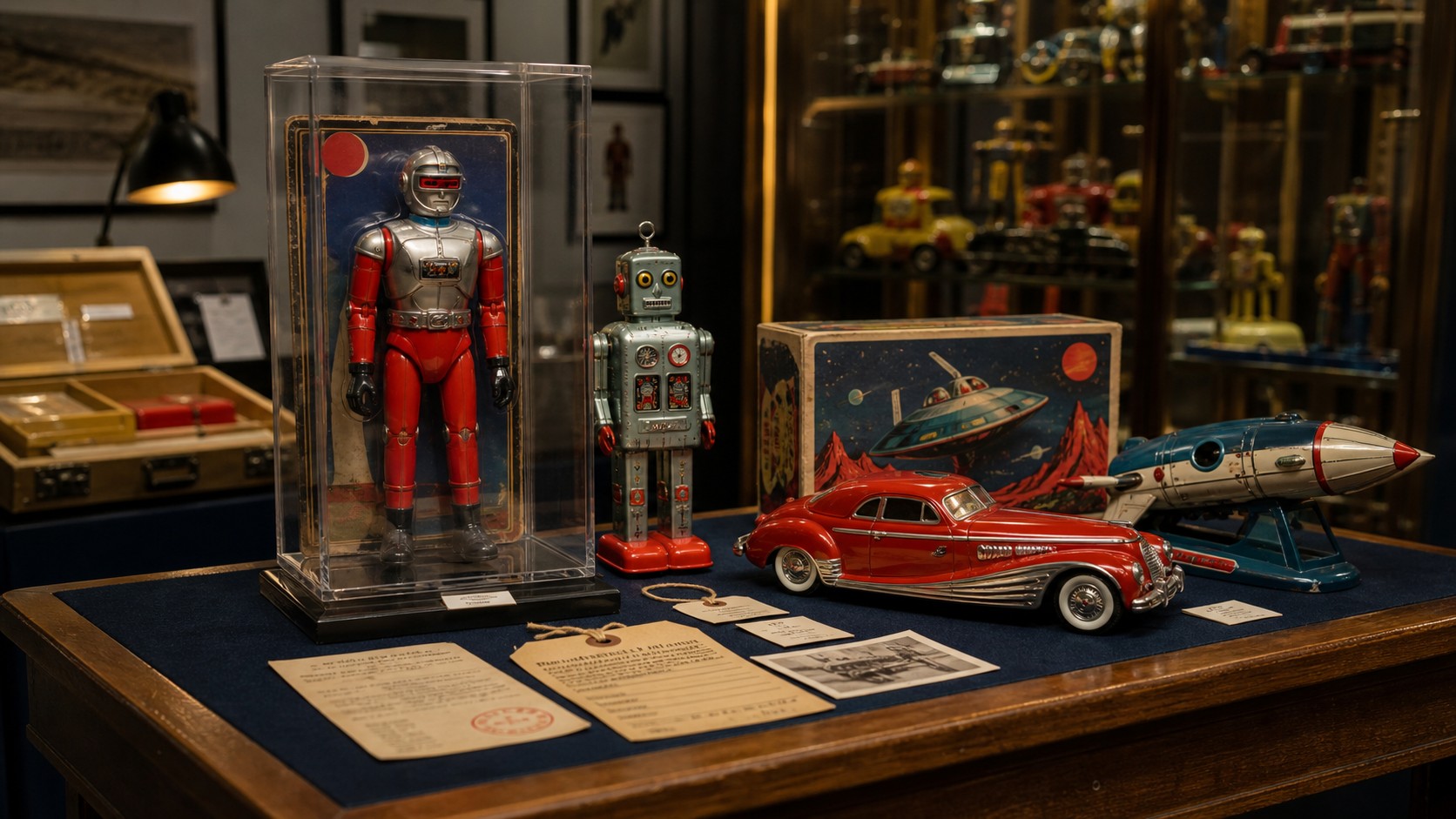
Packaging can dramatically affect value because it preserves the toy’s retail identity. A figure on its original card, a playset in a sealed box, or a vintage toy with inserts and instructions tells a fuller story than the loose object alone. The packaging shows how the toy was marketed, displayed, and understood by its first audience.
Collectors often treat packaging as part of the artwork. Box illustrations, logos, photography, copywriting, and layout can become as important as the toy. In some categories, the difference between loose and packaged value is enormous. That gap reflects the rarity of complete survival, not just the presence of cardboard.
Prototype and Preproduction Pieces Matter
Some of the most valuable toy collectibles are prototypes, test shots, hardcopies, samples, or preproduction pieces. These items matter because they show the process behind the final toy. They may reveal alternate colors, sculpt changes, cancelled features, or decisions made before mass production. Collectors value them because they sit close to the creative source.
Preproduction pieces are also rare by nature. They were not meant for ordinary retail, and many were discarded after serving their purpose. When one survives with credible documentation, it can attract serious attention. The value comes from both scarcity and insight. The object helps explain how a toy became what fans remember.
Cultural Importance Creates Demand
A toy connected to a major franchise, historic character, beloved brand, or generational memory can draw intense demand. Cultural importance gives collectors a reason to care beyond materials and scarcity. A small plastic figure can become valuable because it represents a movie era, a television phenomenon, a design movement, or a childhood shared by millions.
This is why some toys outperform rarer objects from less remembered lines. A rare item still needs buyers who care. Cultural weight creates that audience. When nostalgia, media history, and collector competition meet, prices can rise dramatically.
Auction Drama Can Shape Public Perception
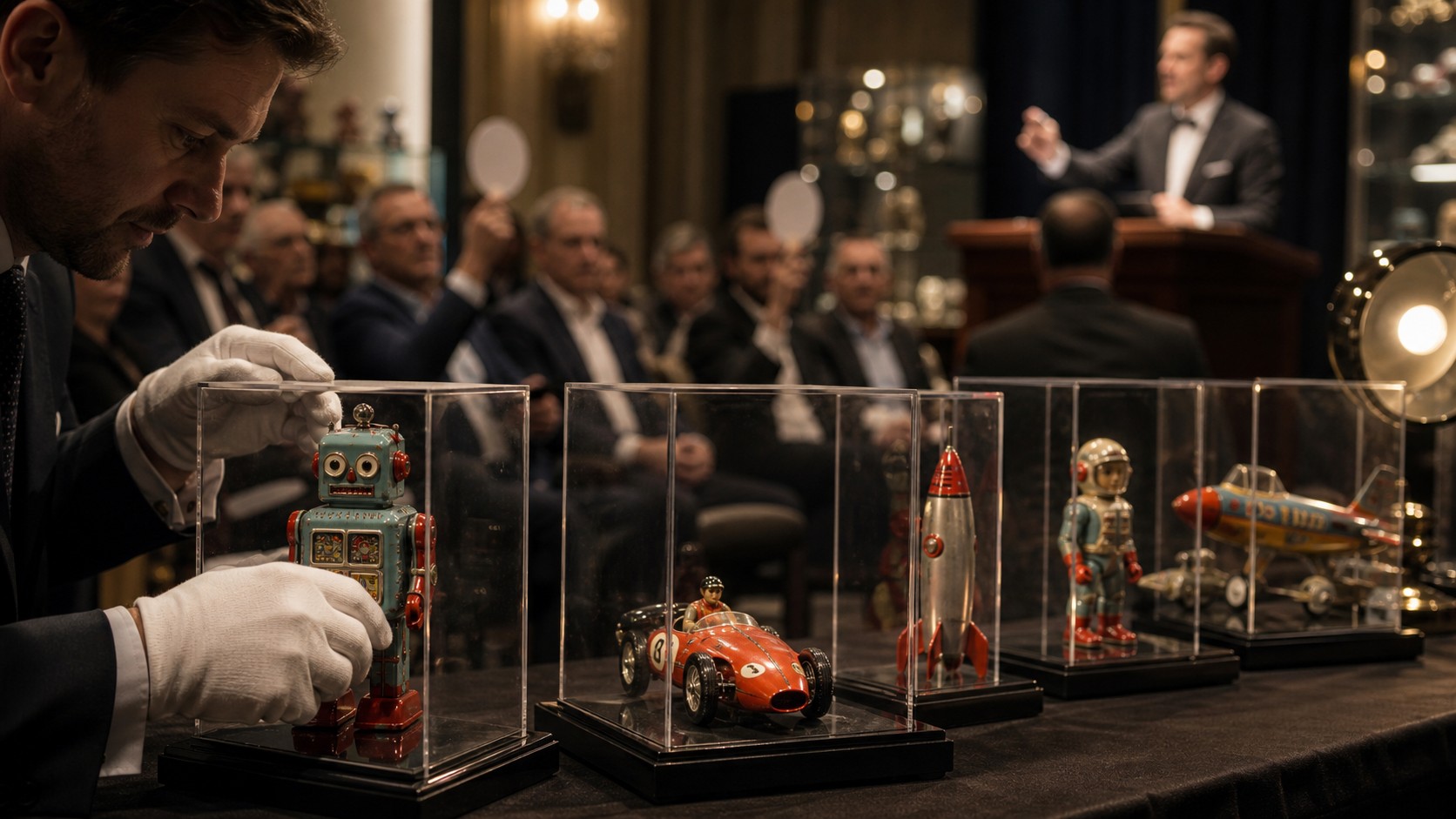
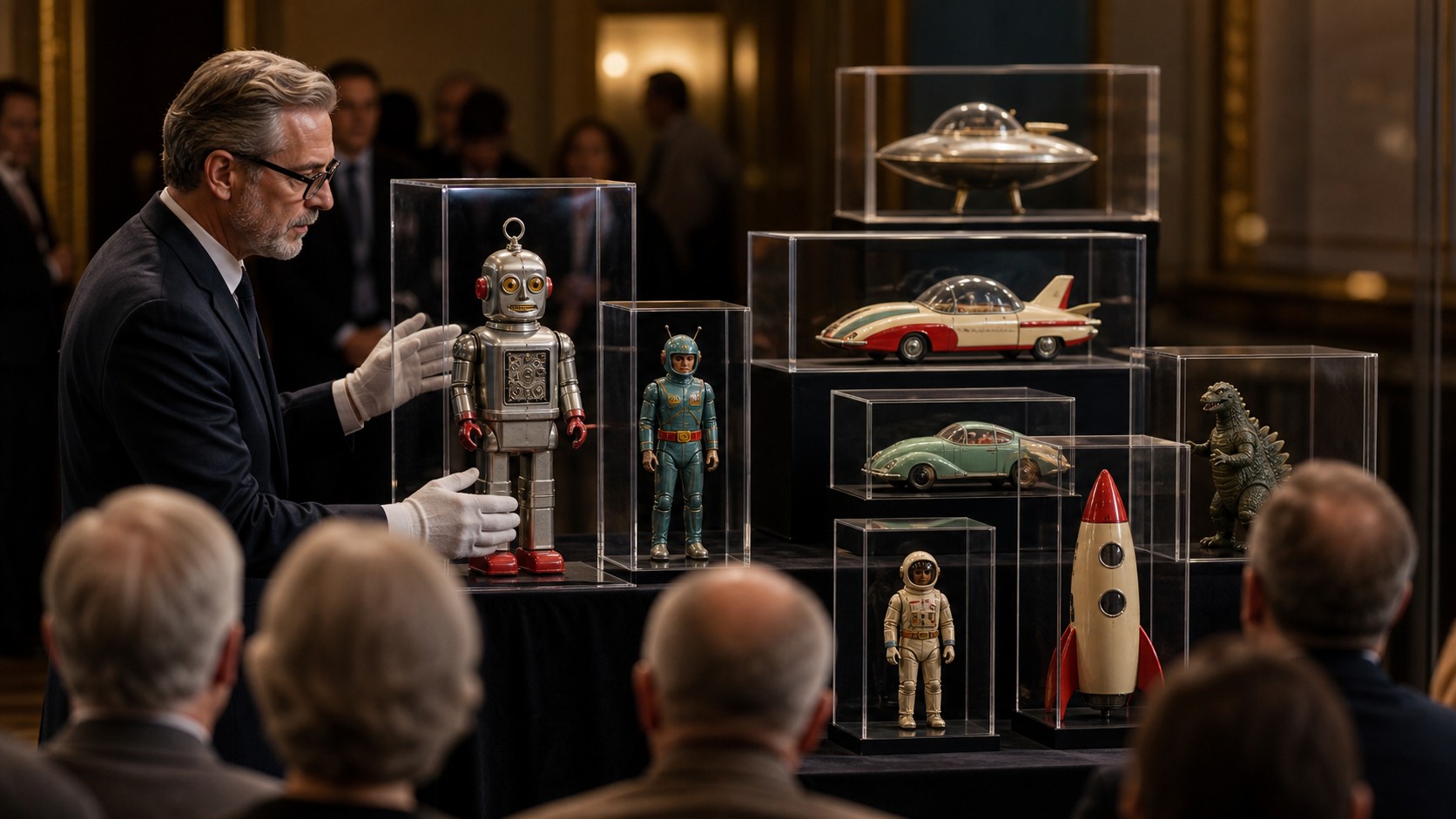
High-profile auctions can make toy collectibles seem suddenly more important. A record sale attracts headlines, brings new buyers into the category, and gives collectors a public reference point. The auction result becomes part of the object’s story, even if the market later settles.
However, auction prices should be interpreted carefully. One dramatic sale does not automatically reset the value of every similar toy. Condition, provenance, bidding competition, and timing all matter. Serious collectors look beyond the headline number and ask what made that specific example special.
Sealed Does Not Always Mean Simple
Sealed toys can bring major premiums, but sealed status also requires careful evaluation. Collectors may need to consider box condition, seal authenticity, shrink-wrap type, age consistency, and whether the contents can be verified. A sealed box is desirable because it suggests untouched completeness, but it can also raise questions if the seal looks suspicious.
This is why authentication and expert review matter in expensive categories. A buyer paying a record-level price wants confidence that the item is truly what it appears to be. The more valuable the collectible, the more important careful inspection becomes.
Why Some Toys Become Investment Objects
Some toy collectibles cross from hobby objects into investment territory when demand becomes broad, supply becomes visibly limited, and comparable sales establish a high market. Investors may be drawn to iconic franchises, sealed examples, graded items, prototypes, or pieces with strong provenance. The toy becomes part collectible and part asset.
Investment attention can bring money into the market, but it can also create pressure. Collectors should remember that toy values can change. Trends cool, tastes shift, and economic conditions affect spending. A thoughtful buyer studies history instead of assuming every expensive toy will keep climbing.
Emotional Value Helps Sustain the Market
The high-end toy market is not driven only by investors. Many serious buyers are motivated by memory, fandom, design admiration, or the desire to preserve pop culture. Emotional value creates long-term demand because collectors are not simply buying plastic, paper, or metal. They are buying a connection to a story.
That emotional layer is why certain toys inspire bidding wars. The object may represent a childhood wish, a franchise milestone, or a piece that almost never appears in complete condition. When emotional significance and market scarcity overlap, prices can become extraordinary.
Record Sales Preserve Toy History
When a toy sells for a remarkable price, it can change how people view the category. Objects once dismissed as disposable playthings may be recognized as design history, media history, or cultural artifacts. High prices can encourage preservation because owners realize that boxes, inserts, and documentation matter.
This does not mean every toy should be treated as a museum object. Play is still the reason toys exist. But record sales remind us that toys carry stories about technology, childhood, advertising, art, and fandom. Valuable collectibles matter because they help preserve those stories.
What Buyers Can Learn From Expensive Sales
Collectors do not need record-setting budgets to learn from high-end sales. The same principles apply at smaller scales: condition matters, completeness matters, documentation matters, and demand matters. Studying major sales can help ordinary collectors make smarter choices within their own budgets.
A collector may never buy a prototype or sealed grail piece, but they can still apply the lesson. Buy carefully, document purchases, protect condition, and understand why an item belongs in the collection. Valuable sales show the market’s priorities. Wise collectors use those priorities without losing their own taste.
Why These Toys Still Matter After the Sale
The most valuable toy collectibles continue to matter after the auction closes because they influence how collectors think. They establish benchmarks, spark research, and bring attention to categories that might otherwise remain niche. They also raise questions about what childhood objects deserve preservation.
A high price is only the most visible part of the story. The deeper significance lies in why people cared enough to compete for the object. When a toy carries rarity, condition, provenance, and cultural meaning together, it becomes a small artifact of shared memory. That is why the best-known sales keep being discussed.
High Prices Reflect Collector Confidence
When a toy sells for an extraordinary amount, the price usually reflects confidence as much as desire. Buyers believe the item is authentic, accurately described, important, and unlikely to appear again soon in comparable condition. That confidence comes from documentation, expert review, clear photographs, and market history.
This is why high-value sales often involve more than a casual listing. Serious buyers want time to evaluate evidence. They may compare production details, ask specialists, inspect provenance, and study comparable sales. The final price is not only a reaction to nostalgia. It is a decision built on trust.
The Best Examples Become Category Benchmarks
Record-setting toys often become benchmarks for an entire category. Collectors refer back to them when discussing condition, packaging, rarity, and value. A sale can establish what the market considered the best known example at that moment. Even people who never bid may learn from the details.
Benchmarks matter because they sharpen standards. Once collectors see what an exceptional example looks like, they may evaluate their own pieces more carefully. This can improve documentation and preservation across the hobby. A record sale can therefore influence behavior far beyond the buyer and seller.
Toy Value Often Follows Story Value
The most valuable toy collectibles usually have stories people can understand. A prototype shows how a famous toy was created. A sealed figure captures the retail moment. A rare variation reveals a production change. A childhood icon in elite condition connects personal memory to cultural history. These stories make value easier to explain.
Story value is not the same as hype. Hype can be temporary, while a strong collecting story holds up under research. The best high-value toys matter because the story can be documented, repeated, and appreciated by more than one buyer. That is what helps demand remain strong.
Condition Rarity Can Be Invisible at First
A beginner may see several examples of the same toy and assume it is common, but condition rarity can be hidden. Many loose examples may exist, while sealed or near-mint examples are nearly impossible to find. High prices often reflect this narrower category of survival.
This is why collectors study condition populations, grading reports, and detailed sales history. The question is not only whether the toy exists. The question is how many examples exist in comparable condition with comparable completeness. At the top of the market, that distinction can change everything.
Why These Sales Influence Preservation
Major toy sales can change how owners treat old toys. A person who once stored boxes in a damp basement may realize that packaging, inserts, and condition deserve better care. Collectors may become more careful about sunlight, humidity, handling, and documentation after seeing what preserved examples can mean.
This influence is one reason high-value sales matter culturally. They encourage people to preserve pieces of childhood history that might otherwise be discarded. Not every toy will become expensive, but more toys may survive because collectors understand that ordinary playthings can become meaningful artifacts.
What High-End Sales Do Not Tell You
Record sales are useful, but they do not tell the whole story of a market. They usually represent exceptional examples, unusual timing, and motivated buyers. A headline number may not apply to a lower-grade item, an incomplete version, or a piece without documentation. Collectors need to separate inspiration from direct comparison.
This perspective protects buyers from unrealistic expectations. A valuable sale can teach what the market rewards, but it should not make every owner assume they have the same item. The details matter. Condition, provenance, packaging, and demand explain the difference between an impressive collectible and a record-setting one.