The First Spark: Where Play Meets Engineering
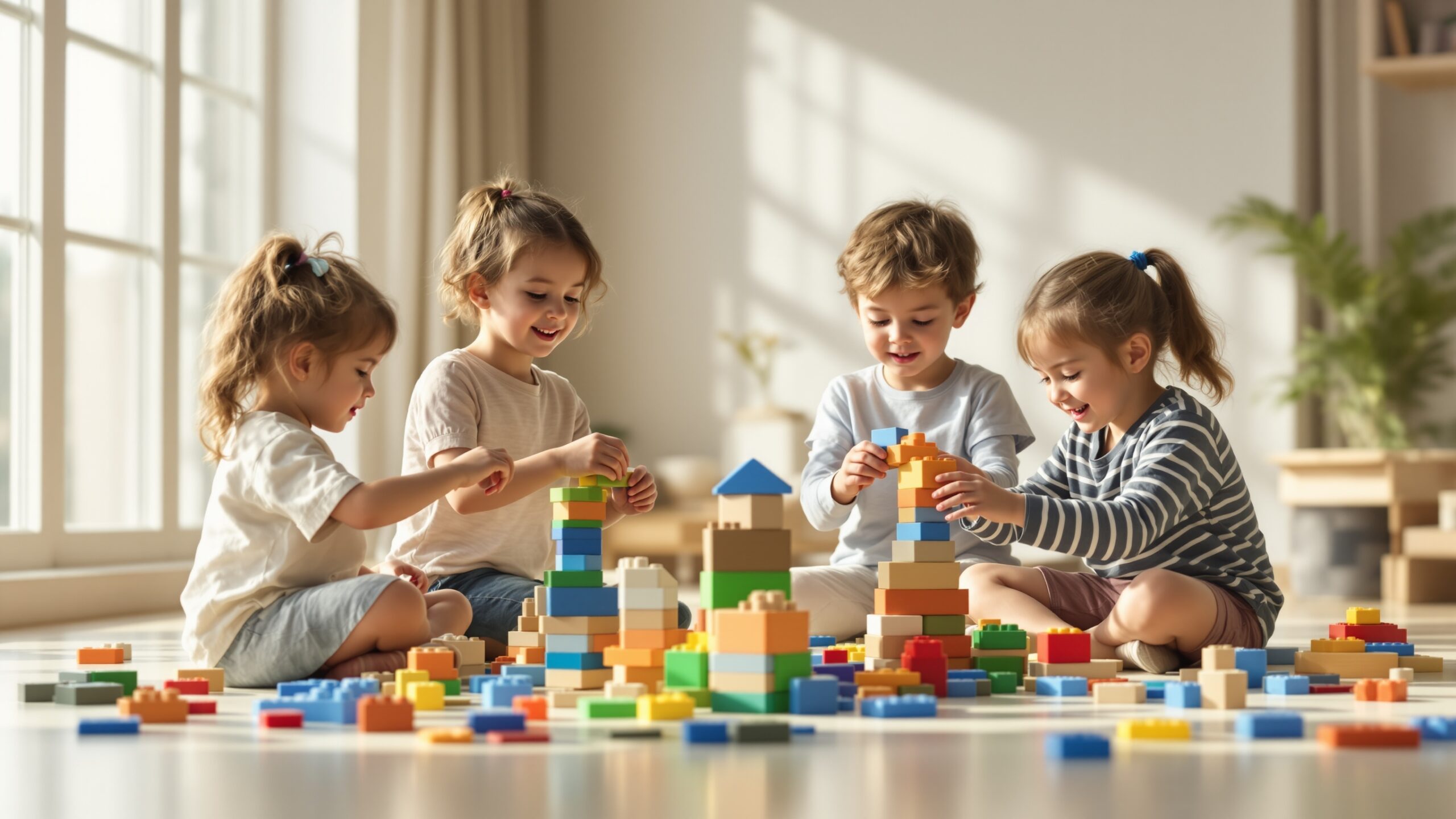
Engineering rarely begins in a classroom. More often, it starts on the floor of a living room, in a playroom filled with scattered pieces of plastic, wood, or metal. A child sits surrounded by building blocks, interlocking bricks, or a construction set, experimenting with shapes, connections, and ideas. Without realizing it, they are engaging in the earliest stages of engineering thinking. Building toys and construction sets provide a natural bridge between play and problem-solving. They introduce children to fundamental engineering principles such as structure, balance, motion, and design. The beauty of this process lies in its simplicity. There are no formal lectures, no rigid instructions that must be followed precisely. Instead, children are free to explore, test, fail, and try again. This unstructured exploration is exactly what makes building toys so powerful. Engineering, at its core, is about solving problems creatively and efficiently. When a child tries to build a tower that keeps falling over, they are not just playing—they are analyzing stability, weight distribution, and structural integrity. These are the same principles that professional engineers apply when designing skyscrapers or bridges.
A: As early as toddler years with simple blocks, scaling up in complexity with age.
A: Yes, they teach problem-solving, logic, and foundational engineering concepts.
A: Instructions help, but open-ended play is equally valuable.
A: It depends on age and interest—blocks, gears, robotics, or magnetic sets all offer benefits.
A: They introduce physics, math, and design through hands-on experiences.
A: Not necessarily—simple toys can teach equally powerful concepts.
A: Yes, many modern kits integrate coding with physical construction.
A: Regular play sessions encourage deeper learning and skill development.
A: Yes, they reinforce math, science, and critical thinking skills.
A: Problem-solving, creativity, spatial reasoning, and persistence.
Understanding the Foundations of Engineering Thinking
Engineering thinking is not a single skill but a combination of analytical reasoning, creativity, and persistence. Building toys nurture these abilities in a way that feels intuitive and enjoyable. As children engage with construction sets, they begin to develop spatial awareness, which is the ability to visualize how different components fit together in three-dimensional space.
This skill is critical in fields such as mechanical engineering, architecture, and product design. When children manipulate pieces, rotate them, and experiment with different configurations, they are strengthening neural pathways that support spatial reasoning. Over time, they become more adept at predicting how parts will interact before even assembling them.
Another foundational element is systems thinking. Even a simple construction set teaches children that individual components do not exist in isolation. Each piece contributes to the overall function of the structure. A missing connector or a weak joint can compromise the entire build. This awareness fosters a deeper understanding of how complex systems operate, an essential concept in engineering disciplines ranging from civil engineering to robotics.
Learning Through Trial, Error, and Iteration
One of the most valuable lessons building toys offer is the importance of iteration. Unlike traditional learning environments where mistakes may be discouraged, construction play actively encourages trial and error. A child builds a structure, observes its weaknesses, and modifies it to improve performance. This cycle mirrors the engineering design process used in professional settings.
Iteration teaches resilience. When a carefully constructed model collapses, the child is faced with a choice: abandon the project or try again. Most choose the latter, driven by curiosity and determination. Each attempt brings new insights, reinforcing the idea that failure is not an endpoint but a stepping stone to success.
This mindset is crucial in engineering careers, where prototypes often fail multiple times before a viable solution emerges. By experiencing this process early, children develop a healthy relationship with failure. They learn to see it as a source of information rather than a setback, which fosters confidence and adaptability.
The Role of Creativity in Engineering Development
Engineering is often perceived as a purely technical field, but creativity plays an equally important role. Building toys provide an open canvas for imaginative expression. A set of simple blocks can become a castle, a spaceship, or an entirely new invention that exists only in a child’s mind.
This imaginative freedom encourages divergent thinking, the ability to generate multiple solutions to a single problem. Instead of following a fixed blueprint, children explore various approaches, testing different designs and configurations. This flexibility is essential for innovation, as it allows engineers to think beyond conventional solutions.
Creative play also introduces children to the concept of design constraints. While their imagination may be limitless, the physical pieces impose certain limitations. Children must work within these constraints, finding ways to achieve their vision using available resources. This mirrors real-world engineering challenges, where budget, materials, and environmental factors must be considered.
Developing Fine Motor Skills and Precision
While the cognitive benefits of building toys are widely recognized, the physical aspect of construction play is equally significant. Manipulating small pieces requires coordination, dexterity, and precision. These fine motor skills are essential for tasks ranging from assembling machinery to performing delicate surgical procedures.
As children handle different components, they learn to control their movements with increasing accuracy. They become more adept at aligning pieces, applying the right amount of force, and maintaining stability during assembly. This physical engagement reinforces their understanding of how structures are built and maintained.
Precision also introduces the concept of tolerance, a fundamental principle in engineering. Even slight misalignments can affect the functionality of a structure or mechanism. By experiencing this firsthand, children gain an appreciation for accuracy and attention to detail.
Introducing Mechanical Concepts Through Play
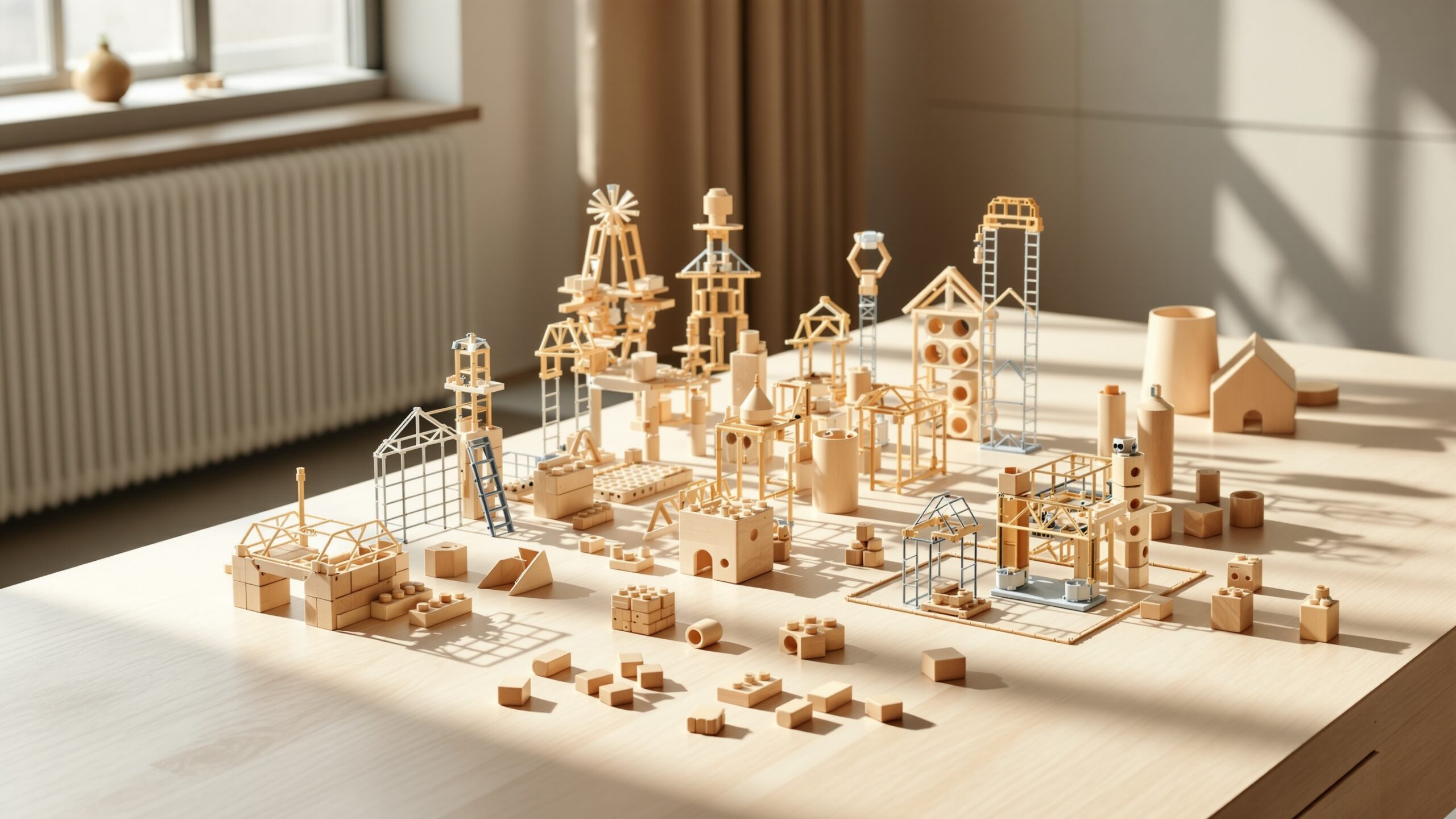
Many construction sets go beyond static structures, incorporating moving parts such as gears, pulleys, and axles. These elements introduce children to basic mechanical engineering concepts in a tangible and accessible way. Instead of learning abstract theories, they can see and feel how motion is transferred and controlled.
For example, when a child connects gears and observes how turning one gear causes another to move, they are exploring the principles of rotational motion and gear ratios. Similarly, building a simple pulley system demonstrates how force can be distributed to lift heavier objects with less effort.
These hands-on experiences make complex concepts more intuitive. Children develop an understanding of cause and effect, recognizing how changes in one part of a system influence the entire mechanism. This foundational knowledge can spark an interest in more advanced topics such as robotics, automation, and mechanical design.
Encouraging Problem-Solving and Critical Thinking
Every construction project presents a series of challenges that require problem-solving skills. Whether it is figuring out how to stabilize a structure or designing a mechanism that performs a specific function, children must analyze the situation and develop a strategy.
This process involves critical thinking, as children evaluate different options and predict their outcomes. They learn to identify patterns, recognize potential issues, and devise solutions that address specific problems. Over time, these skills become more refined, enabling them to tackle increasingly complex challenges.
Problem-solving through play also fosters independence. Instead of relying on external guidance, children learn to trust their own judgment and experiment with different approaches. This autonomy builds confidence and prepares them for real-world scenarios where solutions are not always immediately apparent.
Collaboration and Communication in Construction Play
While building toys can be enjoyed individually, they also offer valuable opportunities for collaboration. When children work together on a construction project, they must communicate their ideas, negotiate roles, and coordinate their efforts. This collaborative environment mirrors the teamwork required in professional engineering projects.
Through group play, children learn to articulate their thoughts clearly and listen to others’ perspectives. They develop skills in compromise and conflict resolution, as differing ideas must be reconciled to achieve a common goal. These interpersonal skills are essential in any engineering field, where projects often involve multidisciplinary teams.
Collaboration also exposes children to diverse approaches and solutions. By observing how others tackle challenges, they gain new insights and expand their own problem-solving repertoire. This exchange of ideas fosters a culture of innovation and continuous learning.
The Impact of STEM-Focused Construction Sets
In recent years, the rise of STEM-focused toys has further enhanced the educational value of building sets. These products are specifically designed to integrate science, technology, engineering, and mathematics into play. They often include guided projects that introduce concepts such as coding, electronics, and robotics.
STEM construction sets provide a more structured approach to learning while still allowing for creativity and exploration. Children can follow step-by-step instructions to build functional models, such as robots or simple machines, and then modify them to create new designs. This combination of guidance and flexibility helps bridge the gap between play and formal education.
By engaging with STEM toys, children gain exposure to real-world applications of engineering principles. They begin to understand how theoretical concepts translate into practical solutions, which can inspire a deeper interest in pursuing STEM-related careers.
Building Confidence Through Achievement
Completing a construction project, whether simple or complex, provides a sense of accomplishment that reinforces a child’s confidence. Each successful build serves as tangible proof of their ability to create and solve problems. This positive reinforcement encourages them to take on new challenges and push their limits.
Confidence is a critical factor in learning. When children believe in their capabilities, they are more likely to engage with difficult tasks and persist in the face of obstacles. Building toys create a safe environment where children can experiment without fear of failure, allowing their confidence to grow organically.
This sense of achievement also fosters intrinsic motivation. Instead of relying on external rewards, children derive satisfaction from the process of building and the results they achieve. This internal drive is essential for long-term learning and success.
Bridging the Gap Between Play and Real-World Engineering
The skills and concepts children develop through building toys have direct applications in real-world engineering. The ability to analyze problems, think creatively, and iterate on solutions is fundamental to any engineering discipline. By engaging with construction sets, children are essentially practicing these skills in a simplified and enjoyable context.
As they grow older, these early experiences can translate into more advanced learning opportunities. A child who enjoys building with blocks may develop an interest in architecture, while one who experiments with gears and motors may be drawn to mechanical engineering. The transition from play to professional interest is often seamless, as the foundational skills remain consistent.
Building toys also provide a glimpse into the engineering mindset. Children learn to approach challenges systematically, breaking them down into manageable components and addressing each part individually. This analytical approach is a hallmark of successful engineers.
Choosing the Right Construction Sets for Different Ages
The effectiveness of building toys depends on selecting sets that are appropriate for a child’s developmental stage. Younger children benefit from larger, simpler pieces that are easy to manipulate and connect. These sets focus on basic concepts such as stacking, balancing, and simple structures.
As children grow, more complex construction sets introduce advanced features such as intricate connectors, moving parts, and electronic components. These sets challenge their skills and encourage deeper exploration of engineering principles. It is important to strike a balance between challenge and accessibility, ensuring that the toys are engaging without being overwhelming.
Parents and educators play a key role in guiding this progression. By providing a variety of construction sets and encouraging experimentation, they can support a child’s development and nurture their interest in engineering.
The Long-Term Benefits of Engineering Play
The impact of building toys extends far beyond childhood. The skills developed through construction play—problem-solving, creativity, collaboration, and resilience—are valuable in virtually every aspect of life. Whether a child ultimately pursues a career in engineering or another field, these abilities provide a strong foundation for success.
In a rapidly evolving world, the ability to think critically and adapt to new challenges is more important than ever. Building toys equip children with these skills in a way that feels natural and enjoyable. They transform playtime into a powerful learning experience, shaping the innovators and problem-solvers of the future.
Conclusion: Building the Engineers of Tomorrow
Building toys and construction sets are more than just entertainment. They are tools for learning, exploration, and growth. Through hands-on play, children develop the skills and mindset that define engineering, from analytical thinking to creative problem-solving.
By fostering curiosity, encouraging experimentation, and embracing failure as part of the learning process, these toys lay the groundwork for a lifelong appreciation of engineering. They empower children to see themselves as creators and innovators, capable of shaping the world around them.
As technology continues to advance and the demand for skilled engineers grows, the importance of early exposure to engineering concepts cannot be overstated. Building toys provide an accessible and engaging way to introduce these ideas, ensuring that the next generation is equipped to tackle the challenges of the future with confidence and creativity.