Where Play Meets Cognitive Engineering
Children don’t typically think of themselves as engineers, architects, or systems designers—but give them a pile of blocks, magnetic tiles, or interlocking bricks, and they begin to operate in exactly those roles. Construction play, often seen as a simple pastime, is in fact one of the most powerful developmental tools available during early childhood. It transforms abstract thinking into tangible experimentation, allowing children to engage with the fundamentals of problem solving in a hands-on, highly intuitive way.
From stacking wooden blocks into towering structures to designing intricate worlds with modular building systems, construction play invites children to confront challenges, test hypotheses, and refine their ideas in real time. These experiences are not incidental; they form the foundation of critical thinking, spatial awareness, and adaptive reasoning. In an increasingly complex world, the ability to analyze problems and devise solutions is more valuable than ever, and construction play serves as an early training ground for these essential skills.
A: As early as toddler years with large, safe blocks.
A: Yes, they require planning, testing, and adjusting solutions.
A: Both help—instructions teach sequencing, free play builds creativity.
A: Large blocks or magnetic tiles are easiest to start with.
A: Introduce challenges like building bridges or towers.
A: Physical play provides better motor and tactile development.
A: Yes, especially math, science, and engineering concepts.
A: Both—solo builds boost focus, group builds enhance teamwork.
A: Encourage small steps and celebrate progress to build confidence.
A: Regular play sessions help reinforce learning and skill development.
The Cognitive Architecture of Play
Construction play engages multiple domains of the brain simultaneously, making it uniquely effective for cognitive development. When a child begins building, they are not simply placing objects together—they are forming mental models, predicting outcomes, and making decisions based on both logic and creativity. This process activates executive functions, including planning, working memory, and cognitive flexibility.
For example, when a child decides to build a bridge using blocks, they must consider stability, balance, and structure. If the bridge collapses, they are prompted to reassess their approach. This iterative cycle of trial and error mirrors the scientific method and fosters a mindset rooted in exploration and resilience. Over time, children internalize these patterns, becoming more adept at breaking down complex problems into manageable components.
Construction play also strengthens neural pathways associated with spatial reasoning. Children learn to visualize how different pieces fit together, rotate objects mentally, and understand relationships between shapes and dimensions. These skills are directly linked to later success in STEM fields, particularly in engineering, mathematics, and architecture.
Trial, Error, and the Development of Resilience
One of the most valuable aspects of construction play is its inherent unpredictability. Structures fall, pieces don’t fit as expected, and designs often need to be reworked. While this might seem frustrating, it is precisely these moments that cultivate resilience and adaptive problem solving.
Children quickly learn that failure is not an endpoint but a stepping stone. When a tower collapses, they are faced with a choice: abandon the project or try again with a new strategy. Most choose the latter, driven by curiosity and the intrinsic motivation to succeed. This repeated exposure to manageable failure builds emotional resilience and encourages a growth mindset.
Importantly, construction play provides a safe environment for these experiences. The stakes are low, and the consequences are reversible. This allows children to take risks, experiment freely, and develop confidence in their ability to overcome challenges. Over time, they become more comfortable with uncertainty and more willing to tackle complex problems in other areas of life.
Planning and Strategic Thinking in Action
Effective construction requires more than creativity—it demands planning and foresight. Before placing the first block, children often تصور what they want to build. This mental blueprint guides their actions and helps them organize their approach. As they progress, they must continuously evaluate their design, anticipate potential issues, and adjust their strategy accordingly.
This process mirrors real-world problem solving, where planning and execution are deeply interconnected. Children learn to set goals, break them down into smaller tasks, and sequence their actions to achieve the desired outcome. These skills are fundamental to academic success and are particularly important in subjects that require logical reasoning and structured thinking.
Strategic thinking also emerges as children experiment with different building techniques. They begin to understand concepts such as symmetry, load distribution, and structural integrity, even if they cannot yet articulate them in technical terms. This intuitive grasp of complex principles lays the groundwork for more advanced learning later on.
Creativity as a Problem Solving Tool
While logic and structure are central to construction play, creativity plays an equally important role. Children are not bound by rigid rules; they are free to imagine, innovate, and reinterpret the materials at their disposal. This creative freedom enhances problem solving by encouraging divergent thinking—the ability to generate multiple solutions to a single problem.
For instance, if a child lacks the exact piece needed to complete a structure, they may improvise using alternative components. This requires flexibility and resourcefulness, key traits of effective problem solvers. Rather than seeing limitations as obstacles, children learn to view them as opportunities for innovation.
Creativity also allows children to approach problems from different perspectives. A simple set of blocks can become a castle, a spaceship, or a cityscape, depending on the child’s imagination. Each scenario presents unique challenges and requires different solutions, further expanding the child’s cognitive repertoire.
Social Collaboration and Collective Problem Solving
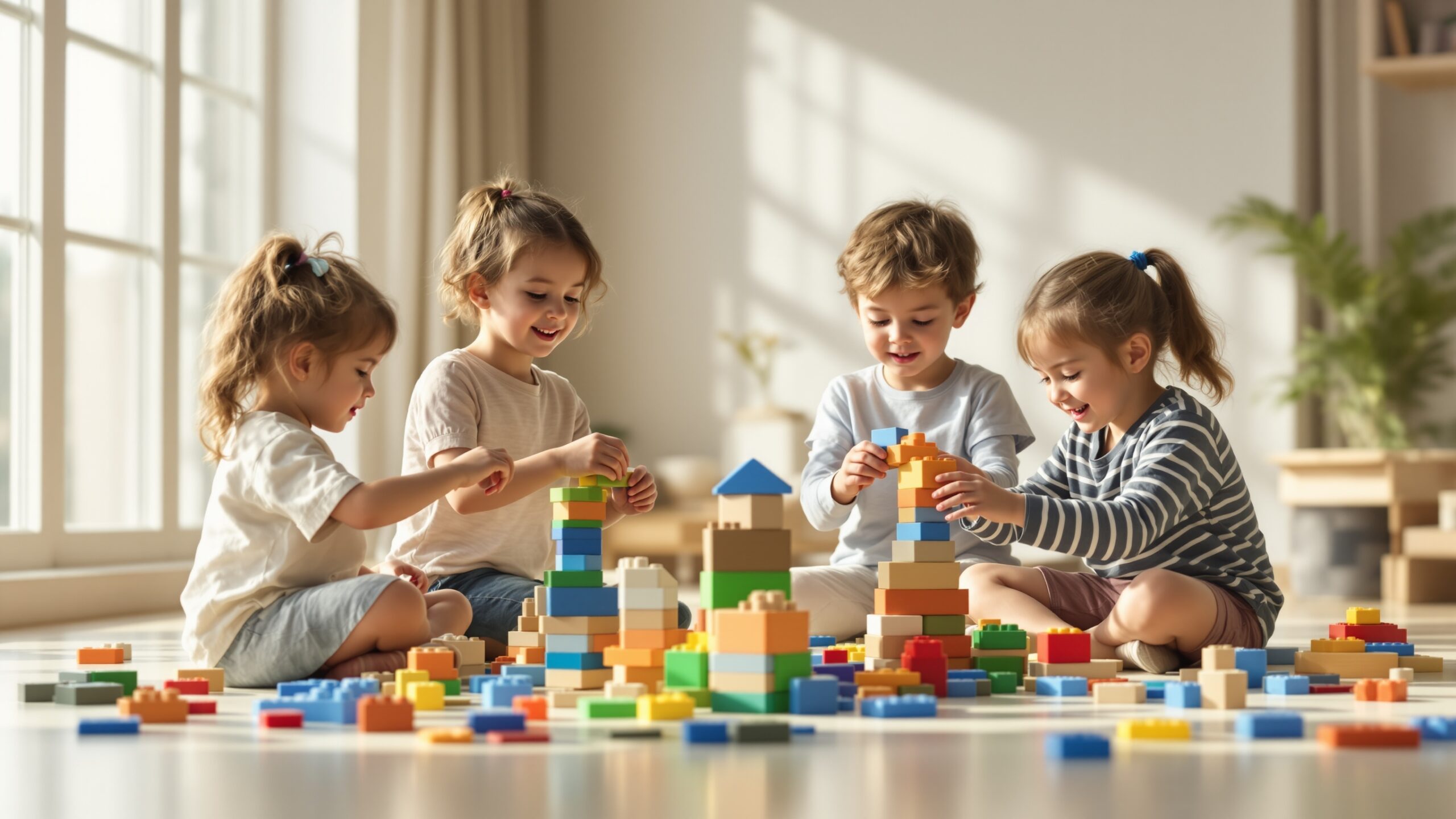
Construction play is often a social activity, especially in classroom settings or shared play environments. When children build together, they must communicate their ideas, negotiate roles, and collaborate to achieve a common goal. This introduces a new dimension of problem solving—one that involves interpersonal dynamics and collective decision making.
Working in groups, children encounter differing opinions and approaches. They must learn to listen, compromise, and integrate multiple perspectives into a cohesive plan. This not only enhances their problem solving skills but also fosters empathy and social intelligence.
Collaborative construction projects often lead to more complex and ambitious designs, as children pool their ideas and resources. The process becomes a shared journey of discovery, where each participant contributes to the solution. These experiences prepare children for real-world scenarios, where teamwork and collaboration are essential.
Language Development and Cognitive Expression
As children engage in construction play, they naturally begin to articulate their thoughts and ideas. They describe what they are building, explain their reasoning, and narrate their process. This verbalization reinforces cognitive development and helps children organize their thinking.
Language becomes a tool for problem solving, allowing children to externalize their ideas and reflect on their strategies. When a child explains why a structure collapsed or how they plan to fix it, they are engaging in metacognition—the ability to think about one’s own thinking. This self-awareness is a critical component of effective problem solving.
In social settings, language also facilitates collaboration. Children use words to coordinate their actions, share insights, and resolve conflicts. This interplay between language and cognition enhances both communication skills and analytical thinking.
The Role of Materials and Environment
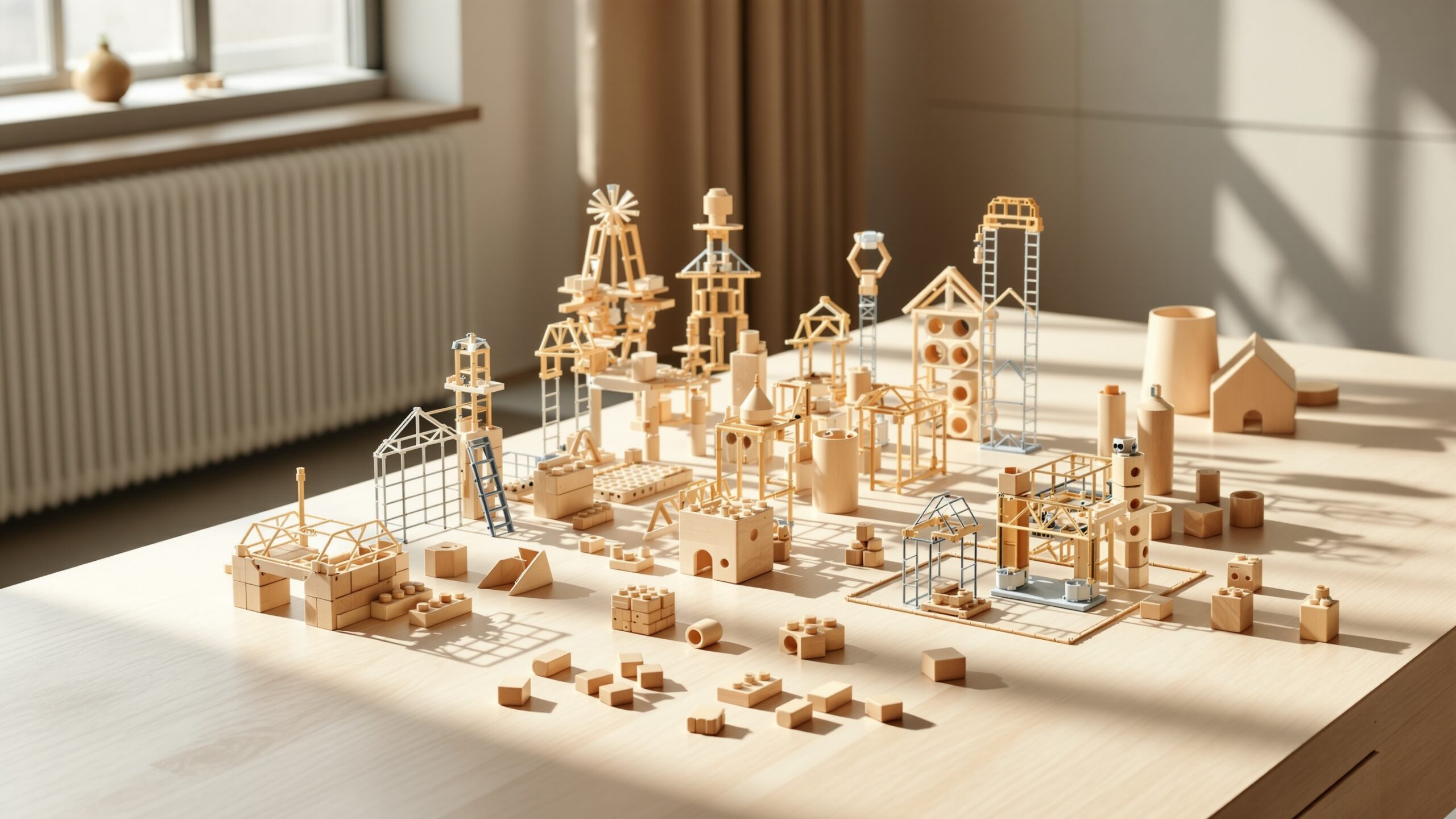
The effectiveness of construction play is influenced by the materials and environment provided. Open-ended materials, such as wooden blocks, magnetic tiles, and modular building sets, offer the greatest potential for creativity and problem solving. Unlike toys with predefined outcomes, these materials encourage exploration and experimentation.
The play environment should be conducive to sustained engagement. Ample space, accessible materials, and minimal distractions allow children to immerse themselves fully in the building process. When children feel comfortable and supported, they are more likely to take initiative and persist through challenges.
Variety is also important. Different materials introduce new variables and complexities, keeping the experience fresh and stimulating. For example, building with soft foam blocks presents different challenges than constructing with rigid plastic pieces. Each variation requires children to adapt their strategies and refine their skills.
Bridging Play and Real-World Skills
The problem solving skills developed through construction play extend far beyond the playroom. They translate into academic success, particularly in subjects that require logical reasoning, spatial awareness, and analytical thinking. Children who engage in regular construction play often demonstrate stronger performance in mathematics and science, as well as improved reading comprehension and writing skills.
Beyond academics, these skills are essential for everyday life. Problem solving is a fundamental competency that underpins decision making, innovation, and adaptability. Whether navigating social situations, managing tasks, or pursuing creative endeavors, the ability to analyze challenges and devise solutions is invaluable.
Construction play also introduces children to the principles of design and engineering. They learn to think like creators, not just consumers, developing a sense of agency and empowerment. This mindset encourages lifelong learning and curiosity, traits that are critical in a rapidly evolving world.
Encouraging Construction Play at Home and in Education
Parents and educators play a crucial role in fostering construction play. Providing access to high-quality materials is a good starting point, but equally important is creating an environment that values exploration and creativity. Children should feel free to experiment, make mistakes, and pursue their ideas without fear of judgment.
Guidance should be subtle and supportive rather than directive. Instead of telling children what to build or how to build it, adults can ask open-ended questions that prompt reflection and deeper thinking. Questions like “What do you think will happen if you add another layer?” or “How can you make it more stable?” encourage children to analyze their work and consider alternative approaches.
In educational settings, construction play can be integrated into the curriculum as a hands-on learning tool. It complements traditional teaching methods and provides a dynamic way to explore concepts in science, technology, engineering, and mathematics. By bridging play and education, educators can create a more engaging and effective learning experience.
The Long-Term Impact of Early Problem Solving Experiences
The benefits of construction play are not limited to early childhood. The skills and mindsets developed during these formative years have a lasting impact on a child’s development. Children who are encouraged to engage in problem solving through play are more likely to become confident, independent thinkers.
As they grow, these individuals are better equipped to להתמודד complex challenges, adapt to changing circumstances, and innovate in their chosen fields. They approach problems with curiosity rather than fear, viewing obstacles as opportunities for growth.
Research in developmental psychology consistently highlights the importance of early experiences in shaping cognitive and emotional outcomes. Construction play, with its rich combination of creativity, logic, and exploration, stands out as one of the most effective ways to nurture these outcomes.
Building Minds Through Play
Construction play is far more than a recreational activity—it is a powerful catalyst for cognitive development and problem solving. Through hands-on exploration, children learn to think critically, adapt to challenges, and express their ideas with clarity and confidence. They develop the resilience to مواجهة failure, the creativity to innovate, and the strategic thinking to achieve their goals.
In a world that increasingly values adaptability and innovation, these skills are indispensable. By encouraging construction play, we are not just providing children with entertainment; we are equipping them with the tools they need to navigate complexity and shape the future.
The next time a child sits down with a set of blocks or building pieces, it’s worth recognizing the deeper significance of what’s happening. They are not just playing—they are building the foundations of their intellect, one piece at a time.